Da Nang hospital saves 720-gram premature baby born to Singaporean tourists

After more than three months of intensive treatment and specialised neonatal care, the infant was discharged from hospital on June 22 in stable condition.

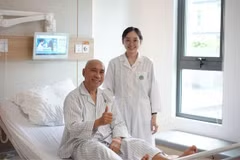
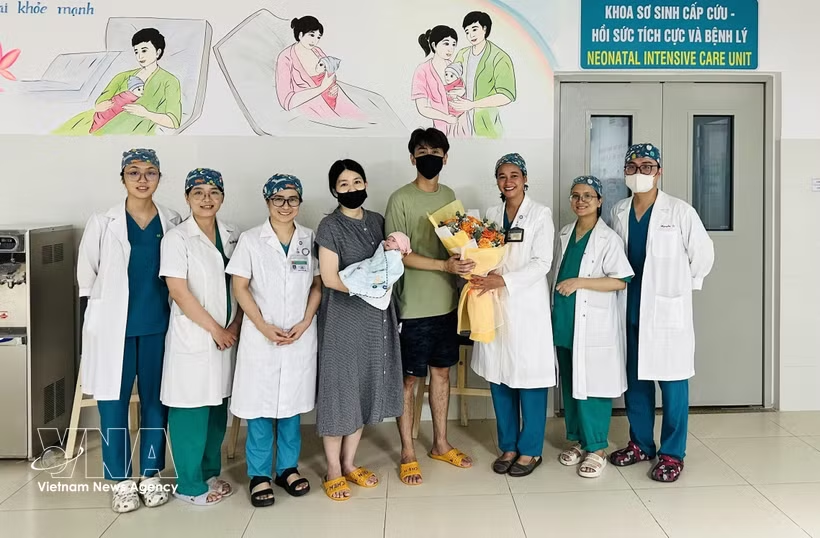
Medical staff from Da Nang Hospital for Women and Children present flowers to congratulate the couple and their baby on the child’s discharge from hospital. (Photo published by VNA)

Da Nang (VNA) – Doctors at the Da Nang Hospital for Women and Children have successfully saved and cared for an extremely premature baby girl weighing just 720 grams at birth, the daughter of a Singaporean couple visiting Vietnam.

After more than three months of intensive treatment and specialised neonatal care, the infant was discharged from hospital on June 22 in stable condition. She is now breathing on her own, feeding well and weighs 2.655 kilograms, the hospital said on June 23.

The baby's mother was admitted to the hospital on March 16 while 25 weeks and four days pregnant with her first child. The Singaporean tourist had travelled to Da Nang with her husband and planned to return home before giving birth. However, shortly before their scheduled flight, she developed serious health complications and required emergency medical treatment.

Doctors diagnosed her with severe preeclampsia, accompanied by multiple fluid accumulations, low blood sodium levels and suspected heart failure. Medical teams initially sought to prolong the pregnancy through intensive treatment to give the fetus more time to develop.

Despite nearly two weeks of close monitoring, the fetus later showed signs of severe distress. Faced with life-threatening risks to both mother and child, specialists from the hospital's obstetrics and paediatrics departments decided to perform an emergency caesarean section on March 27.

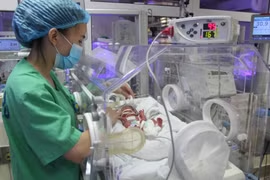
The baby girl was delivered at 27 weeks and one day of gestation, placing her among the most vulnerable groups of premature infants. Immediately after birth, she received respiratory support and intensive neonatal care before being transferred to the hospital's Neonatal Intensive Care Unit (NICU).

Dr. Huynh Thi Le, head of the hospital's Neonatal, Emergency and Intensive Care Department, said babies born this prematurely often face multiple serious complications because their organs are not fully developed.

During her 87-day stay in intensive care, the infant underwent a range of advanced treatments and monitoring procedures. After overcoming the most critical stage, she was successfully weaned off mechanical ventilation and transitioned to non-invasive respiratory support.
vnanet-potal-da-nang-cuu-song-be-gai-sinh-non-cua-vo-chong-du-khach-singapore-8843272.jpg
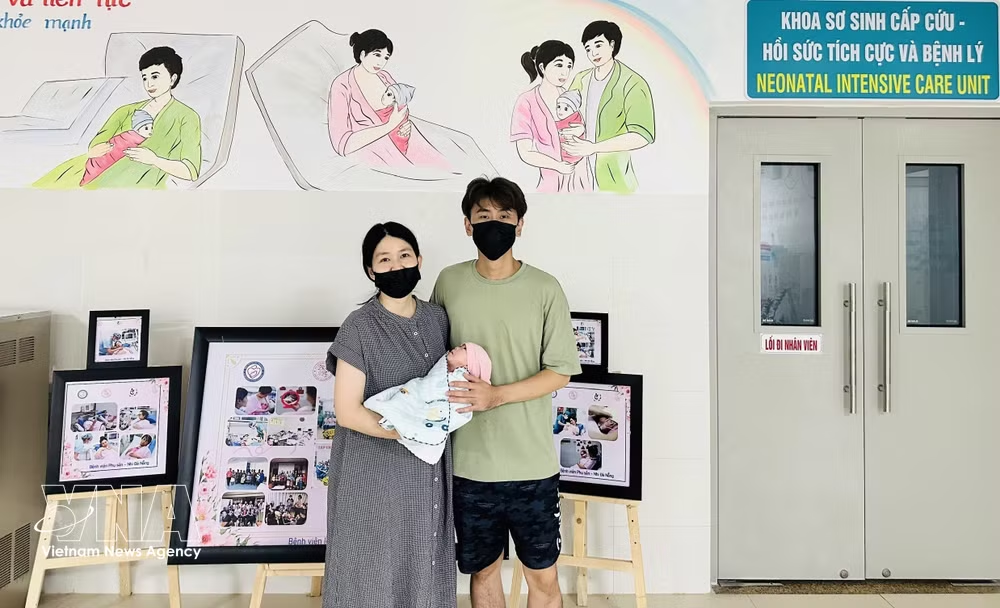
The Singaporean couple and their baby on the day of the infant's discharge from hospital. (Photo: VNA)

Doctors carefully managed her nutrition using breast milk to ensure healthy growth while minimising digestive complications. Medical assessments showed no signs of intraventricular haemorrhage, while screening for retinopathy of prematurity produced encouraging results.

As her condition improved, the baby received Kangaroo Mother Care, involving prolonged skin-to-skin contact, and gradually learned to breastfeed while achieving developmental milestones appropriate to her corrected age.

Before returning to Singapore, the baby's father sent a letter expressing his gratitude to the hospital's medical staff for their professionalism, dedication and support throughout the family's difficult journey.

Hospital representatives said the successful outcome highlights the effectiveness of close cooperation between obstetric and paediatric specialists and reflects the growing capabilities of neonatal intensive care in Vietnam./.
VNA

See more

The number of foreign tourists coming to Ho Chi Minh City for travel combined with medical check-ups is increasing. (Photo: VNA)

Vietnam looks to unlock medical tourism potential with national strategy

The draft strategy aims to position Vietnam as a trusted healthcare destination in Southeast Asia by 2030 and eventually among Asia's leading medical tourism hubs. The plan marks a shift from viewing medical tourism as an untapped opportunity to making it a national development priority.

Delegates at the conference. (Photo: VNA)

Vietnam to produce first homegrown next-generation vaccines from 2028

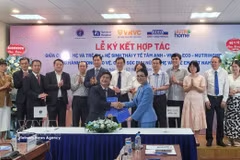
Under the agreement, Sanofi will transfer technology to VNVC to manufacture selected high-demand vaccines for children and adults at VNVC Vaccine and Bioproduct Plant. The first next-generation vaccines produced in Vietnam are expected to roll off production lines in 2028.

Eric and Alysha joyfully welcome their baby through Mini IVF after more than 10 years of waiting. (Photo: Hong Ngoc Phuc Truong Minh General Hospital)

Vietnam - a destination for journeys to parenthood

An increasing number of international families are choosing Vietnam for infertility treatment, embarking on journeys to parenthood that transcend geographical distance and differences in nationality.

Prime Minister Le Minh Hung delivers remarks at the inauguration ceremony for Viet Duc University Hospital's second campus in Ninh Binh province. (Photo: VNA)

PM urges modern restructuring of healthcare network

The PM stressed that throughout the country’s development process, people have consistently been regarded as the centre, the driving force, the objective and the most important resource for national development. Sustainable and rapid development requires not only a healthy, knowledgeable and skilled population but also a modern, equitable, efficient, sustainable and accessible healthcare system.

Thu Duc General Hospital, with a capacity of 1,000 beds, was inaugurated and put into operation in April 2025 (Photo: VNA)

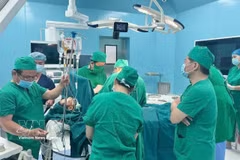
Ho Chi Minh City moves to expand robotic surgery to gateway hospitals

According to the municipal Department of Health, developing gateway hospitals is a key pillar of the city's strategy to establish a regional specialised healthcare system. The network is designed to permanently relieve overcrowding at major downtown hospitals while strengthening strong inter-regional emergency care and treatment network.

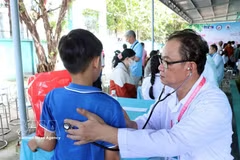
Doctors conduct health screenings for children in Tru Van Tho commune, Ho Chi Minh City. (Photo :VNA)

Ho Chi Minh City moves closer to universal health check-ups

Achieving universal health check-ups in 2026 will lay the foundation for a new healthcare model in which every resident has an electronic health record, receives regular screenings, benefits from lifelong health management and gains access to early intervention through primary healthcare services.

Illustrative photo: Internet

Dengue cases rise, outbreaks become more unpredictable

Vo Hai Son, Deputy Director of the ministry's Administration of Disease Prevention, said dengue fever is no longer following previous epidemiological trends. In 2025, infections remained elevated through November and December rather than declining at the end of the year as had traditionally been the case, indicating a shortening outbreak cycle.