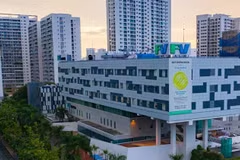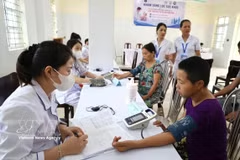
Hanoi (VNA) - Mr. Luis Caballero, a Filipino national who had lived with hypertension for more than 30 years and persistent hypokalemia for over two decades, was diagnosed with a complex endocrine disorder and successfully treated at Hong Ngoc General Hospital, one of Vietnam’s leading healthcare providers.
Three decades of hypertension treatment failed to uncover the root cause
For more than 30 years, Mr. Caballero had lived with hypertension and had undergone medical consultations and treatment in several countries, yet the underlying cause remained unidentified. For many years, treatment primarily focused on controlling blood pressure with medication, while his persistent hypokalemia continued for more than 20 years, leaving him with recurrent fatigue, muscle weakness, and an increased risk of cardiovascular complications and stroke.
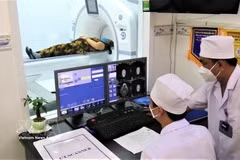
Upon evaluating the patient, Dr. Kieu Hong Nhung, MD, Resident Doctor, Endocrinology Department, Hong Ngoc General Hospital, suspected secondary hypertension caused by an endocrine disorder. Mr. Caballero was indicated for specialised endocrine testing and an adrenal CT scan. The results revealed that the root cause of his condition was primary aldosteronism.
To accurately determine the source of aldosterone overproduction, the patient subsequently underwent adrenal vein sampling (AVS). Dr. Do Huy Hoang, MD, Diagnostic Imaging and Interventional Radiology Department, Hong Ngoc General Hospital, who directly performed the procedure, said AVS is a highly specialised technique with considerable technical difficulty, as the adrenal veins are very small and anatomically complex. The procedure must be performed under digital subtraction angiography (DSA) guidance to ensure procedural accuracy and safety.
The AVS results confirmed bilateral primary aldosteronism. Based on this diagnosis, physicians developed a targeted treatment regimen using aldosterone antagonists. Following treatment, the patient’s blood pressure improved significantly, serum potassium levels returned to a safe range, the number of antihypertensive medications was markedly reduced, and his overall health rapidly stabilised.
The success of this case highlights the critical role of advanced diagnostics and multidisciplinary collaboration at Hong Ngoc General Hospital, particularly in long-standing conditions that may be easily misdiagnosed or remain unresolved despite years of treatment.
Hong Ngoc General Hospital enhances specialised care for international patients
Mr. Luis Caballero’s case is a notable example among hundreds of international patients examined, diagnosed, and successfully treated within the Hong Ngoc healthcare system each year. In addition to routine health check-ups, Hong Ngoc General Hospital has become a trusted healthcare destination in Hanoi for international patients seeking advanced evaluation of complex, long-standing, or treatment-resistant conditions.
To improve diagnostic and treatment outcomes, the hospital places strong emphasis on a multidisciplinary model involving Endocrinology, Cardiology, Diagnostic Imaging, Interventional Radiology, Intensive Care, General Surgery, Musculoskeletal Medicine, Rehabilitation, and other specialties. This collaborative approach enables physicians to conduct comprehensive assessments, identify root causes, and develop individualized treatment plans for each patient.
With an experienced medical team that has managed many complex cases, together with modern laboratory, diagnostic imaging, and interventional systems, the hospital is able to support the detection of underlying diseases, difficult-to-recognise disorders, and long-overlooked causes of illness. Rather than focusing solely on symptom control, physicians adopt a comprehensive approach aimed at identifying the underlying cause and developing an appropriate treatment plan for each individual case.

In addition to clinical expertise, Hong Ngoc General Hospital has developed a professional care process for international patients. The hospital provides interpreters in English, Korean, Japanese, and Chinese throughout the examination and treatment process, helping patients communicate effectively with physicians, understand their medical condition, and follow treatment protocols. Bilingual medical records also support patients with insurance procedures, treatment follow-up, and hospital transfer when necessary.
The growing number of international patients seeking care at Hong Ngoc reflects the hospital’s expanding reputation as a trusted healthcare provider for foreigners in Vietnam. With its closely coordinated specialty system, experienced physicians, modern equipment, and international-standard service process, Hong Ngoc General Hospital is steadily becoming a trusted medical destination for international patients seeking diagnosis, treatment, and long-term health monitoring in Hanoi./.
Hong Ngoc General Hospital - The place to trust
- Hotline: 024 3927 5568
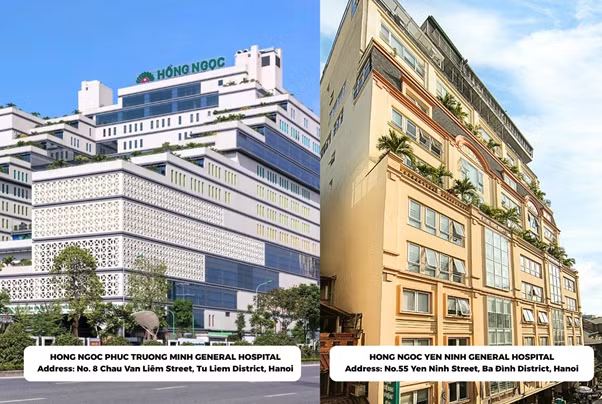
- Hong Ngoc Yen Ninh General Hospital: : 55 Yen Ninh Street, Truc Bạch Ward, Hanoi
- Hong Ngoc Phuc Truong Minh General Hospital : 8 Chau Van Liem Street, Tu Liem Ward, Hanoi