Ho Chi Minh City (VNA) – Ho Chi Minh City is pioneering efforts to expand access to quality healthcare by deploying doctors and extending hospital services to remote and island areas, as part of its push toward universal health coverage.
For years, residents in outlying and hard-to-reach areas had to travel long distances to major hospitals for treatment, incurring significant time and cost. To address this gap, the city has adopted a more flexible approach—sending highly qualified medical staff from top-tier hospitals to underserved areas while gradually strengthening local facilities.
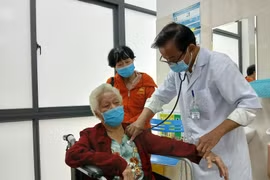
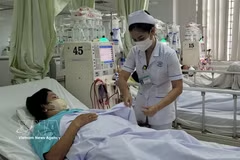
In the Con Dao Special Zone, patients with kidney failure no longer need to travel to the mainland for dialysis. Since May 6, a newly established dialysis unit at the local military-civilian medical centre, supported by Thong Nhat Hospital, has begun operations. Initially equipped with two dialysis machines, the unit can serve up to 12 regular patients, with plans to expand to 10 machines for around 60 patients in the future.
Since September 2025, the municipal Department of Health has organised rotational deployments of doctors from leading hospitals to Con Dao. This model - prioritising high-quality human resources over large-scale infrastructure investment - has delivered immediate results.
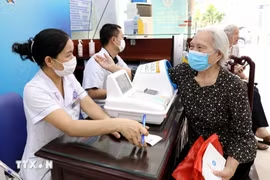
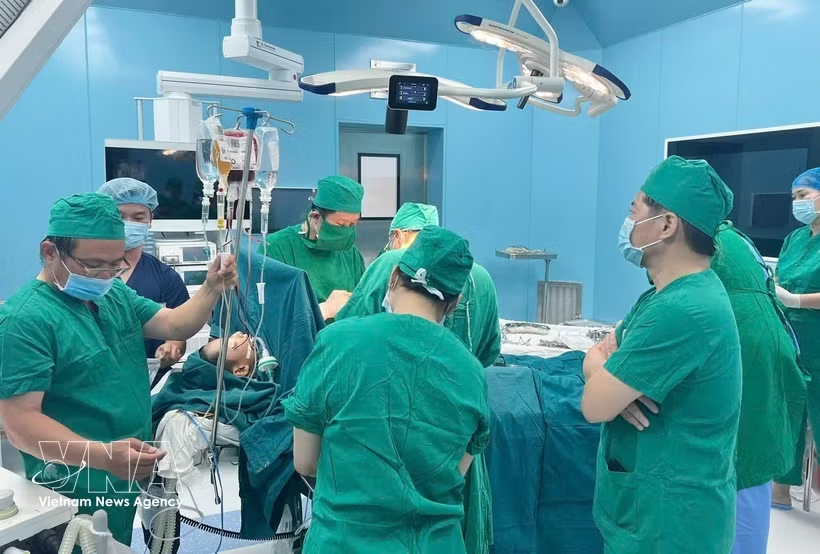
Patient visits at the local medical centre have surged from about 80 to over 200 per day, while dozens of surgeries, including complex emergency cases, have been successfully performed there. Advanced procedures such as stroke thrombolysis and microsurgery have also been introduced, significantly improving survival rates.
Many advanced medical techniques have also been introduced, helping save patients’ lives directly on the island, including emergency thrombolysis for stroke treatment, multi-trauma surgery, and microsurgical procedures to reconnect blood vessels and nerves.
Nguyen Phuoc Loc, Deputy Secretary of the municipal Party Committee, said the rotating specialist doctor programme in Con Dao has increasingly demonstrated its profound humane value, helping realise the policy of equitable access to healthcare and ensuring that geographic distance does not become a barrier to people’s right to medical care.
Similar progress has been made in Can Gio, where a new facility – Tu Du Hospital’s second campus – has been operating since late 2025. As Vietnam’s first affiliated general hospital model, it brings together medical teams from nine top-tier hospitals to deliver high-quality services locally. The hospital now handles thousands of patient visits each month, with a growing number of complex surgeries performed and significantly fewer referrals to central hospitals.
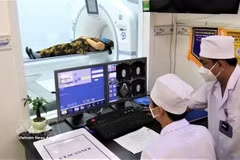
Beyond these efforts, the city is working to develop multiple specialised healthcare hubs in formerly underserved areas such as Binh Duong and Ba Ria-Vung Tau. Partnerships have been established between major city hospitals and regional facilities to strengthen key specialities, including emergency care, surgery, obstetrics, paediatrics, orthopaedics, and diagnostic imaging.
Plans are also underway to transform Ba Ria General Hospital into a strategic “gateway hospital” for the southeastern region.
Meanwhile, Binh Duong General Hospital is being developed into a 1,500-bed comprehensive and highly specialised medical facility with strengths in trauma care, cardiology, intensive care and oncology. This hospital has also been directed to expand advanced capabilities in interventional radiology, urology and andrology, pediatric intensive care, and specialised obstetrics, while strengthening services in assisted reproduction, prenatal diagnostics, genetics, and anesthesiology and resuscitation.
At the same time, several overloaded central hospitals, including Tu Du, Oncology, Trauma and Orthopaedics, are expected to open additional campuses in these areas to ease pressure on inner-city facilities.
According to Director of the municipal Department of Health Tang Chi Thuong, the southern metropolis is pursuing a multi-centre healthcare model, with gateway hospitals acting as frontline hubs for early diagnosis and treatment. This approach is expected to reduce congestion at major hospitals while cutting travel time and costs for patients.
The strategy reflects a broader vision of equitable healthcare, ensuring that all residents – regardless of location – can access high-quality medical services close to home, while allowing central hospitals to focus on advanced and specialised care./.