Offshore wind-hydrogen integration optimises investment efficiency

Under the integrated model, surplus electricity generated during periods of low grid demand could be used for seawater electrolysis, producing green hydrogen to help optimise investment efficiency for offshore wind farms.

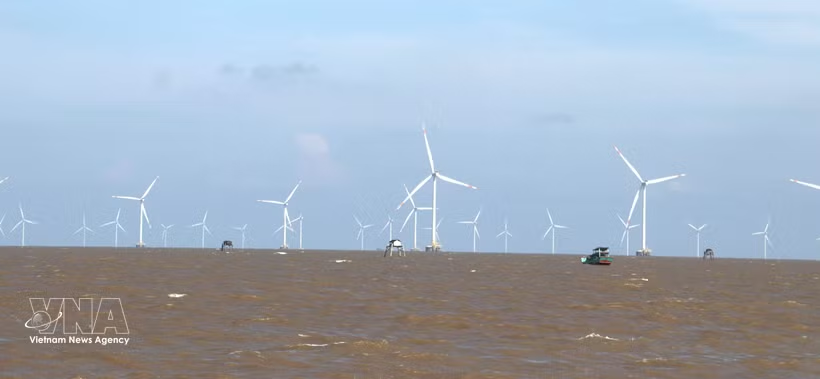
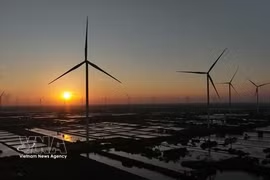
The offshore wind turbine system of Tien Giang Wind Power Energy JSC. (Photo: VNA)

Hanoi (VNA) - The Politburo’s Resolution No. 70-NQ/TW on national energy security through 2030 with a vision to 2045 has created an important policy framework for expanding renewable and new energy industries, including solar power, offshore wind and green hydrogen, according to Dr. Du Van Toan from the Institute of Meteorology, Hydrology, Environment and Marine Sciences (IMHEMS) under the Ministry of Agriculture and Environment.

Vietnam targets 6,000 MW of offshore wind power by 2030, rising to 15,000 MW by 2035 and 139,000 MW by 2050, equivalent to 20-25% of the country’s total installed power capacity.

Toan said recent revisions to the Electricity Law have helped ease obstacles surrounding offshore wind survey licensing, allowing Vietnam to gradually establish a legal and technical foundation for the sector’s development. If survey procedures continue progressing smoothly, offshore wind is expected to open up major opportunities for both domestic and foreign investors.

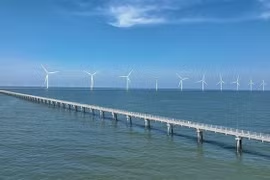
Vietnam has already connected approximately 1,500 MW of nearshore wind power to the national grid in Mekong Delta provinces. Domestic firms and foreign joint ventures have also begun deploying monopile foundation technology for coastal wind projects, laying technical groundwork for larger offshore projects beyond six nautical miles.

Despite these advances, Toan noted that the offshore wind sector remains relatively new globally and that Vietnam’s regulatory framework is still evolving. Licensing responsibilities are currently divided among ministries, while the growing number of applications has slowed the approval process for offshore wind surveys.

Electricity pricing remains another major issue. Calculations by IMHEMS indicate offshore wind projects would require power prices of 12-15 US cents per kWh across Vietnam’s three regions to ensure profitability. However, the FIT1 and FIT2 feed-in tariff mechanisms that previously supported renewable energy projects are no longer in effect, highlighting the need for new pricing mechanisms to balance investor and consumer interests.
vnanet-du-va-n-toa-n-20260514202146.jpg
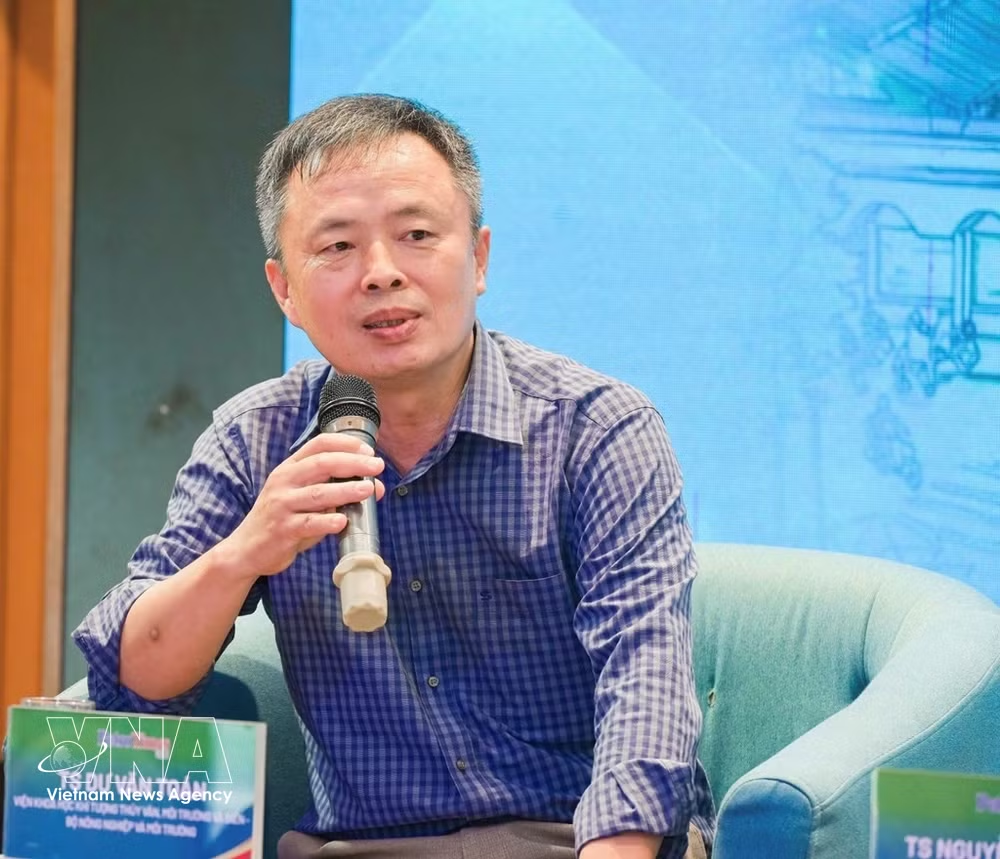
Dr. Du Van Toan from the Institute of Meteorology, Hydrology, Environment and Marine Sciences (IMHEMS) under the Ministry of Agriculture and Environment. (Photo: VNA)

To support the sector, Toan proposed policies on the sea surface and seabed usage fees that would favour offshore projects during the initial development phase. Such incentives could help Vietnamese firms strengthen their capabilities across the offshore wind supply chain, including surveys, construction, installation, operations and port services.

Subsidiaries of Petrovietnam are already participating in service contracts for foreign offshore wind developers. With stronger policy support, Vietnam could build competitive domestic enterprises capable of delivering integrated offshore wind infrastructure services to lower development costs.

Toan also highlighted the growing potential of combining offshore wind projects with green hydrogen production. Under the integrated model, surplus electricity generated during periods of low grid demand could be used for seawater electrolysis, producing green hydrogen to help optimise investment efficiency for offshore wind farms.

Green hydrogen is increasingly being deployed globally in sectors such as transport and maritime services. In Vietnam, several green ports have begun piloting the use of hydrogen-powered tugboats and small vessels as part of efforts to achieve net-zero emissions by 2050.

Vietnam should therefore consider offshore wind-hydrogen integration as a strategic solution for ensuring energy security while reducing greenhouse gas emissions, Toan said.

He added that around 30 countries worldwide have already adopted green hydrogen strategies, while Vietnam issued its own national green hydrogen strategy in 2024. Incorporating green hydrogen provisions into the draft revised Petroleum Law is expected to provide an important legal basis for developing new energy supply chains and supporting Vietnam’s net-zero roadmap./.
VNA

See more

Coffee, often referred to as the “brown gem” of Lam Dong, is one of the province’s signature agricultural products. (Photo: VNA)

Lam Dong reshapes coffee industry to elevate export value

Lam Dong plans to strengthen branding and trade promotion efforts, develop coffee-growing regions linked to geographical indications, expand digital traceability systems and make greater use of free trade agreements (FTAs) to diversify export markets.

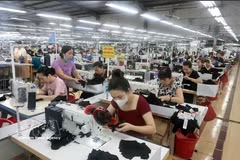
Cargo handling operations at Berths 3 and 4 of the Hai Phong International Gateway Port. (Photo: VNA)

AI reshapes logistics, raising bar for workforce skills

According to the Vietnam Logistics Business Association (VLA), the logistics sector will require around 2.2 million workers by 2030, including 1.6 million employees for logistics service providers and nearly 600,000 personnel supporting logistics operations in manufacturing and trading enterprises.

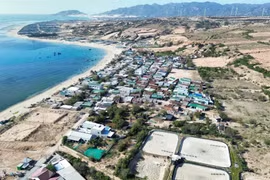
The site planned for the Ninh Thuan 1 nuclear power plant in Phuoc Dinh commune of Khanh Hoa province (Photo: VNA)

Nuclear power projects to transform Khanh Hoa coastal communities

Khanh Hoa province aims to hand over fully cleared sites to investors by June 30, 2026. For Ninh Thuan 1, both the plant site and the resettlement zone are scheduled for completion by June 30. For Ninh Thuan 2, the plant site is due on June 15, with the resettlement area following by June 30.

Professor Tao Yitao, Director of the China Centre for Special Economic Zone Research (Photo: VNA)

Stable beginnings, powerful breakthroughs for Vietnam’s private economic sector

Vietnam is now at a critical juncture in pursuing what its leadership has described as a new era of national rise. In the long term, the development of the private economic sector will depend not only on supportive policies but also on a stable, transparent institutional environment that guarantees fair competition, said Professor Tao Yitao, Director of the China Centre for Special Economic Zone Research.

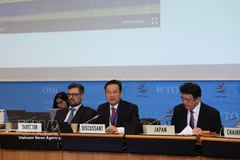
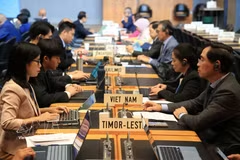
The trade policy review of Uruguay at the WTO headquarters. (Photo: VNA)

Vietnam participates in WTO review of Uruguay's trade policy

Vietnam also welcomed Uruguay's active engagement in the multilateral trading system as a founding member of the WTO. Uruguay has ratified the Agreement on Fisheries Subsidies, joined the Multi-Party Interim Appeal Arbitration Arrangement (MPIA), and contributed to Joint Statement Initiatives (JSIs) on e-commerce and micro, small and medium-sized enterprises (MSMEs).

Experts discuss cooperation opportunities in Vietnam-Germany manufacturing value chains at the forum. (Photo: VNA)

Vietnam-Germany cooperation creates new opportunities for sustainable manufacturing

Germany is an important partner of Vietnam and a global leader in green technology, smart manufacturing, automation and circular economy solutions. The combination of German technological expertise and Vietnam's manufacturing capabilities and strong commitment to transformation would create significant opportunities in green production, supporting industries, digital transformation, supply chain management and eco-industrial park development.

Businesses introduce Halal market products at the workshop. (Photo: VNA)

Da Nang businesses eye growth in booming global Halal market

Huynh Xuan Son, Deputy Director of the Da Nang Department of Industry and Trade, said the Halal market has emerged as a strategic destination for Vietnamese exporters amid persistent global economic uncertainties. Serving more than two billion consumers across over 110 countries and territories, the market offers significant opportunities for business expansion.

Vietnamese bananas are sold at an AEON supermarket in Japan. (Photo: VNA)

Vietnamese products promoted at AEON stores across Japan

Speaking at the opening ceremony, Deputy Minister of Industry and Trade Phan Thi Thang highlighted the significance of 2026, which marks a decade of cooperation between the ministry and AEON in organising Vietnam Week in Japan.