Hanoi (VNA) – Through aggressive technological solutions and eco-friendly fuel initiatives, Vietnam's rail transport is staging a strong comeback, significantly boosting its economic contribution while spearheading the transport sector's greenhouse gas reduction efforts.
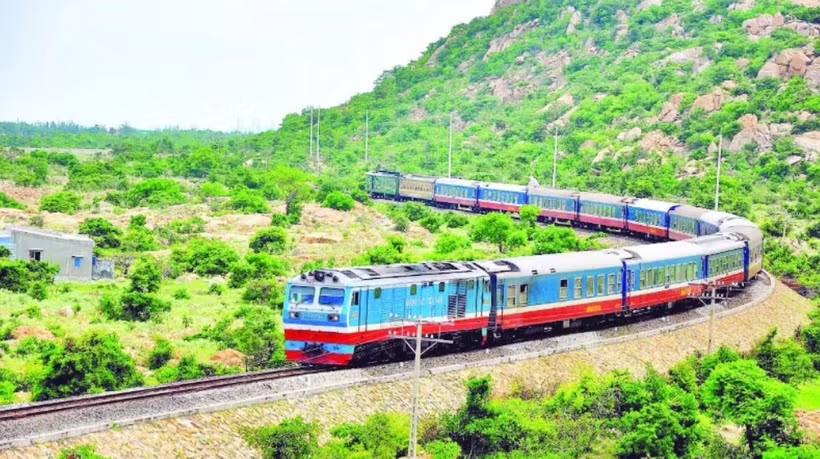
The State-owned Vietnam Railways Corporation (VNR) currently operates 258 locomotives, 128 generators, 4,000 carriages, and approximately 2,600 kilometres of track. While historically a vital transport artery, rail transport slowed down due to fierce competition from road, air, and maritime routes.
However, following a severe pandemic-induced downturn, the sector has rebounded strongly. In 2025, the network transported around 40 million passengers and over 5 million tonnes of cargo. This turnaround stems from drastic improvements in infrastructure, service quality and, especially, a robust commitment to digital transformation to ensure safety and convenience.
Digital transformation proves strong effects
"Politburo Resolution No. 57-NQ/TW, issued on December 22, 2024, on making breakthroughs in science – technology development, innovation, and national digital transformation has truly opened the door for the railway sector to make a strategic breakthrough to enhance competitiveness," said VNR Deputy General Director Nguyen Quoc Vuong.
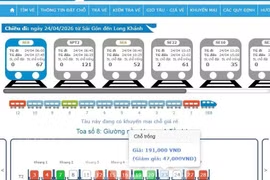
Following the resolution, the firm has issued a number of directives, decisions, plans, and action programmes. In particular, an array of digital applications have been deployed. These include E-office software, digital signature, electronic ticketing, AI-powered customer service chatbot, and the VNRA-MIS system for infrastructure management and train monitoring. The VNR has also installed surveillance cameras and Lidar automatic warning devices.
Crucially, the VNR now operates an emergency response centre that streams real-time visuals from key traffic junctions and level crossings. In the event of an incident, experts can immediately deploy optimal solutions, ensuring maximum safety and punctuality.
In 2025, the corporation launched a "digital railway" model in which all management activities and operations are fully integrated onto a centralised data platform powered by AI, big data, and the Internet of Things (IoT).
Fruitfully, practical results have been yielded in optimising operations, reducing costs, and improving service quality and overall competitiveness of rail transport in the national transportation system.
Determination to boost green transition
Data from the Ministry of Construction show that greenhouse gas emissions of rail transport is lower than that of other means of transport, accounting for just 0.2% of the economy’s total emissions and roughly 3% of the transport sector's total footprint.
However, turning the railway green remains a challenge due to limited investment resources, low flexibility, and modest intermodal connectivity.
The VNR reports that locomotives and generators consume 46,000 tonnes of diesel annually, accounting for over 70% of the railway sector's total emissions.
To tackle this, its Party Committee issued Resolution No. 04/NQ-DU on February 11, 2026, outlining its science – technology, innovation and digital transformation duties for 2026–2030. The resolution mandates that all VNR units complete relevant tasks by 2030, alongside modernising rolling stock and related infrastructure and using fuels that meet emission standards.
Secretary of the VNR Party Committee Dang Sy Manh emphasised that the corporation is determined to carry out four groups of breakthrough tasks and measures to fulfil the set targets.
By 2030, Vietnam's railway aims to achieve sustainable growth on existing lines while promoting its role in the development of the green and circular economy. To that end, the VNR is gradually transitioning the entire ecosystem from fossil fuels to green energy and low-emission technologies.
The entire railway transport ecosystem will be greened, not just individual parts, he said, adding that the VNR is undergoing a strong transformation towards a digital railway enterprise operating intelligently and developing sustainably./.