Hanoi (VNA) – As Vietnam moves towards its net-zero emissions target, authorities in Ho Chi Minh City are accelerating efforts to develop a greener transport system through clear roadmaps, strong policy support and prioritised investment.
Alongside economic growth, expanding green transport is seen as both an urgent necessity and a breakthrough solution to improve urban living conditions.
Transition to environmentally friendly transport
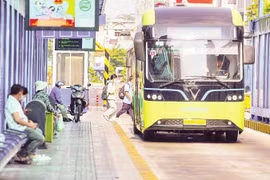
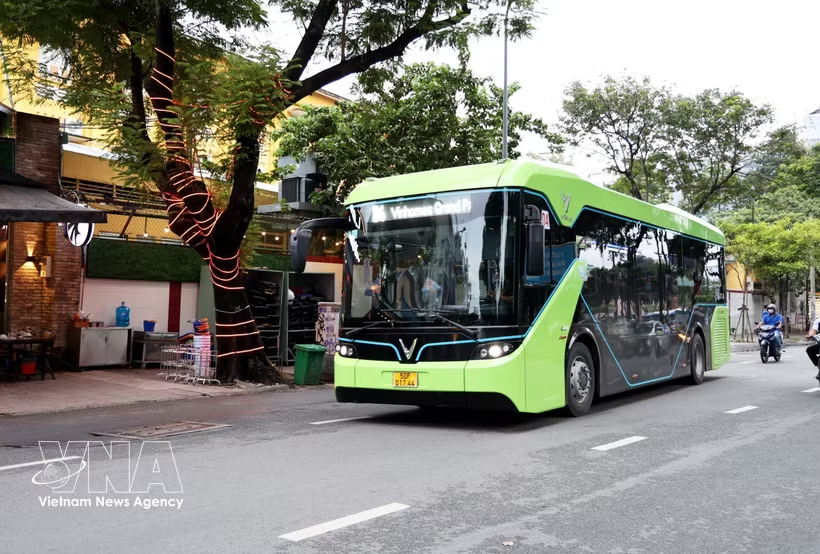
Ho Chi Minh City currently operates 2,432 buses, including 1,185 electric units and 182 powered by compressed natural gas (CNG), accounting for more than 56% of the fleet.
Thanks to the city’s strong commitment to cleaner public transport, the shift from petrol-powered to electric buses has accelerated in the first months of 2026, raising the share of electric buses from 40% to nearly 57%.
The city plans to continue tendering projects for electric bus conversion, aiming for all public buses to use clean and green energy by 2030.
According to Pham Ngoc Dung, Director of the Public Transport Management Centre under the municipal Department of Construction, countries with advanced industries typically begin emissions reduction by transforming public transport systems such as metro lines and buses before expanding to commercial and personal vehicles.
Beyond buses, the city is also mapping out plans to convert ride-hailing vehicles, delivery fleets and government vehicles to electric power and other low-emission technologies.
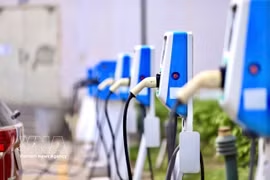
The Department of Construction said the city has announced 4,000 locations for battery-swapping stations over the past year, with around 1,200 already equipped to serve electric motorbike users. Authorities aim to complete planning and public disclosure of 20,000 battery-swapping locations by the end of 2026.
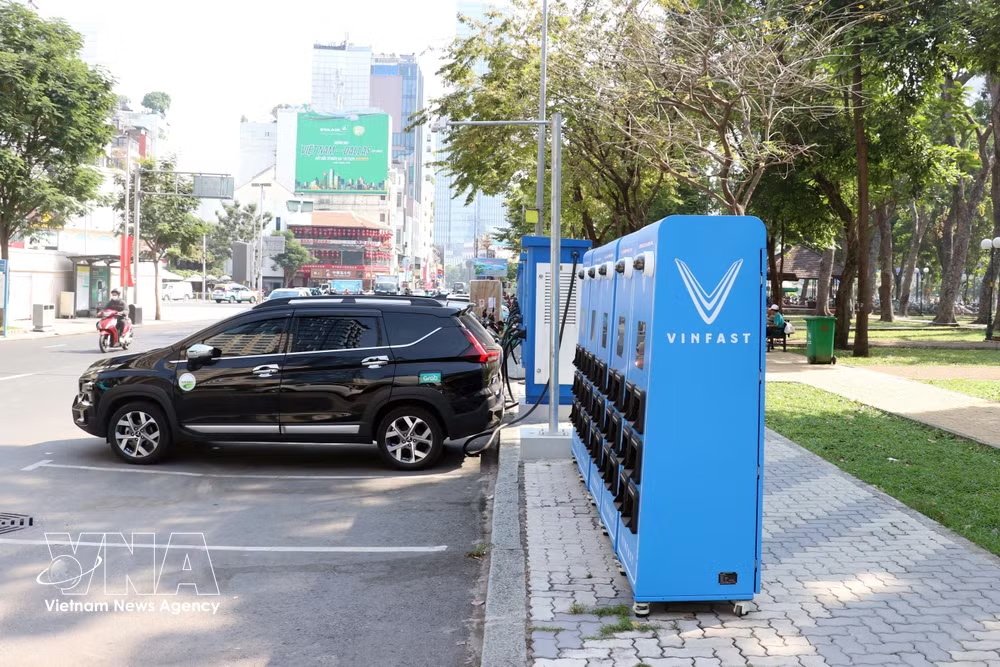
However, concerns remain over charging infrastructure. The city estimates that by 2030, around 1.2 million electric motorbikes will be in circulation, requiring more than 25,000 public charging points and battery-swapping stations.
Implementing emissions reduction roadmap
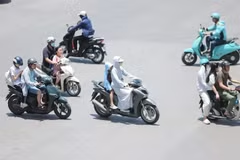
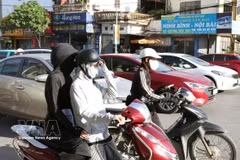
As Vietnam’s largest economic hub with a population of around 14 million, Ho Chi Minh City faces mounting pressure from traffic congestion, environmental pollution and greenhouse gas emissions. Following administrative restructuring, the city now has more than 11 million motorcycles and motorbikes subject to emissions inspections.
According to local authorities, effective emissions control could reduce annual carbon emissions by more than 56,000 tonnes and hydrocarbon emissions by nearly 5,000 tonnes, significantly improving air quality.
Bui Hoa An, Deputy Director of the Department of Construction, said green transport development in Vietnam is not only mandatory but also represents a major breakthrough. He stressed that the transition involves not only technology adoption but also comprehensive reforms in institutions, human resources, governance and the development of a domestic industrial base capable of technological self-reliance.
Infrastructure support, he added, remains the decisive factor for successful implementation.
Although several investors have begun deploying EV charging stations and battery-swapping facilities across the city, experts say access to charging infrastructure still needs more comprehensive solutions to ensure convenience for users.
According to Associate Professor and Doctor Dam Hoang Phuc, a senior expert at the United Nations Development Programme (UNDP), the key bottleneck lies in the broader ecosystem, operational models and fragmented charging systems. He noted that users need faster and more flexible charging solutions rather than long waiting times at stations, with charging networks integrated more deeply into residential areas and destinations to suit electric motorbikes and short urban trips.
To support emissions reduction in transport, Ho Chi Minh City is also studying financial support policies, including subsidies, preferential loans and risk-sharing mechanisms for green transport projects.
Alongside the expansion of electric buses, the operation of Metro Line No. 1 connecting Ben Thanh Market and Suoi Tien Theme Park is expected to increase the share of public transport and reduce dependence on private vehicles.
On emissions control, the Department of Construction recently urged manufacturers, importers and maintenance providers to upgrade facilities in preparation for mandatory emissions testing for motorcycles and motorbikes under new national technical standards taking effect on June 30, 2026.
Authorities are further studying plans to limit certain private vehicles on selected roads during specific periods, in line with transport infrastructure capacity and the development of public transport systems.
Experts have recommended that Ho Chi Minh City diversify its emissions reduction roadmap, combining various low-emission technologies suited to the realities of a densely populated megacity./.