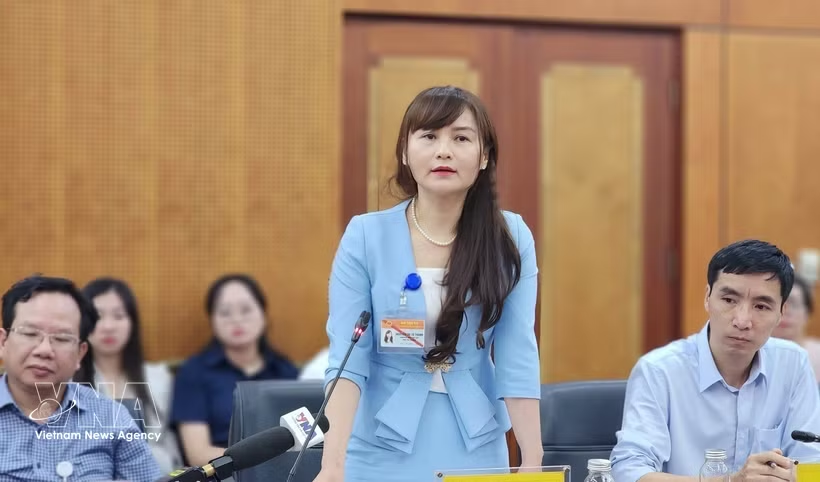
Hanoi (VNA) – The two-tier local administration model has run smoothly and effectively since July 2025 thanks to the Party Central Committee’s direction, the Government’s drastic governance, and the concerted efforts of the entire political system, said Deputy Director of the Ministry of Home Affairs’ Department of Local Government Nguyen Thi Tu Thanh.
Speaking at the ministry’s press briefing held in Hanoi on April 28, Thanh admitted difficulties in several key areas, saying that information technology system, databases, and digital infrastructure remain incomplete and poorly integrated. Certain locality-specific utilities are glitchy on the new platforms and still need upgrades to function properly.
After slashing layers of bureaucracy and pushing more power down to the commune level, a substantial volume of work has shifted to the grassroots officials. In many areas, the workforce is unevenly skilled, with a shortage of specialists. Additionally, certain units operate across multiple locations, making management, coordination, and day-to-day operations a real mess.
On the institutional front, while most responsibilities related to decentralisation and delegation of authority have been assigned, several tasks still lack adequate legal guidance. Further amendments and supplementations are needed to ensure consistency, coherence, and alignment with on-the-ground realities.
Thanh said the ministry is now pushing five major groups of solutions. First, it will continue refining the institutional framework, with a focus on regulations governing decentralisation, organisational structure, and personnel management, guided by the principle of clear accountability and stronger state management effectiveness.
Second, the ministry plans a major shake-up to upgrade the quality of officials and civil servants, particularly at the grassroots level. That means reviewing and reshuffling staff to better match the jobs, plus ramping up training in everything from professional skills and digital know-how to basic customer service and accountability.
Third, it will accelerate administrative reform and build better-connected digital infrastructure and data systems between central and local levels, with the goal of finally clearing technical headaches that frustrate citizens and businesses.
Fourth, the ministry will continue managing public assets and surplus office facilities in line with local needs, making sure nothing goes to waste while improving working conditions at the commune level.
Fifth, it will intensify monitoring, supervision, and inspections, adopt timely corrective measures to boost governance effectiveness and clear emerging obstacles. As the Government’s standing agency on the issue, the ministry will regularly assess progress and work closely with other ministries, agencies, and localities to accelerate the effort.
According to her, the ministry has already recommended the Government and Prime Minister launch a one-year review of the entire two-tier model. It aims to figure out what’s actually working, learn from mistakes, spot the best practices, and map out a clearer path forward.
On the operation of villages and residential groups, including part-time personnel, she said the ministry has been ordered by the PM to draft a decree laying down clear rules. The decree, which will provide the legal basis for local rollout, has undergone careful study, given its direct impact at the grassroots level.
Regarding training for People’s Council deputies at all levels, the ministry will coordinate with competent agencies to launch training courses, particularly for newly elected ones. The courses will be tailored to real governance needs so they can actually do their jobs effectively from the outset of their terms./.