Hanoi (VNA) – From north to south, Vietnamese people on April 26 (the 10th day of the third lunar month) solemnly marked the Hung Kings’ Commemoration Day, turning their hearts toward the nation’s roots.
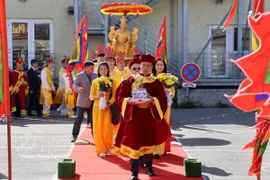
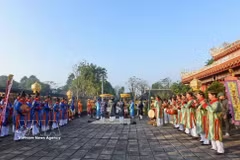
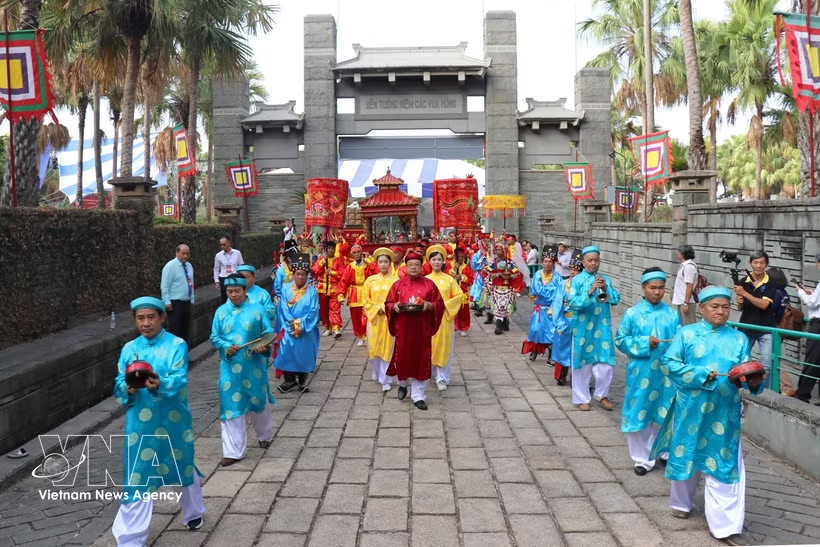
In Ho Chi Minh City, leaders, residents, overseas Vietnamese, students and pupils offered incense and flowers in tribute to the Hung Kings and Nguyen Huu Canh, credited with opening up the Sai Gon – Gia Dinh area. Rituals were conducted with full traditional rites, including ceremonial processions, offerings of banh chung, banh giay (square and round glutinous rice cakes), fruits and southern specialties, and formal sacrificial ceremonies.
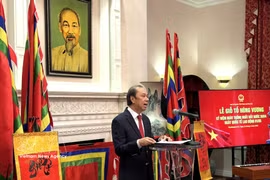
Speaking at the event, municipal Party official Nguyen Phuoc Loc said the act of offering incense reaffirms the sacred value of national origins and the millennia-long tradition of nation-building and defence, while fostering patriotism, self-reliance and responsibility for safeguarding the country.
He noted that as the city enters a new development phase, it is accelerating efforts to become a modern service–industrial hub and a leading centre for the digital economy, governance and society, aiming for a prominent position in Southeast Asia by 2030 and global-city status by 2045. Science, technology, innovation and digital transformation are seen as strategic breakthroughs, with people at the heart of all policies. The year 2026 is designated as a period of acceleration to realise Party Congress goals.
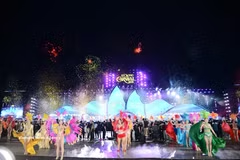
The city also hosted a wide range of cultural activities, including a traditional banh chung wrapping and cooking contest, folk music performances, art programmes and book fairs. A highlight was the 17th “Proud of Dragon and Fairy Descendants” youth camp, featuring incense offerings, tent design contests, cultural performances and a sacred fire procession at the Hung Kings memorial site.
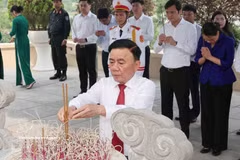
In Ca Mau province, provincial Party Secretary Nguyen Ho Hai led the opening incense ritual at the Hung Kings Temple. Provincial leaders later offered incense and ceremonial items from Ca Mau and Phu Tho provinces, in a solemn atmosphere reflecting deep reverence for the ancestors.
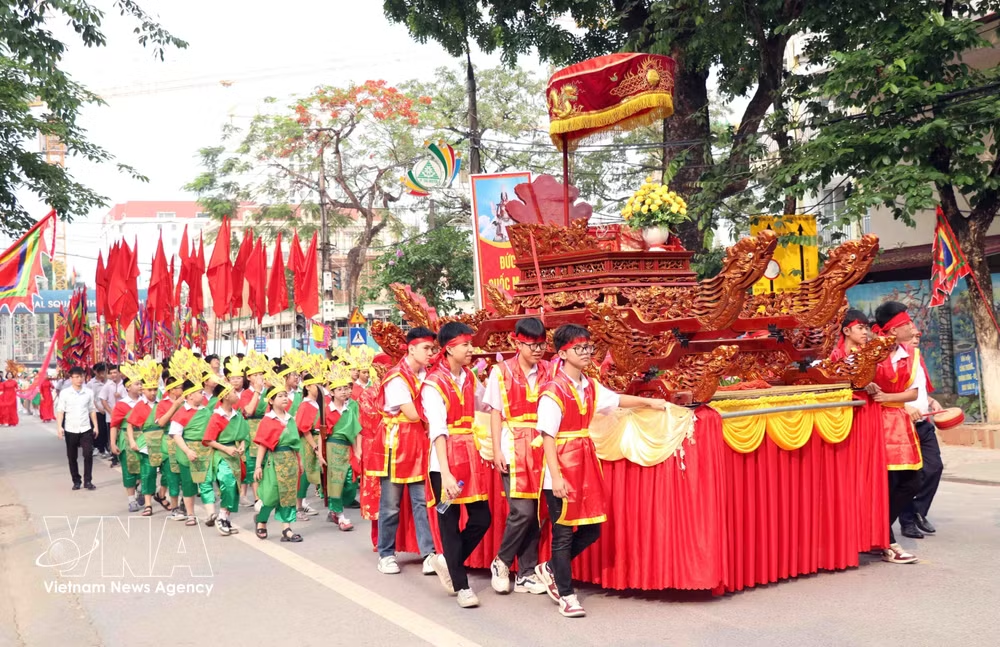
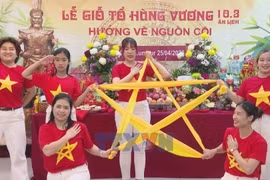
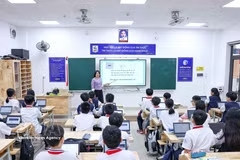
In Thai Nguyen, the Hung Kings worship tradition continues to thrive at the century-old Hung Vuong Communal House. Originally a small shrine, it became a place of Hung Kings worship after 1945 when sacred incense was brought from the Hung Temple in Phu Tho. Each year, hundreds gather here for rituals such as processions and offerings. A notable feature is a performance by students portraying the 100 children of Lac Long Quan and Au Co, symbolising the origin of the Vietnamese people.
Vice Chairman of the People’s Committee of Phan Dinh Phung ward Tran Dinh Thin said the ceremony helps instil patriotism, strengthen national unity, and promote local cultural values to residents and visitors.
In Vinh Long province, a ceremony at the Hung Kings shrine within the provincial museum featured traditional rites, including offerings and incense burning. Chairman of the provincial People’s Committee Tran Tri Quang stressed the importance of building on ancestral traditions to drive local development and international integration.
The province also organised a series of cultural activities at the museum, blending ceremonial and festive elements to engage the public and deepen awareness of national heritage.
Meanwhile, in Lam Dong province, thousands of locals and tourists attended a ceremony at the Au Lac Temple in the Prenn Waterfall tourist area in Da Lat. Festivities included folk performances, traditional games, rural markets and chess competitions, alongside exhibitions on Vietnamese tea culture, calligraphy and folk paintings.
Preparatory events such as flower arrangement and ceremonial offering contests were also held, drawing strong public interest and highlighting enduring traditions of paying tribute to the Hung Kings./.