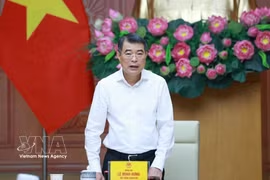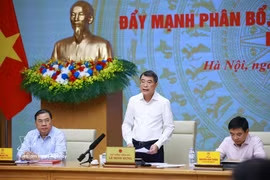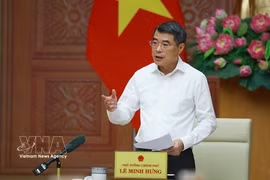
Hanoi (VNA) – Prime Minister Le Minh Hung has urged a fundamental shift in governance mindset – from administrative control to proactive service and facilitation – in a bid to promote production, investment and business activities, as the country pushes towards the double-digit growth target.
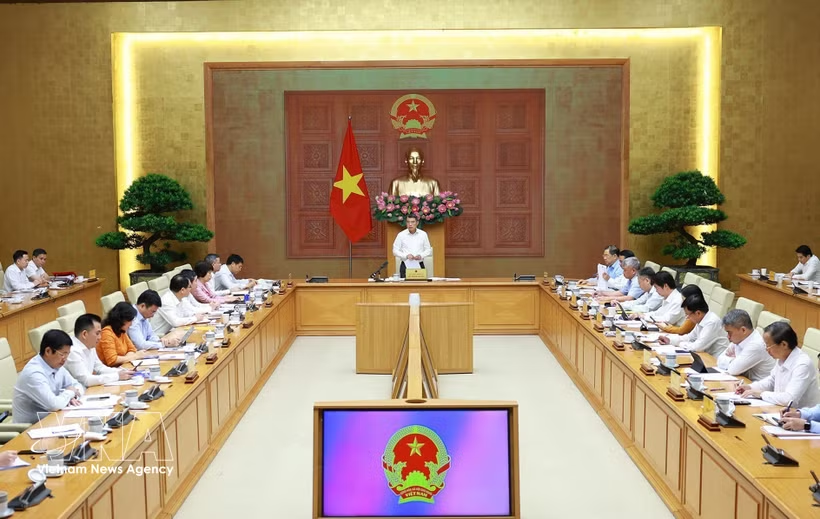
The PM made the request while chairing a working session with the Ministry of Finance on April 29 to review performance in the first months of 2026, and define priorities and policy proposals for the months ahead.
Discussions focused on analysing growth drivers and bottlenecks, improving the mobilisation and allocation of resources, and ensuring the delivery of the double-digit growth target as set in Conclusion 18-KL/TW of the Party Central Committee.
As an advisory body in drafting macroeconomic plans, the Ministry of Finance has taken a more agile policy approach by proposing reforms in fuel taxation, solutions to land issues and long-delayed projects, and support for small enterprises and business households. It has also contributed to improving the investment climate and facilitating start-ups. Notably, in 2025, Vietnam’s stock market was upgraded from frontier to emerging status.
PM Hung acknowledged the ministry’s efforts, particularly since its organisational restructuring, but warned that increasingly volatile global conditions are placing mounting pressure on macroeconomic governance and fiscal policy. He emphasised the Government’s determination to achieve all set targets, including double-digit growth for this year.
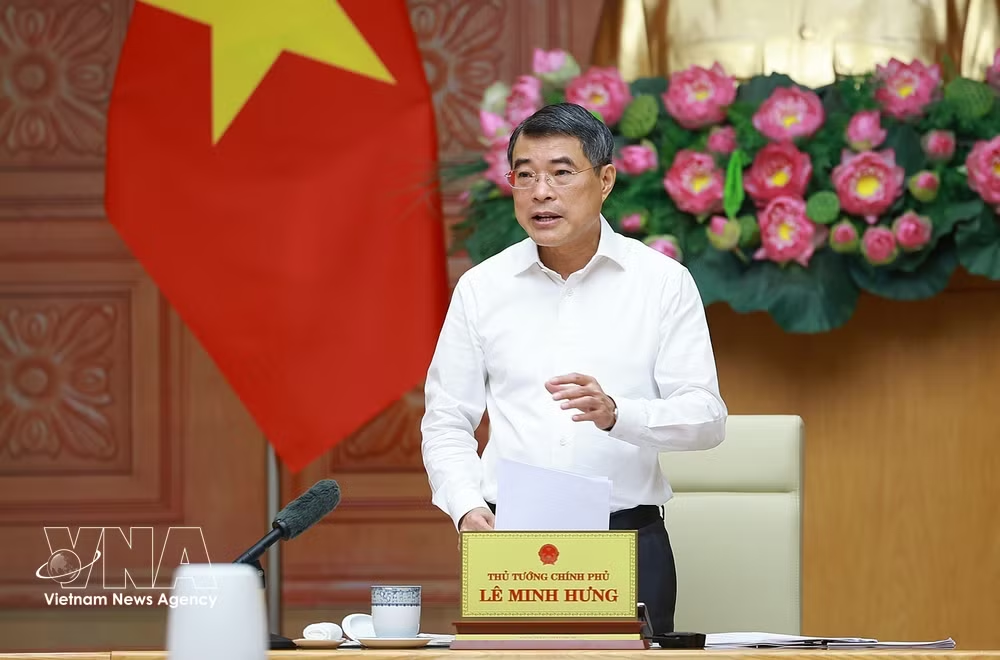
At the core of his directive is the request for a decisive change in mindset, shifting from “managing” to “serving and enabling”. Ministries and agencies, he said, must enhance forecasting capacity, adopt more responsive policy tools, and fundamentally rethink how policies are designed and executed in a rapidly evolving environment.
PM Hung underscored the importance of mobilising both public and private capital, as well as domestic and international ones, to meet development needs, with the required total estimated at 1.7–2 times higher than the previous term, while state budget resources account for only 20–22%.
Priorities include strengthening transparency and discipline in capital markets, accelerating state-owned enterprise equitisation, improving tax administration to prevent revenue losses while broadening the tax base and advancing digital transformation in fiscal governance.
Relevant agencies were tasked with reviewing and assigning growth targets on the national financial plan, public debt borrowing and repayment, and medium-term public investment across key areas, including investment, sectoral growth, digital transformation and technological innovation, for localities and state-owned enterprises for 2026 and the five-year period, with completion required by the end of April.
Legal and institutional reform remains central. The PM ordered a comprehensive review of the legal framework, including proposals to merge the Law on the State Budget and the Law on Public Investment, and to amend key legislation such as the Law on Bidding, the Law on Support for Small and Medium-sized Enterprises, and the Customs Law, ensuring no regulatory gaps.
He asked for strong-enough measures for developing the stock market into a robust medium- and long-term capital channel, alongside amendments to regulations on the corporate bond market and the International Financial Centre. The State Capital Investment Corporation should be restructured and moves be made to set up a national investment fund by the second quarter of 2026.
Public investment discipline will be tightened, with a focus on reducing fragmentation and improving efficiency. The number of centrally funded projects in the 2026–2030 period is set to be cut by at least 30% compared to the previous cycle, with capital concentrated on strategic priorities.
At the same time, the Government leader demanded accelerating reforms to improve the business environment, including cutting administrative procedures, reducing compliance costs and finalising criteria for classifying state-owned enterprises.
Looking ahead, the PM tasked the ministry with developing a plan for building an independent and self-reliant economy closely integrated with global markets by the third quarter of 2026, alongside a broader national development model anchored in science, technology, innovation and digital transformation.
He also stressed the importance of strengthening national reserves and strategic stockpiles, particularly fuel reserves, in coordination with relevant ministries to ensure energy security and resilience against external shocks./.