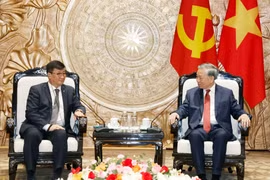
London (VNA) – When Vietnam issued Resolution 70-NQ/TW on ensuring national energy security through 2030, with a vision to 2045, the message went beyond a development plan to reflect a national development vision in an era when energy security is increasingly intertwined with economic security.
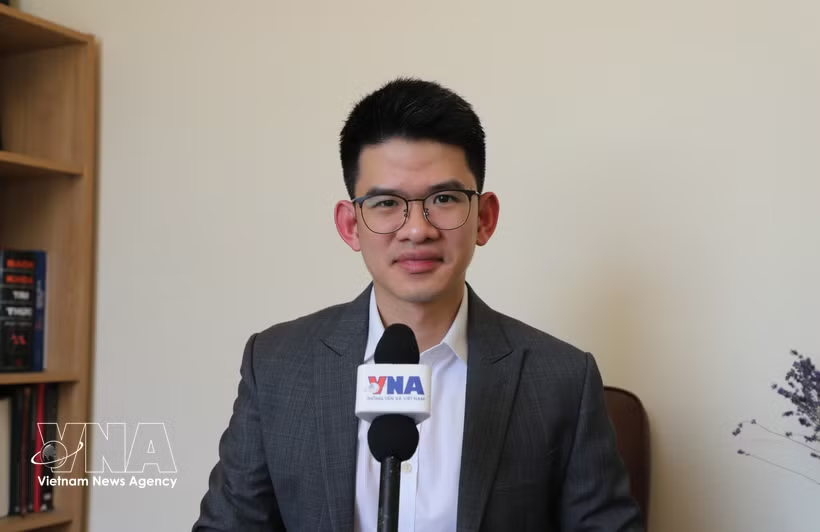
Nguyen Son Tung, an investor at the UK’s M&G Investments and co-founder of the Vietnam Finance and Investment Association in the UK (VIFA), noted that Vietnam sees energy security not just as a technical issue, but a prerequisite for increasing its economic competitiveness and drawing long-term capital.
For foreign investors, policy clarity often matters as much as growth potential. The resolution sets out a concrete roadmap to 2030 and a vision extending to 2045, to deliver steady, quality power to fuel the economy. It is a welcome signal that Vietnam is finally getting serious about building a more sustainable, flexible and resilient power system, Tung said.
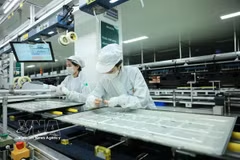
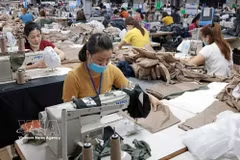
According to him, Vietnam further benefits from a rare regional edge: surging energy demand driven by rapid industrialisation and supply chain relocation. That creates actual market demand, not just forecasts.
Tung pointed out that Vietnam’s appeal comes from the genuine demand for green energy, not just a fad. Clean power is fast becoming essential for manufacturers. When picking new sites, global companies now weigh more than just labour costs and tax incentives, and also consider electricity supply and the capacity to meet international Environmental, Social, and Governance (ESG) standards. In essence, clean energy is now key to national competitiveness, offering both a challenge and an opportunity if Vietnam moves decisively.
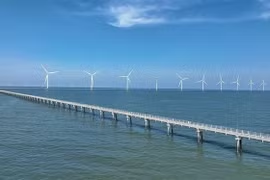
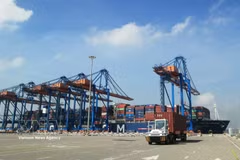
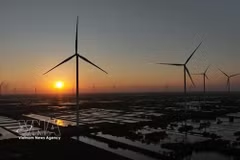
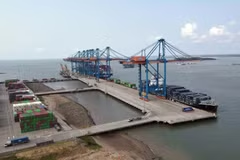
Across the broader region, he said, Southeast Asia is shaping up as the next major battleground for global clean energy capital. And in that scramble, Vietnam has some hard-to-copy advantages: skyrocketing electricity demand from factories, foreign investment, cities growing fast and supply chains shifting; plenty of potential in wind, solar, LNG, pumped hydro and maybe even nuclear down the line; plus clear government promises to boost power capacity while slowly ditching coal.
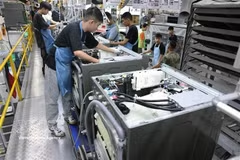
But Tung warned Vietnam can’t lean on cheap labour forever. The country’s future depends on moving up the ladder into hi-tech manufacturing, data centres, semiconductors, modern supply chains, finance, smart cities and upscale consumer goods. All those sectors need reliable, affordable, and increasingly green power.
If Vietnam can actually deliver a reliable, greener and more shock-resilient energy system, it will have a massive leg up on many other emerging markets, he added./.