Ho Chi Minh City (VNA) - Far from being merely symbolic landmarks, a string of gigantic infrastructure projects worth hundreds of trillions of Vietnamese dong, set to break ground during the upcoming Reunification Day celebrations, are poised to deliver a historic boost to Ho Chi Minh City, completely transforming its skyline and the entire southern key economic region.
Mega projects reshaping urban landscape
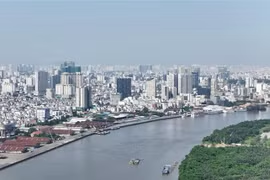
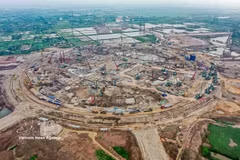
Leading the charge in this massive building spree is the new central city square in the core of the Thu Thiem new urban area. Spanning more than 20 ha, it’s the crown jewel of the Central Square and new administrative center complex.
With the square and riverside park alone expected to cost several trillions of Vietnamese dong, the project is on track to become Vietnam’s biggest public gathering spot, big enough to host major political and cultural events with an international flair. Once finished, it will act as the city’s brand-new “heart,” mixing historical charm with the sleek vibe of a smart modern area.
Designed to hold crowds the size of ten national stadiums, the space won’t just be for big political events; it’s also set to become an iconic architectural showstopper. Blending a cutting-edge square with a lush riverside park, it will create a wide-open public playground where locals can get right up close to the historic Saigon River. Planners see it as the missing piece that will finally turn Thu Thiem into a top-tier regional financial and cultural hotspot.
Just across the river, the major renovation and upgrade of the Ho Chi Minh Museum’s Ho Chi Minh City branch is packed with deep cultural meaning. Breaking ground on the Nha Rong Wharf refurbishment on April 30 is a heartfelt nod to history while turning the site into a world-class cultural and tourism magnet worthy of the city that bears President Ho Chi Minh’s name.
In parallel, the launch of the Berjaya International University Town project is a huge deal for easing the population crunch in the city’s northwest. Planned as a full-scale urban development blending education, research, and innovation, it is expected to house around 135,000 residents and 60,000 students, complete with homes, schools, shops, and all the social amenities. After nearly 20 years of sitting idle since its 2008 investment license, the project has finally been revived and now stands as the biggest development in northwest Ho Chi Minh City. Slated to open in early 2035, it is aiming to become a world-class education–healthcare–commercial hub powerhouse that gives the suburbs a major upgrade.
Another major transport project breaking ground during the holiday is the Ben Thanh–Thu Thiem section of Metro Line 2. Riding high on the success of Ho Chi Minh City Metro Line 1, this new cross-river link tying the historic city centre to Thu Thiem is hugely strategic. The Management Authority for Urban Railways (MAUR) calls it more than just tracks, but a “lifeline” connecting the east and west banks, sparking underground development and urban projects along the route, and setting the stage for the first metro link to Long Thanh International Airport.
A growth lever for new development cycle
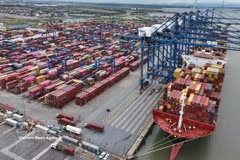
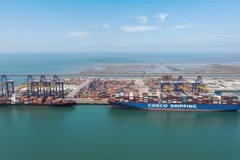
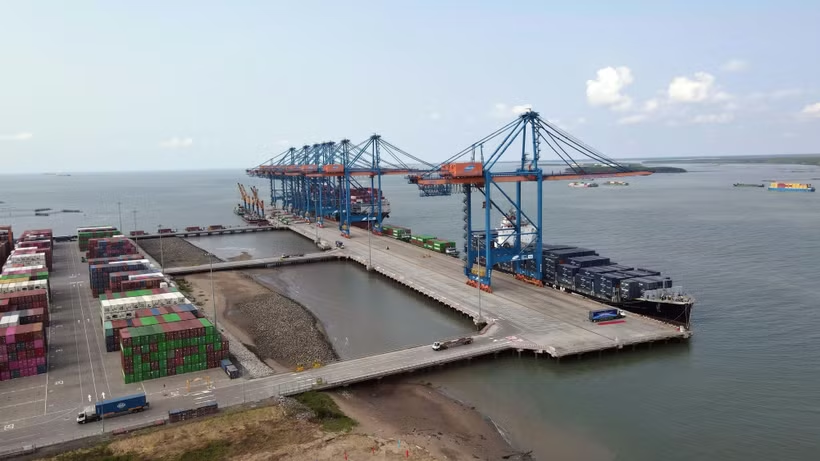
April 30 will also mark a milestone in Ho Chi Minh City’s maritime strategy, with the city expected to hand over the investment approval to the Can Gio International Transshipment Port. The project forms a cornerstone in turning the city into a true maritime urban area. Unlike inner-city ports struggling with traffic jams and few channels, the Can Gio port sits right at the sea entrance and will be able to handle the world’s biggest container ships.
The investor consortium, made up of Vietnam Maritime Corporation, Saigon Port, and MSC Mediterranean Shipping Company, isn’t just building infrastructure, but also laying the groundwork for a top-tier global logistics ecosystem. Best of all, the development is expected to “wake up” Can Gio, flipping it from an agricultural suburb and biosphere reserve into a major global trade gateway.
As part of the bigger maritime infrastructure oadmap, Ho Chi Minh City originally mapped out three major ports for its seaward push. So far, only Can Gio has cleared all the hurdles in time for this round. The other two, Cai Mep Ha General and Container Port (phase 1) and the Cai Mep Gemadept – Terminal Link project (phase 2), are in the final stages and expected to break ground later this year. Once all three are up and running alongside the Ba Ria–Vung Tau port cluster, they’ll create the region’s largest port system, ready to go head-to-head with heavyweights like Singapore and Shanghai.
Tran Anh Tung, head of the Business Administration Faculty at the Ho Chi Minh City University of Economics and Finance, said the massive investment tied to these projects should be seen as a powerful “growth lever”, not just another pile of government spending./.