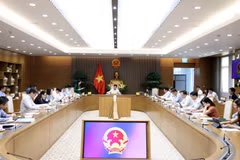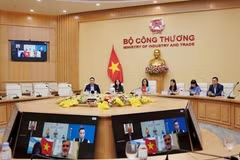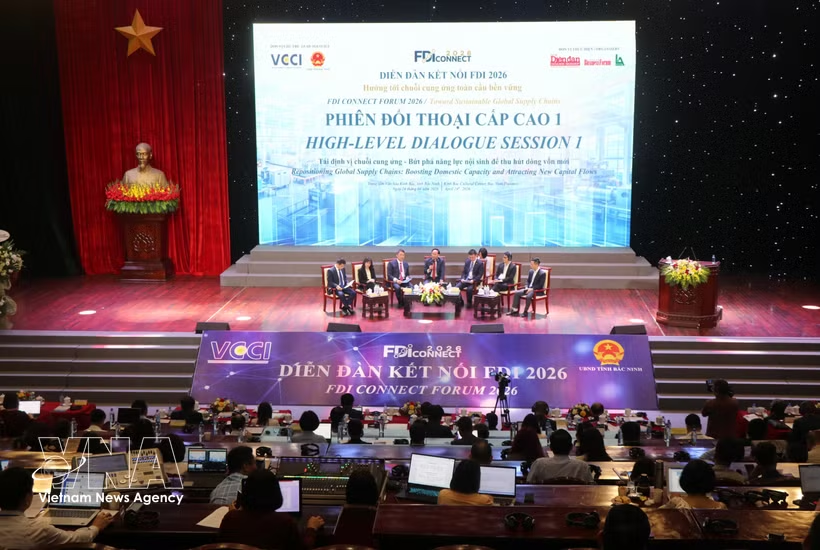
Bac Ninh (VNA) – The FDI Connect Forum 2026, themed “Towards Sustainable Global Supply Chains”, took place in the northern province of Bac Ninh on April 24.
The event, jointly organised by the provincial People’s Committee and the Vietnam Chamber of Commerce and Industry, aimed to support Vietnam’s efforts to achieve the 2026 GDP growth target of at least 10%, transform the country into a regional high-tech hub and reaffirm Bac Ninh’s role as a leader in foreign direct investment (FDI) attraction.
Addressing the forum, VCCI President Ho Sy Hung highlighted Bac Ninh’s position as one of Vietnam’s foremost industrial and FDI centres. He emphasised that the forum provided a platform for businesses to connect and build a transparent, efficient and sustainable investment ecosystem.
The forum served as a space for strategic dialogue where stakeholders shared visions, mobilised resources and explored pathways for deeper integration into global supply chains. It also conveyed Vietnam’s strong commitment to welcoming new waves of investment and partnering with businesses.
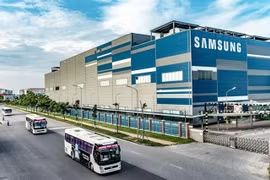
Chairman of the provincial People’s Committee Pham Hoang Son noted that Bac Ninh remains among Vietnam’s top performers in attracting FDI. To date, it has drawn over 3,500 projects from 46 countries and territories, with total registered capital exceeding 49 billion USD. In 2025 alone, the province secured 5.73 billion USD, ranking second nationwide, and continued its strong performance with 1.2 billion USD attracted in the first quarter of 2026. Major international corporations such as Samsung, Foxconn, and Amkor have expanded original investments here.
He underscored that these achievements demonstrate Bac Ninh’s favourable investment environment, highlighting a strategic shift towards selective, high-quality and sustainable FDI attraction. The province aims to develop into a centrally run city, a national hub for electronics and semiconductor industries by 2030, and a green, civilised, culturally rich and liveable city in Asia by 2050.
To realise these goals, Bac Ninh is prioritising the development of strategic infrastructure, including inter-regional transport networks, next-generation industrial parks, logistics and digital infrastructure, and a free trade zone. The province continues to implement a “green lane” mechanism to streamline investment procedures, ensuring transparency, efficiency and rapid project deployment, the official added.
Nguyen Duc Hien, Vice Chairman of the Party Central Committee’s Commission for Policies and Strategies, outlined key orientations for enhancing FDI attraction nationwide and in Bac Ninh. He stressed the importance of developing a synchronised investment ecosystem, shifting from quantity-driven to quality-driven FDI attraction, and strengthening linkages between foreign-invested and domestic enterprises to enhance local firms' capacity and resilience.
He also called for continued institutional reforms to create a more transparent, stable and competitive investment climate, alongside the development of high-quality human resources to meet the demand of next-generation FDI.
The Party and State of Vietnam remain steadfast and consistent in their commitment to fostering a favourable investment environment for all enterprises, including FDI companies, Hien affirmed, calling on foreign investors to maintain confidence in Vietnam’s ongoing reform and economic development, as well as in its localities, including Bac Ninh, and to pursue long-term engagement.
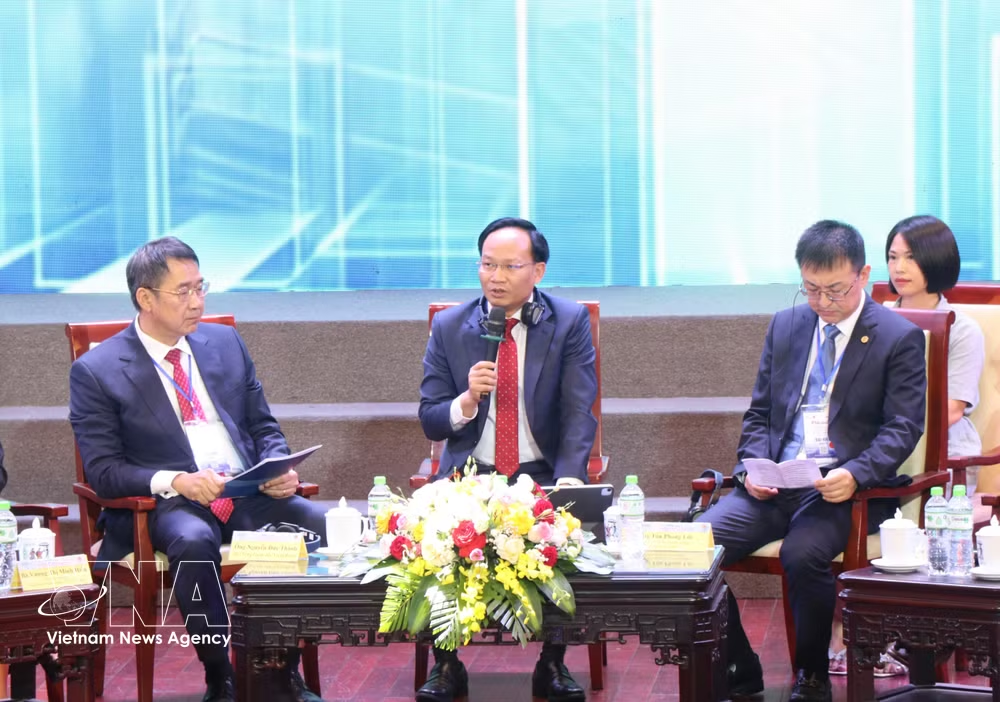
At the forum, two high-level dialogue sessions were held on repositioning supply chains and enhancing domestic capacity, as well as upgrading Vietnamese enterprises to Tier-1 suppliers within FDI value chains. Participants discussed strategies for moving up in global value chains, from assembly to innovation; breakthroughs in industrial infrastructure; green and smart industrial ecosystems; and models of cooperation between FDI and local enterprises, among others.
The forum provided an opportunity for businesses to engage directly with representatives of ministries and local authorities, gain updates on policy orientations and incentives, and expand connections with strategic partners across supply chains./.