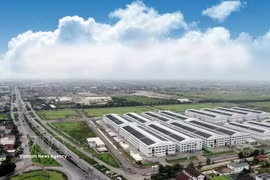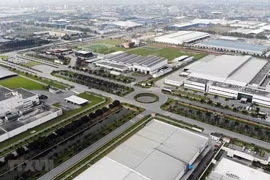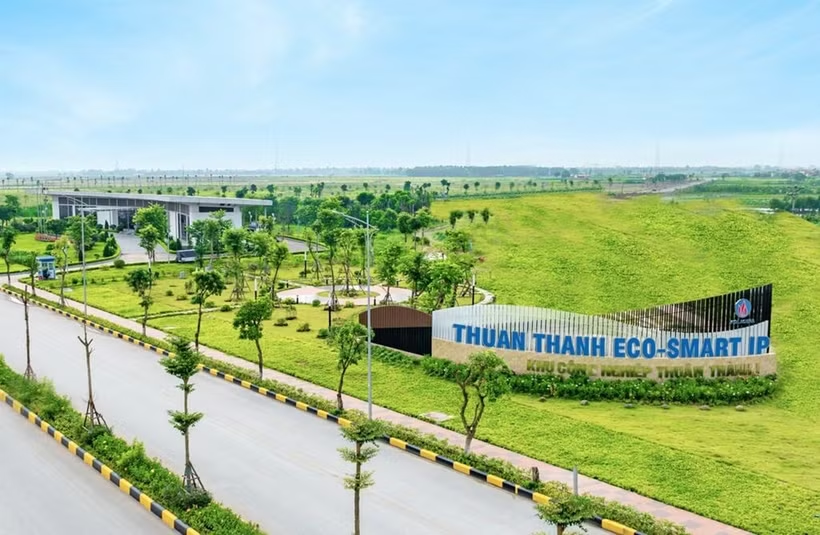
Ho Chi Minh City (VNA) - Ho Chi Minh City is accelerating the development of green, eco-friendly, and smart industrial parks, positioning them as a key platform to attract next-generation foreign direct investment (FDI), strengthen competitiveness, and deepen integration into global supply chains.
As climate change pressures mount and supply chains tighten environmental standards, the transition to green and eco-industrial parks has become a global trend. In Vietnam, the commitment to reach net-zero emissions by 2050 has made the shift from traditional industrial parks to sustainable models a necessity to attract high-quality investment.
A 2025 PwC Vietnam survey on ESG (environmental, social and governance) practices shows 89% of surveyed businesses have committed or plan to commit to ESG within two to four years, up from 80% in 2022.
However, about 60% of firms face difficulties due to a shortage of skilled personnel and expertise. While 82% of businesses have begun collecting ESG data, only 10% can effectively analyse and use it for business decisions or sustainability reporting.
Bui Trung Hieu of the SoiHub Open Innovation Centre said transforming industrial parks into green and smart ecosystems requires new approaches that foster technology investment and collaboration. A pilot model is being implemented within Saigontel’s industrial park ecosystem, integrating consultancy, technology testing and workforce development to improve production environments and attract higher-quality FDI.
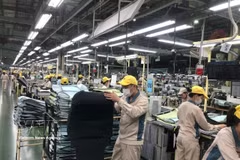
Ho Chi Minh City currently has nearly 60 industrial parks and export processing zones covering about 22,400 hectares. To maintain its competitive edge and capture green investment flows, the city is accelerating the shift from traditional parks to smart, eco-industrial models. Many companies are adopting advanced and environmentally friendly technologies to cut carbon emissions and move toward net-zero goals.
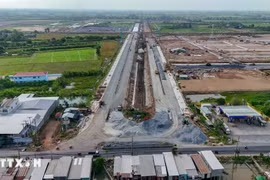
Yet challenges remain. Most industrial parks were established in the 1990s and now face ageing infrastructure, with high renovation costs. Small and medium-sized enterprises remain cautious about the transition due to short-term profit concerns, while many FDI firms still rely on outdated technologies that fall short of ESG standards.
Experts stressed that transitioning to green and eco-industrial parks is no longer an option but a mandatory requirement for businesses in Ho Chi Minh City to avoid being excluded from the global supply chain. Industrial symbiosis where companies share materials, energy, water, waste and by-products can cut energy costs by 10–20% and water use by 20–30%.
The eco-industrial park model at Amata Industrial Park in Dong Nai is often cited as a successful example, meeting 86% of eco-industrial parks standards and reducing around 1,588 tonnes of CO₂ emissions each year.
Nguyen Huu Nghi, Deputy General Director of Amata Bien Hoa Urban JSC, said modern technical infrastructure and shared social services such as healthcare, education and sports facilities help create sustainable industrial-urban ecosystems, enabling businesses to access green finance and meet strict export standards including those under the Carbon Border Adjustment Mechanism (CBAM), the Europe-Vietnam Free Trade Agreement (EVFTA) and the Comprehensive and Progressive Agreement for Trans-Pacific Partnership (CPTPP).
Amata Bien Hoa is also among the industrial parks participating in the Global Eco-Industrial Parks Programme (GEIPP), funded by Switzerland, which promotes circular economy practices and climate impact reduction.
Experts said Ho Chi Minh City should establish clear standards on technology, environment, logistics and value chains, while creating mechanisms to share benefits, risks and data among businesses, authorities and communities.
At the same time, the city needs to strengthen investment in supply chain data systems, smart warehouses, regional logistics centres and inland container depots, while promoting stronger linkages between FDI firms, large domestic companies and small and medium-sized enterprises to support technology transfer and workforce development./.
VNA