Dong Thap (VNA) – Dong Thap province is accelerating efforts to combat illegal, unreported and unregulated (IUU) fishing by strengthening fleet supervision, tightening catch management and enhancing transparency throughout the seafood supply chain, as part of its push toward a more responsible and sustainable fisheries sector.
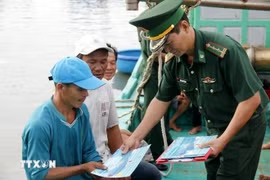
Authorities have expanded targeted outreach programmes, engaging directly with vessel owners, fishermen and related stakeholders. Local officials have been assigned to work closely with fishing communities, supporting compliance with regulations while reinforcing coordination mechanisms to monitor vessel movements at sea and prevent potential violations at an early stage.
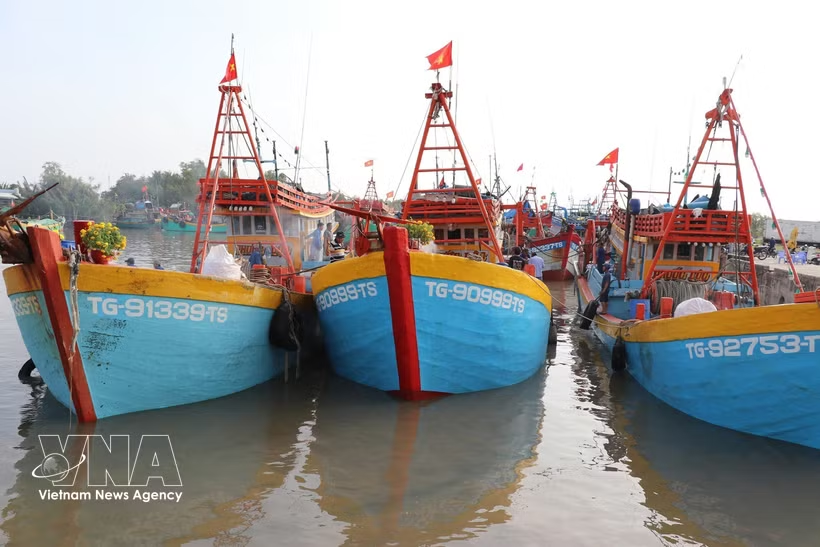
Fleet oversight has been further reinforced through comprehensive reviews aimed at identifying vessels that do not meet operational standards, including those lacking registration, inspection certification, fishing licences or vessel monitoring system (VMS) equipment. Border guards, fishing port authorities and fisheries inspectors have stepped up inspections and strictly prohibited non-compliant vessels from departing ports.
Regulations governing vessel registration, inspection, licensing and identification marking are being rigorously enforced. All operating vessels are required to maintain uninterrupted VMS signals around the clock, from departure until returning to port, ensuring full monitoring compliance.
The province is closely monitoring all fishing vessels, particularly those considered high-risk or operating near sensitive maritime areas. Vessels that lose VMS connectivity for more than six hours or repeatedly over extended periods face strict penalties. High-risk vessel lists are regularly updated on the monitoring platform to enable proactive enforcement.
Controls over transshipment activities at sea have also been tightened, with strict sanctions imposed on illegal fishing practices and on vessels failing to land catches at designated ports as required.
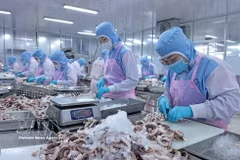
At the same time, Dong Thap continues to rigorously implement catch verification, certification and traceability procedures. Authorities have adopted a zero-tolerance stance toward document falsification, especially for seafood exports bound for the European market.
All landing volumes and port operations are updated in national fisheries data systems, while 100% of catch declarations, verification and certification procedures are now processed via the electronic catch documentation and traceability (eCDT) system, ensuring legality, transparency and full product traceability.
According to the provincial People’s Committee, Dong Thap has largely met key fleet management requirements. All active fishing vessels have installed VMS equipment, while 29 inactive boats remain without installation. All vessels have been integrated into the national fisheries database, with most assigned electronic identification codes, enabling synchronised management from central to local levels.
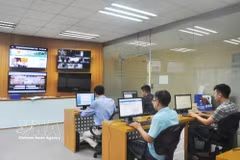
Digital monitoring platforms, including VMS tracking, fisheries databases and electronic fishing logbooks, are operating continuously around the clock.
The province currently operates two Class-II fishing ports, My Tho and Vam Lang, both officially designated and capable of meeting unloading demand. All vessels measuring 15 metres or longer must land catches at designated ports for monitoring and electronic traceability. Since early 2026, the ports have handled 1,727 vessel arrivals, with total landings reaching approximately 2,400 tonnes.
Traceability management has been significantly digitalised, with all verification and certification records processed electronically to minimise fraud risks. Between 2024 and 2025, the province issued hundreds of origin certificates supporting seafood exports, including shipments to the EU.
Dong Thap has also introduced policies supporting livelihood transition and assisting fishermen in upgrading and maintaining VMS connectivity. Notably, since 2024, no local fishing vessels have been recorded violating foreign waters, a significant milestone in the province’s efforts to address IUU fishing challenges./.