Hanoi (VNA) – Vietnam is racing ahead with its energy transition by developing eco-friendly fuels like sustainable aviation fuel (SAF) and sustainable marine fuel oil (SMFO), which supposedly cut CO₂ emissions by as much as 80%.
The whole push lines up perfectly with the goals set out in the Politburo’s Resolution 70-NQ/TW, which targets guaranteed national energy security and reduced greenhouse gases through 2030, with a vision to 2045.
Laying groundwork for commercialising sustainable fuels
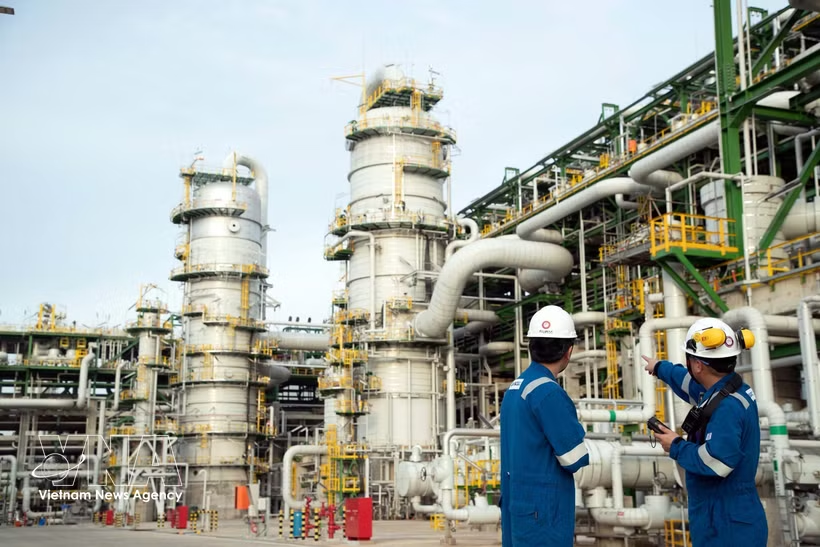
Following the resolution, the Binh Son Refining and Petrochemical JSC (BSR), a subsidiary of state-owned energy giant Petrovietnam, has been hustling to study and roll out SMFO. The goal is to bulk up its lineup of green fuels, which already includes SAF, E10 RON95 bio-petrol and B5/B10 biodiesel.
Cao Tuan Si, Director of the Dung Quat Refinery, called SMFO a practical transitional solution that lets ships cut emissions without requiring major infrastructure or technology overhauls.
BSR is using sustainable components from recycled junk like tire pyrolysis oil (TPO) and plastic pyrolysis oil (PPO) to blend into the new marine fuel. On January 28, the Dung Quat Refinery churned out its first trial batch and pumped it into a ship run by the Petrovietnam Transportation Corporation (PVTrans).
The refinery now claims it can churn out 12,000–15,000 tonnes of SMFO per month, promising a steady supply for the market.
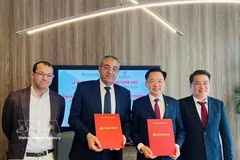
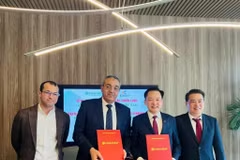
Meanwhile, the Vietnam National Petroleum Group (Petrolimex) inked a deal with the Republic of Korea’s GGenTec to study turning waste oil, plastic and rubber into recycled fuel. The project aims to diversify eco-friendly fuel sources and optimise the value chain from collection and recycling to production and distribution.
Back in 2025, both BSR and Petrolimex rolled out SAF that meets tough global standards. Petrolimex’s version has already fuelled domestic flights for budget carrier Vietjet while BSR’s has gone into Vietnam Airlines planes.
Completing incentives for green fuels
Despite their environmental benefits, turning SAF and SMFO into big business faces major hurdles, mainly because making the stuff costs way more than regular fuels.
Vietnam Airlines admitted that using SAF last year jacked up fuel bills on European routes by nearly 6%, adding an extra 5–6 million USD, as SAF prices are still two to three times higher than traditional jet fuel. With supplies still tight, those costs are only going to climb further as its flight network expands.
Over the next five years, SAF adoption could add around 25 million USD in fuel costs for Vietnam’s aviation sector. Bringing down production costs is therefore critical to scaling up use and meeting the country’s net-zero emissions target by 2050, the Ministry of Construction said.
Globally, many countries have rolled out comprehensive support policies for SAF, including research and development funding, public-private partnership projects, green finance and tax incentives for airlines using sustainable fuels.
Global Head of Sustainability at Air BP Andreea Moyes said SAF remains expensive due to limited feedstock supply and evolving production technologies. Prices should drop as production ramps up and technology improves, but that won’t happen without rock-solid long-term policies to lure investors and plenty more cash poured into research and new feedstocks.
The Vietnamese Ministry of Industry and Trade insisted that pushing SAF isn’t just about hitting net-zero by 2050, but also a golden ticket for big economic wins. It could spark a whole new domestic fuel industry and open doors for exports to the EU and ASEAN. With plenty of farm waste, recycled oil and biomass lying around, Vietnam is well placed to produce SAF at competitive costs and plug itself into global supply chains./.