Hanoi (VNA) – Vietnam’s ambition to sustain annual GDP growth above 10% during 2026–2030 is considered within reach though it will intensify pressure on policy coordination, and the construction sector is expected to take the lead through infrastructure expansion, market stabilisation, and stronger execution.
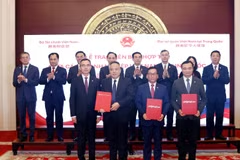
Conclusion No. 18-KL/TW, adopted at the second plenum of the 14th Party Central Committee, sets out not only a “double-digit” growth target but also a structured policy framework measures with clear timelines and accountability. Built on four pillars – institutions, growth drivers, infrastructure, and implementation capacity, it positions institutional reform as the decisive “breakthrough of breakthroughs” for fast and sustainable expansion.
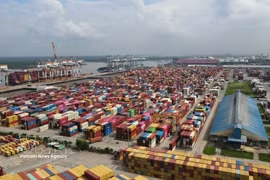
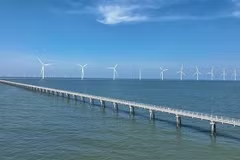
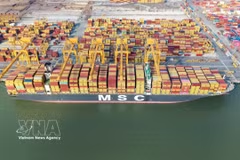
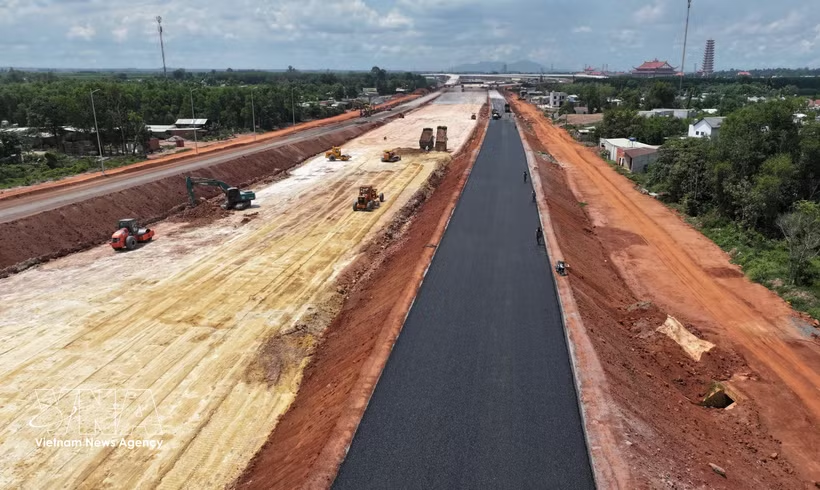
Infrastructure development remains central, with targets including over 5,000 km of expressways by 2030, the North – South high-speed railway, an expanded seaport network, and energy systems, particularly renewables and nuclear power, alongside digital infrastructure and smart cities. Public investment is defined as “seed capital”, to be deployed in a targeted and efficient manner to improve the incremental capital output ratio (ICOR) and stimulate private capital.
Experts note that if delivered effectively, this infrastructure push will not only meet immediate demand but also create new growth poles and reshape the economic landscape, while success will hinge on not only policies but also close coordination across ministries, sectors, and localities.
Against this backdrop, the emphasis shifts from commitment to consistent and system-wide action. The construction sector faces mounting pressure to keep major projects on schedule while managing costs and stabilising markets. Yet, with gains from institutional reform, infrastructure investment, and growth model transformation, it remains well positioned to serve as a key growth engine.
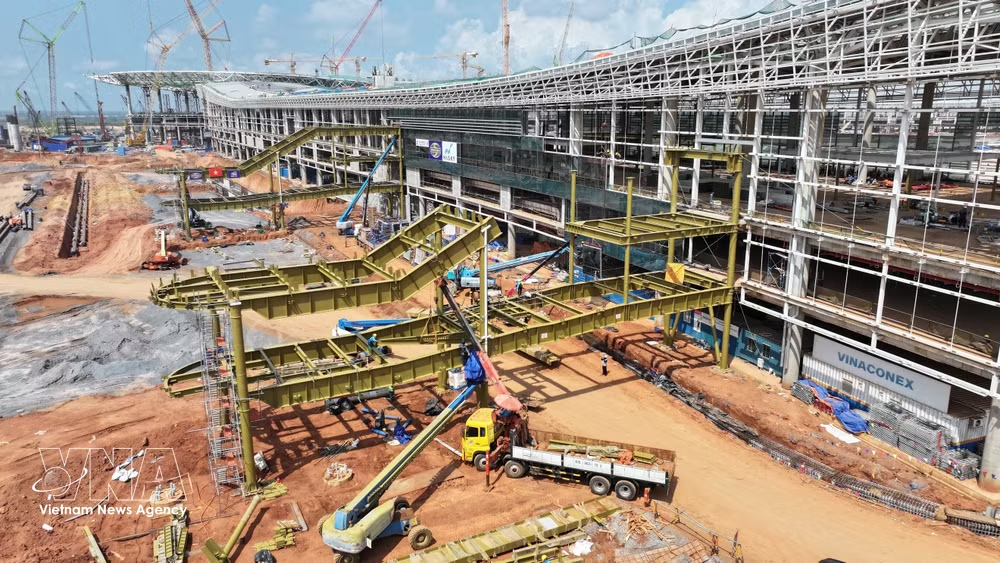
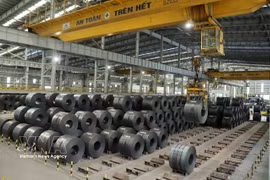
Nguyen The Minh, Deputy Director of the Department of Construction Economics and Investment Management under the Ministry of Construction (MoC), said fluctuations in fuel and material prices are weighing on contractors and project progress. The ministry has responded by advising the Prime Minister to issue directives and urging local authorities to stabilise prices and clamp down on hoarding and speculation.
The MoC is also reviewing bottlenecks to propose broader policies on risk-sharing between the State and businesses, helping sustain growth momentum.
Chief of the MoC’s Office Nguyen Tri Duc reaffirmed the ministry’s commitment to the double-digit growth target as a strategic priority. He said achieving it requires a flexible approach that maintains strict investment discipline, centred on five key tasks.
These include improving investment efficiency by applying stricter assessment based on socio-economic impact and connectivity; accelerating infrastructure development with a public investment disbursement target of over 95%; and restructuring the sector towards sustainability and modernity through new materials, energy efficiency, and digital transformation.
The ministry is also strengthening market oversight to ensure balance in construction materials and real estate while advancing institutional reform through greater decentralisation paired with tighter supervision to shorten project timelines and enhance accountability, Duc noted.
However, implementation remains the critical challenge as the objective extends beyond high growth to building a resilient foundation with synchronised infrastructure, transparent institutions, and strong execution capacity./.