Vietnam eyes becoming region’s leading tourism destination

Vietnam has in recent years undergone a notable transformation in its tourism development strategy, placing a strong emphasis on nature-based and eco-tourism. This shift is not merely aligned with global trends, but represents a necessary step towards safeguarding valuable natural resources, while appealing to a growing segment of environmentally conscious travellers.

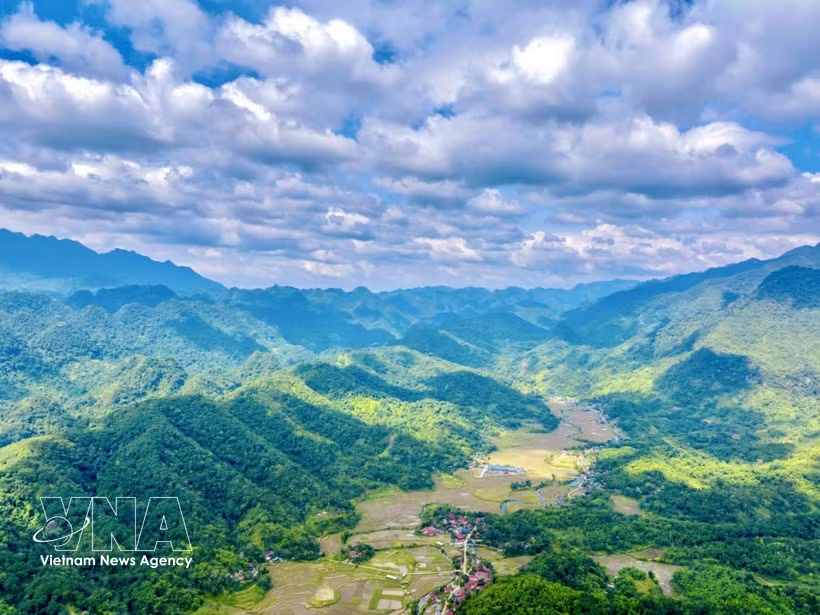
At an elevation of 1,700 metres above sea level, the summit of Pu Luong is increasingly emerging as an ideal destination for trekking - a form of adventure tourism that combines hiking with nature exploration and physical as well as mental endurance. (Photo: VNA)

Hanoi (VNA) – With its rich natural assets and clearly defined policy direction, Vietnam is steadily asserting itself as one of the region’s foremost eco-tourism destinations, striking a balance between economic growth and environmental preservation.

According to the respected travel publication Travel and Tour World (TTW), Vietnam has in recent years undergone a notable transformation in its tourism development strategy, placing a strong emphasis on nature-based and eco-tourism. This shift is not merely aligned with global trends, but represents a necessary step towards safeguarding valuable natural resources, while appealing to a growing segment of environmentally conscious travellers.

Policy as a “green lever”

Recognising both its potential and the challenges ahead, the Vietnamese Government has moved early to shape a sustainable tourism development strategy. The national tourism master plan for 2021–2030, with a vision to 2050, prioritises increasing the share of eco-tourism in tandem with the conservation of natural resources and biodiversity. This direction not only supports economic growth but also calls for minimising environmental impact. Local authorities are encouraged to develop “green tourism” products, while raising awareness among communities and visitors about environmental protection. The integration of development and conservation has become a central guiding principle, helping the industry avoid the pitfalls of overexploitation seen in other parts of the world.

Vietnam is widely regarded as one of the most biodiverse countries globally, ranking among the world’s top 20 in terms of biological resources. A network of more than 30 national parks and dozens of nature reserves stretching from north to south provides a diverse array of destinations.

Sites such as the Phong Nha–Ke Bang, Cuc Phuong and Ba Be National Parks are emerging as key attractions for nature enthusiasts. Visitors are offered not only sightseeing opportunities but also immersive experiences such as trekking, birdwatching, camping and ecological exploration. These activities help foster greater environmental awareness, turning each trip into a journey of learning.
vnanet-hang-en.jpg
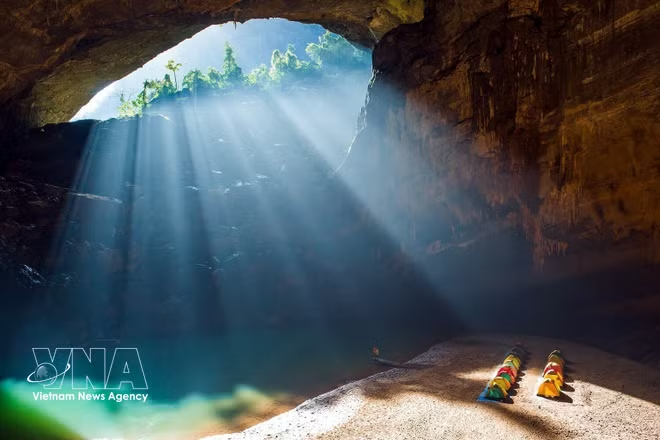
The spectacular and mysterious scenery of En Cave. (Photo: VNA)

Community-based tourism at heart of eco-tourism

One of the defining factors behind Vietnam’s initial success in eco-tourism lies in the active involvement of local communities. Community-based models not only provide livelihoods but also encourage residents to protect natural resources.

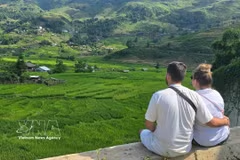
In the famous resort destination of Sa Pa in Vietnam's northern mountainous province of Lao Cai, ethnic minority villages have successfully developed homestays and cultural tourism experiences. Visitors can stay with local families, take part in daily activities and gain deeper insight into indigenous ways of life.

Meanwhile, in the Mekong Delta, eco-tourism linked to riverine landscapes, mangrove forests and agriculture is also gaining momentum. Local residents often serve as guides, directly participating in the tourism value chain, thereby improving incomes and strengthening conservation awareness.

Beyond product development, Vietnamese tourism businesses are also embracing more sustainable practices. Many hotels and resorts are adopting renewable energy, reducing plastic waste and prioritising locally sourced products.

Eco-tourism as a “green driver” of growth

With its abundant natural resources, sound policy direction and strong community engagement, Vietnam is well positioned to become a leading eco-tourism destination in Southeast Asia. Nevertheless, the path ahead will require sustained commitment to environmental protection, careful management of development and continued improvements in service quality. Only by maintaining a balance between utilisation and conservation can eco-tourism truly serve as a “green driver” of growth.

At a time when global travellers are increasingly prioritising sustainable experiences, Vietnam holds advantages to leap. If these opportunities are effectively harnessed, the tourism sector will not only contribute to economic development but also play a pioneering role in protecting nature and preserving heritage for future generations./.


VNA

See more

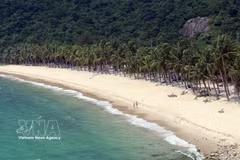
Pristine white-sand beach on Cu Lao Cham Island, Da Nang city, is a magnet for visitors. (Photo: VNA)

Vietnam – a safe destination amid global uncertainties

Despite global tourism headwinds linked to geopolitical conflicts, transport disruptions and surging travel expenses, Vietnam’s tourism sector has sustained strong growth, underscoring the destination’s resilience and rising international profile.

A border guard at the Mong Cai International Border Gate processes exit procedures for passengers at the Bac Luan 1 border gate in Quang Ninh province. (Photo: VNA)

Vietnam, China promote AI application in cross-border tourism cooperation

During the programme, participants will attend intensive courses delivered by AI technology experts, China–ASEAN policy researchers, and tourism specialists. The curriculum focuses on the application of big data in tourism policy planning, the development of cross-border tourism products, and the building of joint tourism brands.

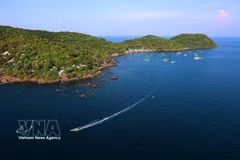
The sea area off the southern coast of Phu Quoc Island. (Photo: VNA)

UK newspaper praises Phu Quoc’s unspoilt charm amid tourism boom

Phu Quoc is positioned as a compelling alternative – even a potential rival to Phuket – for travellers seeking authenticity in Southeast Asia. Its appeal lies not only in scenic beauty and fresh seafood, but also in the harmonious coexistence of modern tourism and enduring local culture.

Foreign tourists in a photo with local residents. (Photo: VNA)

Vietnam serves 6.76 million foreign arrivals in Q1

China and the Republic of Korea (RoK) continued to lead as Vietnam’s largest source markets in the quarter, with 1.4 million and 1.3 million visitors respectively, accounting for around 40% of total arrivals.

Cua Viet beach is a magnet for both locals and visitors during holidays. (Photo: VNA)

Quang Tri seeks to unlock potential of marine tourism’s “golden triangle”

Cua Tung, Cua Viet and Con Co special zone are identified as three key destinations of marine tourism, and to transform this “tourism triangle” into premium and peaceful resorts, a new strategy is needed to enhance attractiveness to high-end travellers seeking private spaces as the strength of these places lies in their pristine and tranquil beauty.

Khanh Hoa province pioneers green, sustainable tourism

Khanh Hoa province pioneers green, sustainable tourism

With its comprehensive transport infrastructure, world-class bays, and a diverse tourism ecosystem, Khanh Hoa is regarded as one of Vietnam’s leading coastal tourism hubs. To rise into the ranks of top destinations in the region and globally, the central province is working to complete strategic infrastructure while attracting investment to develop in-depth and high-end tourism products.

Ngu Ha River (Photo: huengaynay.vn)

Hue city to launch inland water tourism route in Imperial Citadel

The Ngu Ha River, an artificial waterway dating back to the Nguyen Dynasty (1802–1945), runs through the heart of the Imperial City and historically served as a transport route, defensive line, and key landscape axis. In recent years, it has mainly functioned for drainage and environmental regulation. The reopening of the waterway is expected not only to restore its transport role but also to unlock its cultural and scenic value as a heritage river.

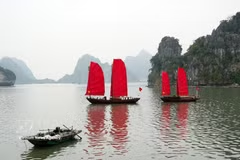
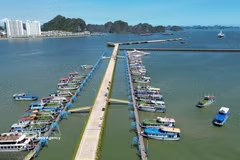
Tourist boats anchored at Ha Long International Cruise Port in Quang Ninh province. (Photo: VNA)

Sea tour launched to connect Ha Long, Lan Ha bays

The new passenger transport scheme, jointly implemented by the two localities, is designed to facilitate seamless travel across the heritage zone and materialise their cooperation commitments following UNESCO’s recognition of the Ha Long Bay–Cat Ba Archipelago complex.

The Hue City People’s Committee holds a ceremony to announce Hue Festival 2026 on January 1, 2026. (Photo: VNA)

Hue unveils vibrant summer festival series to draw April holiday crowds

From April 24 to May 2, the “Imperial Cuisine Space” at the Hue Imperial Citadel will open each afternoon, offering visitors an immersive culinary experience combining royal court gastronomy with traditional local flavours. The venue is expected to become a popular stop before evening tours of the citadel.

Some of famous Vietnamese dishes (Photo: Agoda)

Vietnamese among Asia’s top foodie travellers

The findings, derived from a survey of Asian travellers as part of Agoda’s 2026 Travel Outlook Report, reveal that 35% of Vietnamese travellers cite food as a key reason for travel, placing Vietnam among Asia’s top foodie markets.