Huoi Man – A “sky-high” hamlet where wood and stone architecture reigns

Nestled in the remote border area of Nghe An province, Huoi Man hamlet is often affectionately referred to by local residents and visitors as the “hamlet at the top of the sky.”

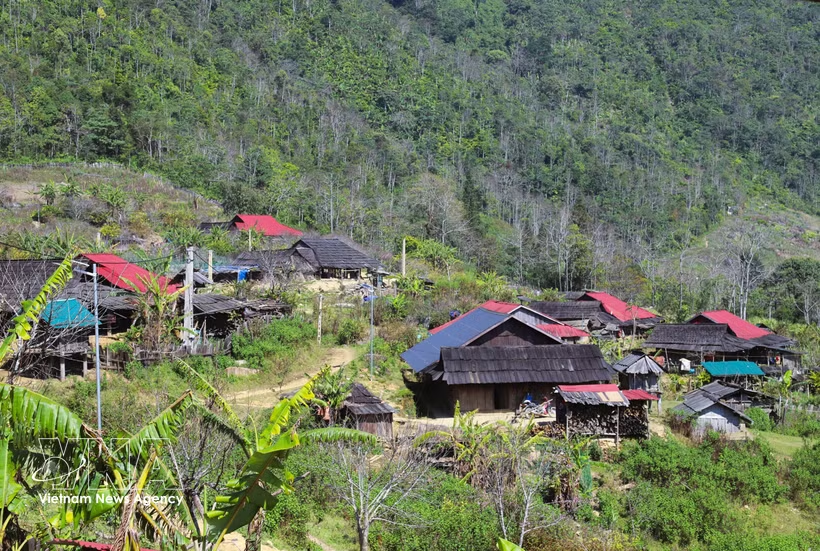
Perched at nearly 1,700 metres above sea level, Huoi Man is home to 21 households with 128 residents of the Mong ethnic minority group. (Photo: VNA)

Nghe An (VNA) – Nestled in the remote border area of Nghe An province, Huoi Man hamlet is often affectionately referred to by local residents and visitors as the “hamlet at the top of the sky.”

Perched at nearly 1,700 metres above sea level, it is one of 21 hamlets in Nhon Mai commune, home to 21 households with 128 residents of the Mong ethnic minority group that have preserved their way of life for nearly eight decades.

Huoi Man stands out not only for its dramatic mountain scenery but also as a “living museum” of indigenous culture. Traditional customs, daily practices, and a resilient work ethic remain deeply rooted in the community’s lifestyle.
vnanet-huoiman2.jpg
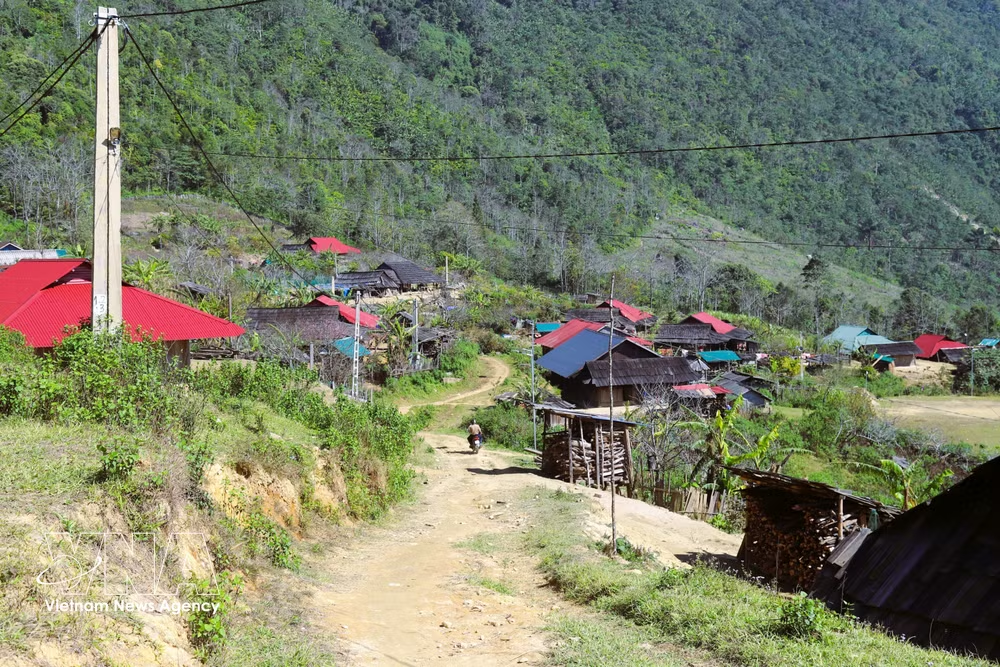
A slope leading to the centre of Huoi Man hamlet (Photo: VNA)

Reaching the hamlet is no easy feat. The journey winds along steep mountain roads, with sheer cliffs on one side and deep valleys on the other. Upon arrival, visitors encounter a strikingly different cultural landscape. There are no modern concrete houses in Huoi Man. Instead, wood and stone dominate every aspect of life. Timber sourced from the forest appears in homes and daily tools, while stone pathways extend into courtyards and kitchens.

The most distinctive feature of the hamlet is its unique “turtle-shell” architecture. Homes are built low and wide, with sturdy wooden walls and roofs crafted from samu (Cunninghamia lanceolata) and pomu (Fokienia hodginsii) timber. Carefully cut and hand-laid, the wooden planks form curved roofs resembling giant turtle shells. Over time, moss blends with the dark wood, giving the houses an ancient, tranquil character. From a distance, the hamlet appears as a cluster of dusky domes emerging from lush green mountains.

According to the head of the hamlet, Gia Ba Lay, the architectural style reflects both aesthetic value and human adaptation to harsh highland conditions. The wooden roofs help keep homes warm in winter and cool in summer, while resisting moisture, frost, and strong winds.
vnanet-huoiman3.jpg
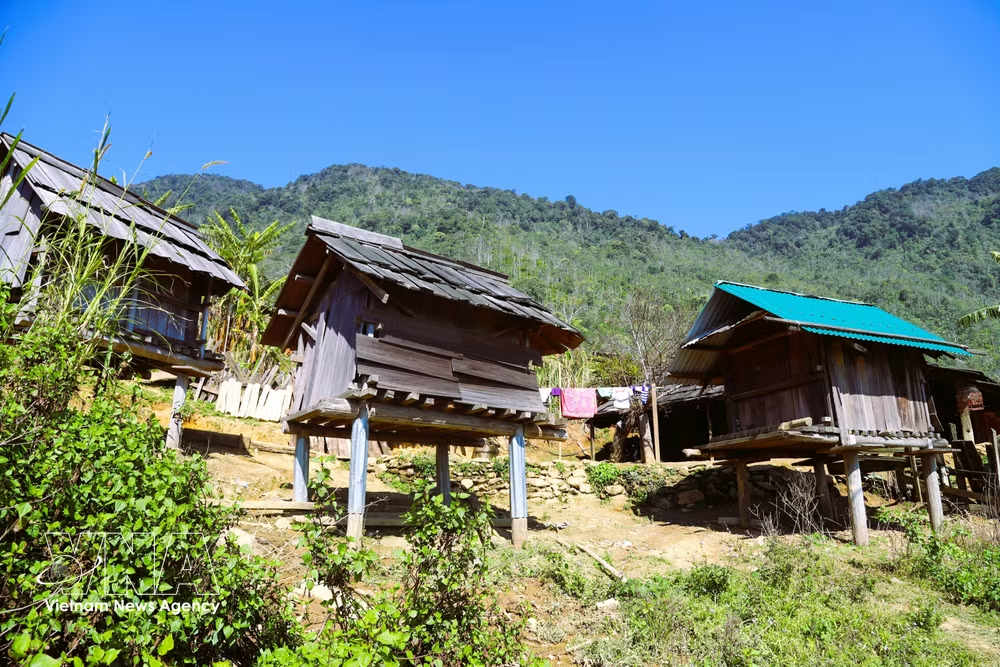
The granaries of Mong people are located separately from the living area and used to store rice, cassava, sweet potatoes, and maize. (Photo: VNA)

Beyond its architecture, Huoi Man preserves a rich repository of intangible cultural heritage. From intricately embroidered traditional costumes and the sound of the ‘khen’ (panpipe) in festivals, to blacksmithing, terrace farming, and food preservation practices, every aspect of life reflects ingenuity and cultural identity. Unique features such as elevated granaries and small hillside fish ponds further illustrate how the community harmonises with nature.

Despite gradual modernisation, including access to electricity and improved infrastructure, Huoi Man continues to safeguard its cultural essence. The hamlet offers a rare sense of tranquility, inviting visitors to experience the rhythm of mountain life and the enduring spirit of the Mong people in the border mountainous area./.
VNA

See more

A representative of Anex Tour Vietnam presents a conical hat to the first passengers arriving in Da Nang from Vladivostok. (Photo: VNA)

Da Nang welcomes first flight from Vladivostok

According to the plan, the programme will run from April 16 to October 23, connecting eight cities across Russia, the CIS, and Belarus with Da Nang. The total number of visitors is expected to reach approximately 25,500, with a maximum frequency of 36 flights per month, equivalent to around 4,800 passengers monthly.

Visitors explore and experience the cultural space of Lo Lo Chai village in Lung Cu commune, Tuyen Quang province. (Photo: qdnd.vn)

Administrative expansion unlocks new momentum for tourism development

Nguyen Thi Hoai, Deputy Director of the Department of Culture, Sports and Tourism of Tuyen Quang, said the expansion of administrative boundaries has opened up new development space for the province, with key tourism products including cultural-historical tourism, ethnic cultural experiences, community-based tourism linked to scenic sites, spiritual tourism, and other distinctive experiential offerings.

At Thung Nham ecological tourism site in Ninh Binh province. (Photo: VNA)

Vietnam’s tourism defies fuel price shock with record Q1 “hat-trick”

According to data released by the National Statistics Office, foreign arrivals in March reached nearly 2.1 million, up 1.3% year-on-year. In total, Vietnam welcomed an estimated 6.76 million foreign tourists in the first quarter, a more than 12% jump from the same period in 2025 and the highest Q1 figure ever recorded.

Visitors scan QR codes at Km0 Ha Giang to access tourism information. (Photo: VNA)

Technology powers tourism growth in mountainous province

Last year, Tuyen Quang welcomed over 3.9 million visitors, and is aiming to attract around 4.1 million arrivals, including around 600,000 foreigners, this year. Tourism continues to be identified as a key economic sector, with development oriented toward sustainability, green growth, and enhanced competitiveness through digitalisation.

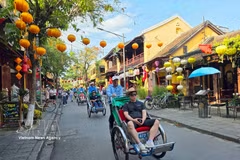
Tourists enjoy a rickshaw tour of Hoi An Ancient Town, Da Nang city. (Photo: VNA)

ITE HCMC 2026 to promote Vietnam’s tourism on global map

With its large scale, the ITE HCMC 2026 aims to promote tourism cooperation between Vietnam and priority markets such as Northeast Asia, Western Europe, North America, Southeast Asia, and Oceania while also boosting visitor arrivals from the Indian market

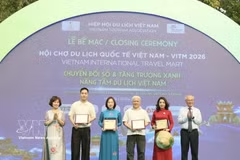
The organisers of VITM 2026 honour sponsors. ( Photo: VNA)

VITM 2026 boosts tourism demand ahead of peak season

According to the organisers, around 4,500 representatives from Vietnamese and international tourism enterprises attended the event, generating more than 25,000 business meetings and partnership exchanges. Approximately 15,000 discounted tours and travel products were offered to visitors.

Traditional dragon procession held on the river in Ninh Binh. (Photo: VNA)

Cultural heritage drives sustainable tourism growth in Ninh Binh

In the first two months of 2026, Ninh Binh welcomed over 5.4 million visitors, up 9.9% year-on-year, generating nearly 5.84 trillion VND (221 million USD) in tourism revenue, up 15.9%. During the 2026 Lunar New Year holiday alone, the province received 2.38 million visitors, an 81.4% increase from the previous year, ranking second nationwide.

Outstanding individuals and firms honoured at VITM 2026 (Photo: VNA)

Outstanding individuals, firms honoured at Vietnam International Travel Mart 2026

In 2025, Vietnam’s tourism sector recorded its highest-ever number of visitors, welcoming more than 21.5 million international arrivals, up more than 20% from 2024, and serving over 135.5 million domestic travellers. Tourism revenue also surpassed 1 quadrillion VND (nearly 38 billion USD). The sector has become a bright spot of the economy, with Vietnam ranking among the world’s fastest-growing tourism destinations.

The Ba Trieu Temple in Thanh Hoa province (Photo: VNA)

Thanh Hoa taps digital transformation to boost heritage tourism

With 28 nationally-recognised intangible cultural heritage elements, Thanh Hoa province has prioritised integrating conservation with tourism development. Digital transformation, in particular, is seen as a crucial bridge connecting tradition with innovation, helping heritage sites become more accessible and engaging.

Pristine white-sand beach on Cu Lao Cham Island, Da Nang city, is a magnet for visitors. (Photo: VNA)

Vietnam – a safe destination amid global uncertainties

Despite global tourism headwinds linked to geopolitical conflicts, transport disruptions and surging travel expenses, Vietnam’s tourism sector has sustained strong growth, underscoring the destination’s resilience and rising international profile.