Mui Ne listed among world’s trending destinations for 2026

Mui Ne was selected among the global top 10 destinations for its ability to deliver highly personalised travel experiences, from leisure retreats to adventure-based activities.

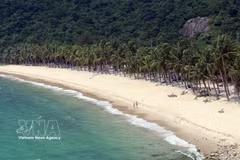
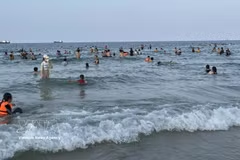
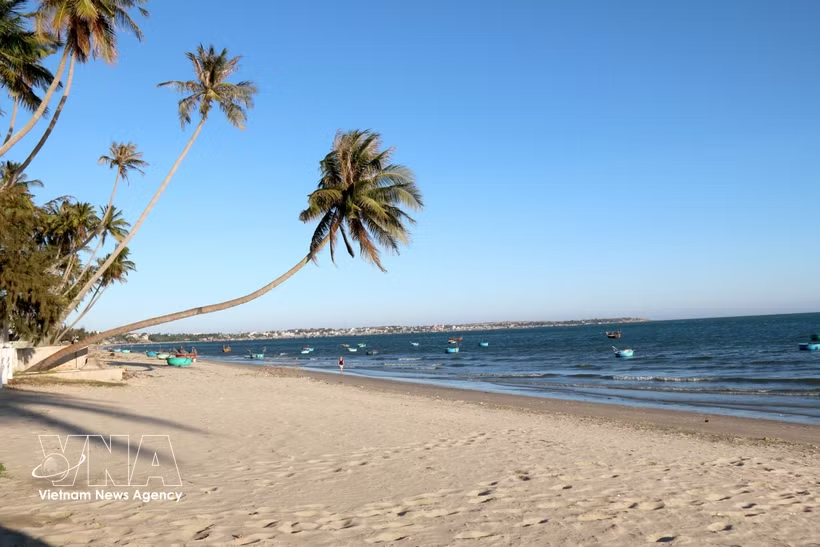
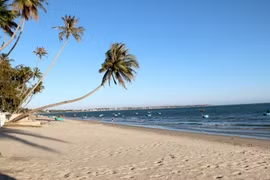
A corner of Mui Ne beach. (Photo: VNA)

Lam Dong (VNA) – Mui Ne has secured a place among the world’s most trending destinations for 2026, according to travel platform Booking.com, which praised the coastal area for its “surreal” landscapes, relaxed atmosphere and status as a hub for sea sports.

The recognition comes from Booking.com’s 10th Travel Predictions report released on April 8, which identifies 2026 as “The Era of You”, a period marked by travellers shifting their focus from choosing destinations to seeking experiences that match personal interests and lifestyles.

Within this trend, Mui Ne was selected among the global top 10 destinations for its ability to deliver highly personalised travel experiences, from leisure retreats to adventure-based activities.

The ranking draws on global search and booking data combined with surveys of tens of thousands of travellers across multiple markets, highlighting destinations that blend distinctive natural settings, authentic local culture and opportunities for exploration.

Booking.com Country Manager for Vietnam Branavan Aruljothi said Mui Ne’s appearance on the list reflects the rising demand for customised travel experiences worldwide. As travel increasingly serves as a means of self-expression, the destination offers a wide range of activities enabling visitors to design journeys tailored to their own preferences, aligning closely with emerging tourism trends, he added.

Alongside its growing international appeal, Mui Ne ranked ninth among the most searched domestic destinations by Vietnamese travellers, moving up one position compared with the previous year.

Mui Ne’s popularity stems from a unique mix of adventure sports, dramatic landscapes such as expansive sand dunes, and upscale beachfront resorts. Accommodation trends also show travellers diversifying their choices, with apartments, guesthouses and serviced residences gaining popularity alongside conventional hotels.

National Geographic previously highlighted Mui Ne’s evolution from a quiet fishing village into one of Southeast Asia’s leading marine sports centres. Its long sandy coastline, consistent winds and distinctive terrain have made it a favourite location for kitesurfing and other water-based activities.

The destination first attracted international attention in 1995, when a total solar eclipse brought thousands of visitors. Since then, rapid tourism development has transformed the area into a major coastal resort destination.

Today, the Mui Ne National Tourism Area features more than 600 accommodation facilities with nearly 18,000 rooms concentrated along the prime coastal belt. Nguyen Dinh Chieu street, stretching eight kilometres, alone hosts 53 resorts, forming one of the country’s most vibrant resort corridors.

Beyond its natural attractions, Mui Ne offers rich cultural experiences, including visits to traditional fishing villages, bustling seafood markets and the Van Thuy Tu relic site, home to thousands of whale skeletons preserved over centuries.

In the 2026 rankings, Mui Ne joins global destinations such as Bilbao, Philadelphia and Guangzhou, highlighting Vietnam’s increasing visibility on the international tourism map amid the growing popularity of personalised travel.

Previously, in Google’s Year in Search 2025 travel rankings, Mui Ne was placed third among the most searched destinations, following Da Lat and An Giang.

With its distinctive landscapes, coastal heritage and diverse adventure offerings, Mui Ne is positioning itself as a leading destination for personalised and experience-driven travel in 2026./.

Mũi Né vào top điểm đến nổi bật toàn cầu 2026

LÂM ĐỒNG

Nền tảng du lịch Booking.com vinh danh Mũi Né trong các điểm đến xu hướng năm 2026 nhờ cảnh quan "siêu thực", nhịp sống yên bình và là "thiên đường" cho các môn thể thao biển.

Mũi Né vào top điểm đến nổi bật toàn cầu 2026

LÂM ĐỒNG

Nền tảng du lịch Booking.com vinh danh Mũi Né trong các điểm đến xu hướng năm 2026 nhờ cảnh quan "siêu thực", nhịp sống yên bình và là "thiên đường" cho các môn thể thao biển.

VNA

See more

Pristine white-sand beach on Cu Lao Cham Island, Da Nang city, is a magnet for visitors. (Photo: VNA)

Vietnam – a safe destination amid global uncertainties

Despite global tourism headwinds linked to geopolitical conflicts, transport disruptions and surging travel expenses, Vietnam’s tourism sector has sustained strong growth, underscoring the destination’s resilience and rising international profile.

A border guard at the Mong Cai International Border Gate processes exit procedures for passengers at the Bac Luan 1 border gate in Quang Ninh province. (Photo: VNA)

Vietnam, China promote AI application in cross-border tourism cooperation

During the programme, participants will attend intensive courses delivered by AI technology experts, China–ASEAN policy researchers, and tourism specialists. The curriculum focuses on the application of big data in tourism policy planning, the development of cross-border tourism products, and the building of joint tourism brands.

The sea area off the southern coast of Phu Quoc Island. (Photo: VNA)

UK newspaper praises Phu Quoc’s unspoilt charm amid tourism boom

Phu Quoc is positioned as a compelling alternative – even a potential rival to Phuket – for travellers seeking authenticity in Southeast Asia. Its appeal lies not only in scenic beauty and fresh seafood, but also in the harmonious coexistence of modern tourism and enduring local culture.

At an elevation of 1,700 metres above sea level, the summit of Pu Luong is increasingly emerging as an ideal destination for trekking - a form of adventure tourism that combines hiking with nature exploration and physical as well as mental endurance. (Photo: VNA)

Vietnam eyes becoming region’s leading tourism destination

Vietnam has in recent years undergone a notable transformation in its tourism development strategy, placing a strong emphasis on nature-based and eco-tourism. This shift is not merely aligned with global trends, but represents a necessary step towards safeguarding valuable natural resources, while appealing to a growing segment of environmentally conscious travellers.

Foreign tourists in a photo with local residents. (Photo: VNA)

Vietnam serves 6.76 million foreign arrivals in Q1

China and the Republic of Korea (RoK) continued to lead as Vietnam’s largest source markets in the quarter, with 1.4 million and 1.3 million visitors respectively, accounting for around 40% of total arrivals.

Cua Viet beach is a magnet for both locals and visitors during holidays. (Photo: VNA)

Quang Tri seeks to unlock potential of marine tourism’s “golden triangle”

Cua Tung, Cua Viet and Con Co special zone are identified as three key destinations of marine tourism, and to transform this “tourism triangle” into premium and peaceful resorts, a new strategy is needed to enhance attractiveness to high-end travellers seeking private spaces as the strength of these places lies in their pristine and tranquil beauty.

A corner of the Phu Quy special zone in Lam Dong province (Photo: VNA)

Phu Quy moves to unlock potential as premier marine tourism hotspot

Under a resolution of the provincial Party Congress for the 2025–2030 term, the locality prioritises spatial planning of the marine economy, focusing on emerging sea-based industries linked with environmental protection and national defence. Located 56 nautical miles offshore, Phu Quy is a central pillar of this vision.

Khanh Hoa province pioneers green, sustainable tourism

Khanh Hoa province pioneers green, sustainable tourism

With its comprehensive transport infrastructure, world-class bays, and a diverse tourism ecosystem, Khanh Hoa is regarded as one of Vietnam’s leading coastal tourism hubs. To rise into the ranks of top destinations in the region and globally, the central province is working to complete strategic infrastructure while attracting investment to develop in-depth and high-end tourism products.

Ngu Ha River (Photo: huengaynay.vn)

Hue city to launch inland water tourism route in Imperial Citadel

The Ngu Ha River, an artificial waterway dating back to the Nguyen Dynasty (1802–1945), runs through the heart of the Imperial City and historically served as a transport route, defensive line, and key landscape axis. In recent years, it has mainly functioned for drainage and environmental regulation. The reopening of the waterway is expected not only to restore its transport role but also to unlock its cultural and scenic value as a heritage river.