Vietnam named among world’s 28 most beautiful countries

In its latest list, the US-based magazine noted that while cities like Hanoi and Ho Chi Minh City attract millions of visitors each year, Vietnam’s true allure lies in its diverse natural landscapes and immersive travel experiences. The country, it said, is “a haven for outdoor enthusiasts” and anyone drawn to scenic beauty.

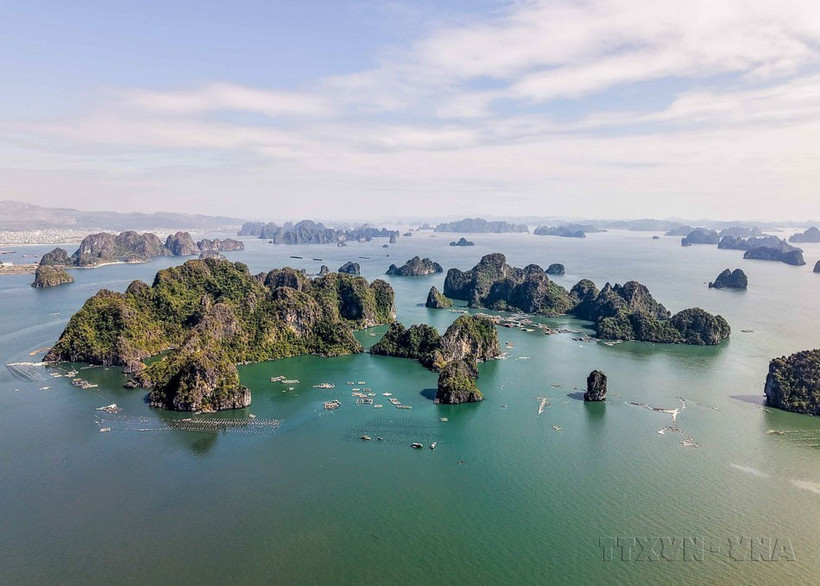
Ha Long Bay, located in northeast Vietnam, is beloved for its blue waters and spread of limestone islands - all occupied by tropical trees and wildlife. (Photo: VNA)

Hanoi (VNA) – Vietnam has been named among the world’s 28 most beautiful countries by Condé Nast Traveler, reinforcing its growing appeal as a premier destination for nature lovers and outdoor enthusiasts.

In its latest list, the US-based magazine noted that while cities like Hanoi and Ho Chi Minh City attract millions of visitors each year, Vietnam’s true allure lies in its diverse natural landscapes and immersive travel experiences. The country, it said, is “a haven for outdoor enthusiasts” and anyone drawn to scenic beauty.

Among the highlights is Ha Long Bay, located in northeast Vietnam and beloved for its blue waters and spread of limestone islands - all occupied by tropical trees and wildlife.

In the northeast, Ha Giang has breathtaking mountain scenery criss-crossed with steep rice terraces and hiking trails. On the southern coast, Ninh Van Bay has great snorkeling and diving.

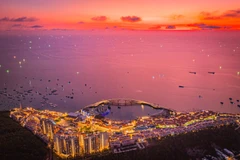
"And you can always hop on a quick flight and spend a few days on Phu Quoc, a jungle-draped island off Vietnam’s southwestern coast," the magazine said.
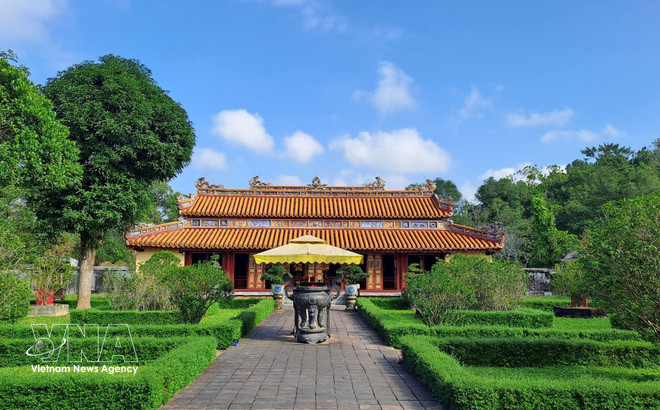
vnanet-hue.jpg
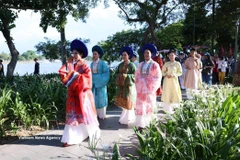
Minh Thanh Palace is part of the Gia Long royal tomb complex in Hue city. (Photo: VNA)

Beyond Vietnam, Condé Nast Traveler’s list features a wide range of destinations celebrated for their natural and cultural beauty, including China, Australia, Brazil, India, the United States, Canada, Mexico, France, Indonesia, Japan, South Africa, and New Zealand, among others.

The recognition comes amid strong momentum in Vietnam’s tourism recovery and growth following the COVID-19 pandemic. According to the Vietnam National Authority of Tourism, the country has entered a new phase of expansion in both scale and quality.

In 2025, Vietnam welcomed nearly 21.2 million international arrivals, up 20.4% year-on-year and 17.8% higher than pre-pandemic levels in 2019. This marked the first time the country surpassed the 21-million threshold, signalling a significant milestone for the industry.
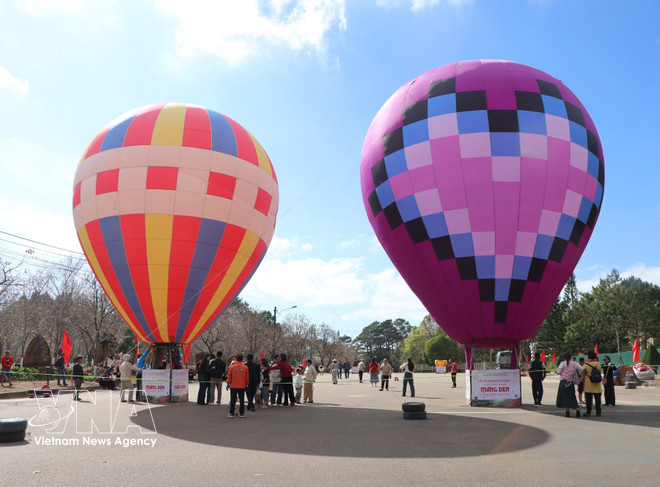
vnanet-quang-ngai-hang-nghin-du-khach-xong-dat-mang-den-8507943.jpg
Tourists participate in a hot air balloon festival in Mang Den, Kon Tum province. (Photo: VNA)

Growth has continued into 2026, with January alone seeing a record of nearly 2.5 million foreign visitors, the highest monthly figure ever recorded. The surge reflects not only increased travel demand but also rising confidence among international tourists.

Asia remains the largest source market, accounting for nearly 80% of total arrivals, with China and the Republic of Korea playing key roles. Meanwhile, Europe has shown notable growth, particularly from markets such as Poland, the Czech Republic, and Switzerland, supported by more open visa policies.

Visa facilitation has been a critical driver, with expanded exemptions, longer stays, and multiple-entry e-visas making Vietnam more accessible. At the same time, improved air connectivity, especially long-haul direct routes, has strengthened links with distant markets.

Tourism diversification is also reshaping the sector. In addition to traditional offerings such as beach, cultural, and nature tourism, Vietnam is increasingly promoting high-value segments including MICE, wellness, golf, railway, and film tourism.

Equally important is the country’s stable socio-political environment, which has helped position Vietnam as a safe, friendly, and sustainable destination.

The inclusion in Condé Nast Traveler’s prestigious list, alongside recognition from other international publications such as British magazine Time Out which recently ranked Hanoi and Ho Chi Minh City among the 50 best cities in the world in 2026.

With a target of welcoming 25 million international visitors in 2026, Vietnam’s tourism sector is poised for further breakthroughs, leveraging its natural beauty, cultural richness, and improving accessibility to attract travellers from around the world./.

VNA

See more

The organisers of VITM 2026 honour sponsors. ( Photo: VNA)

VITM 2026 boosts tourism demand ahead of peak season

According to the organisers, around 4,500 representatives from Vietnamese and international tourism enterprises attended the event, generating more than 25,000 business meetings and partnership exchanges. Approximately 15,000 discounted tours and travel products were offered to visitors.

Traditional dragon procession held on the river in Ninh Binh. (Photo: VNA)

Cultural heritage drives sustainable tourism growth in Ninh Binh

In the first two months of 2026, Ninh Binh welcomed over 5.4 million visitors, up 9.9% year-on-year, generating nearly 5.84 trillion VND (221 million USD) in tourism revenue, up 15.9%. During the 2026 Lunar New Year holiday alone, the province received 2.38 million visitors, an 81.4% increase from the previous year, ranking second nationwide.

Outstanding individuals and firms honoured at VITM 2026 (Photo: VNA)

Outstanding individuals, firms honoured at Vietnam International Travel Mart 2026

In 2025, Vietnam’s tourism sector recorded its highest-ever number of visitors, welcoming more than 21.5 million international arrivals, up more than 20% from 2024, and serving over 135.5 million domestic travellers. Tourism revenue also surpassed 1 quadrillion VND (nearly 38 billion USD). The sector has become a bright spot of the economy, with Vietnam ranking among the world’s fastest-growing tourism destinations.

The Ba Trieu Temple in Thanh Hoa province (Photo: VNA)

Thanh Hoa taps digital transformation to boost heritage tourism

With 28 nationally-recognised intangible cultural heritage elements, Thanh Hoa province has prioritised integrating conservation with tourism development. Digital transformation, in particular, is seen as a crucial bridge connecting tradition with innovation, helping heritage sites become more accessible and engaging.

Pristine white-sand beach on Cu Lao Cham Island, Da Nang city, is a magnet for visitors. (Photo: VNA)

Vietnam – a safe destination amid global uncertainties

Despite global tourism headwinds linked to geopolitical conflicts, transport disruptions and surging travel expenses, Vietnam’s tourism sector has sustained strong growth, underscoring the destination’s resilience and rising international profile.

A border guard at the Mong Cai International Border Gate processes exit procedures for passengers at the Bac Luan 1 border gate in Quang Ninh province. (Photo: VNA)

Vietnam, China promote AI application in cross-border tourism cooperation

During the programme, participants will attend intensive courses delivered by AI technology experts, China–ASEAN policy researchers, and tourism specialists. The curriculum focuses on the application of big data in tourism policy planning, the development of cross-border tourism products, and the building of joint tourism brands.

The sea area off the southern coast of Phu Quoc Island. (Photo: VNA)

UK newspaper praises Phu Quoc’s unspoilt charm amid tourism boom

Phu Quoc is positioned as a compelling alternative – even a potential rival to Phuket – for travellers seeking authenticity in Southeast Asia. Its appeal lies not only in scenic beauty and fresh seafood, but also in the harmonious coexistence of modern tourism and enduring local culture.

At an elevation of 1,700 metres above sea level, the summit of Pu Luong is increasingly emerging as an ideal destination for trekking - a form of adventure tourism that combines hiking with nature exploration and physical as well as mental endurance. (Photo: VNA)

Vietnam eyes becoming region’s leading tourism destination

Vietnam has in recent years undergone a notable transformation in its tourism development strategy, placing a strong emphasis on nature-based and eco-tourism. This shift is not merely aligned with global trends, but represents a necessary step towards safeguarding valuable natural resources, while appealing to a growing segment of environmentally conscious travellers.

Foreign tourists in a photo with local residents. (Photo: VNA)

Vietnam serves 6.76 million foreign arrivals in Q1

China and the Republic of Korea (RoK) continued to lead as Vietnam’s largest source markets in the quarter, with 1.4 million and 1.3 million visitors respectively, accounting for around 40% of total arrivals.

Cua Viet beach is a magnet for both locals and visitors during holidays. (Photo: VNA)

Quang Tri seeks to unlock potential of marine tourism’s “golden triangle”

Cua Tung, Cua Viet and Con Co special zone are identified as three key destinations of marine tourism, and to transform this “tourism triangle” into premium and peaceful resorts, a new strategy is needed to enhance attractiveness to high-end travellers seeking private spaces as the strength of these places lies in their pristine and tranquil beauty.