Ho Chi Minh City leverages brand heritage to boost tourism

As the tourism sector is striving to meet the targets set in the Ho Chi Minh City Tourism Development Plan to 2030, connecting “brand heritage” is emerging as a "key" to creating distinctive tourism products.

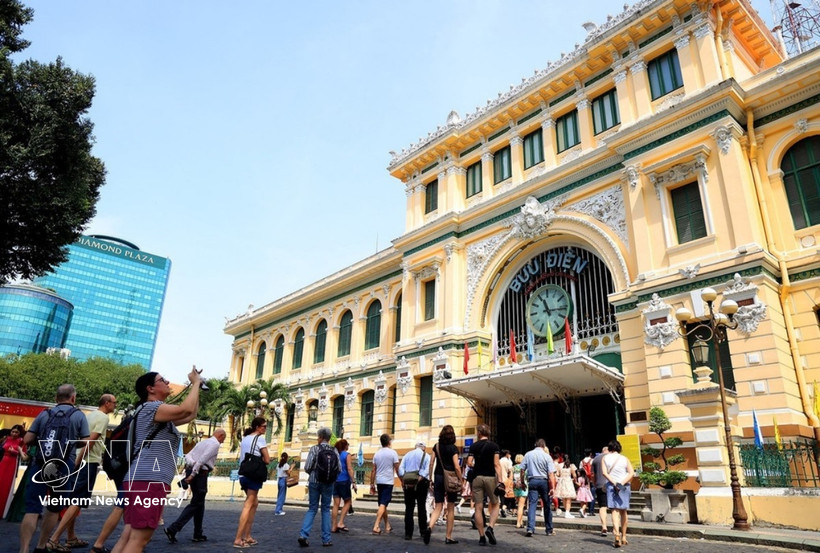
The Saigon Central Post Office in downtown Ho Chi Minh City draws international visitors. (Photo: HVNA)

Ho Chi Minh City (VNA) – As the tourism sector is striving to meet the targets set in the Ho Chi Minh City Tourism Development Plan to 2030, connecting “brand heritage” is emerging as a "key" to creating distinctive tourism products. Municipal authorities are therefore seeking to integrate historical, industrial and technological elements with experiential learning to develop new destinations for both domestic and international visitors.

According to Nguyen Huu An, Deputy Head of the Tourism Resource Planning and Development Division under the municipal Department of Tourism, the sector is under pressure to diversify tourism services and introduce unique products to support the city’s goal of achieving double-digit growth in 2026. In response, the department has conducted surveys to explore industrial tourism experiences, aiming to turn long-standing brand heritage into products with high economic value.

To realise this model, close coordination among manufacturers, travel firms and tourism experts is required. Developing industrial tourism is expected not only to boost tourism revenue but also to help preserve and promote the value of long-established Vietnamese brands. It also contributes to shaping the locality as a destination for entertainment and leisure while strengthening its image as a hub of knowledge, heritage and sustainable innovation.
vnanet-122216-ho-12-20-15-9.jpg
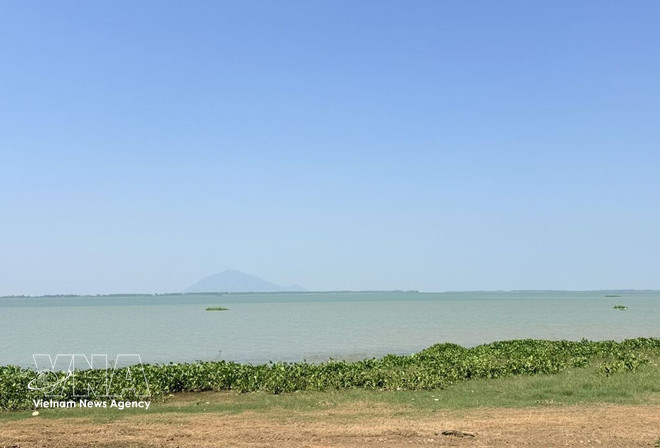
Dau Tieng Lake, the largest artificial lake in Vietnam and Southeast Asia. (Photo: VNA)

A survey of Vissan Joint Stock Company identified the company as a potential industrial tourism site thanks to its more than 55-year history closely linked to the city’s urban life. With modern production processes, well-developed infrastructure and a wide range of branded products, the facility could become an attractive destination for educational tours and culinary experiences.

Similarly, cultural spaces and technological landmarks in Dong Hung Thuan and Trung My Tay wards are being assessed for their potential to form new tourism products. Tourism enterprises participating in field surveys have noted that the north-western area of the city still holds an underexplored “reservoir” of tourism resources, including historical relics, cultural sites and distinctive destinations that could form the basis for new tourism products if properly invested.

Among notable sites is Quang Trung Software Park, a symbol of innovation and technological development that offers a different perspective on tourism compared with traditional historical attractions. Experts suggested that building interconnected tourism routes linking these destinations with neighbouring areas would be more effective than developing individual sites in isolation.

Travel firms have also proposed designing package tours that combine industrial tourism with visits to historical landmarks, thereby creating more appealing travel itineraries. However, for industrial facilities to become tourism products, infrastructure upgrades such as separate visitor pathways, heritage exhibition areas and interactive culinary spaces are needed to ensure professional experiences without disrupting production activities.

Meanwhile, Saigontourist Group has conducted surveys in Dau Tieng commune and surrounding areas to assess tourism potential, infrastructure conditions and service capacity. Sites such as Dau Tieng lake, Cau mountain, Thai Son pagoda and a historical exhibition on French-era rubber plantations were evaluated for their potential to support new tourism products and expand the city’s tourism space.

Local authorities said that following administrative restructuring in 2025, Dau Tieng commune now has favourable conditions to develop eco-tourism, resort tourism and nature-based experiences. Surveys carried out since early 2026 have opened up prospects for forming new tourism products and promoting inter-district tourism routes through cooperation among the Department of Tourism, businesses and local administrations.

These efforts are expected to create new opportunities for more professional tourism planning at ward and commune levels, contributing to destination development and human resource training to meet the needs of both domestic and international visitors./.

VNA

See more

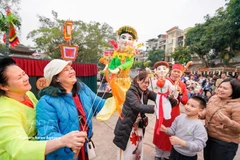
The Hanoi Tourism Festival 2026 at Thong Nhat Park attracts large numbers of residents and visitors for sightseeing and hands-on experiences. (Photo: VNA)

New highlights define Hanoi Tourism Festival 2026

The festival featured nearly 100 booths designed as a journey through diverse themed spaces. The space of memory highlights heritage sites, the Old Quarter, architecture, traditional craft villages and Hanoi’s cultural life through destination models, photography exhibitions and fine art displays. The connection space provides a platform for travel businesses to introduce new tours, promotional programmes and attractive discount vouchers.

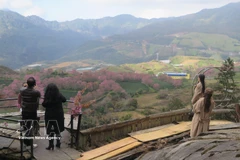
Visitors experience the Ta Nang–Phan Dung trekking route. (Photo: nhandan.vn)

Vietnam taps trail tourism potential

The trend of nature exploration tourism, particularly hiking in mountainous areas, is gaining momentum across Asia, especially among young people. In Vietnam, more young travellers are choosing short weekend trips to explore forests, mountains and local ecosystems.

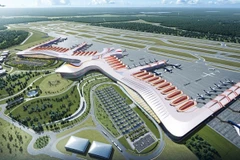
Passenger Terminal T2 draws inspiration from the Phoenix.

Singapore’s CPG Consultants designs Phu Quoc Airport – A world-class vision for the Pearl Island’s gateway

CPG Consultants, a subsidiary of CPG Corporation, an internationally renowned multidisciplinary consultancy group headquartered in Singapore, is the design firm for Phu Quoc International Airport. The project is led by Mr. Steven Thor, Executive Vice President (Global Atelier Collective) at CPG Consultants. He has more than 30 years of experience in international design and has worked on multiple award-winning developments, including large-scale infrastructure projects across several countries.

Phu Quoc is becoming a crossroad for the world's architectural marvels

The allure of Phu Quoc’s timeless architectural DNA

Phu Quoc’s architectural allure doesn't merely stop at honoring the past; it actively creates "contemporary heritage" that cements the Pearl Island's name on the map. A shining example is the Kiss Bridge, envisioned by architect Marco Casamonti—a profound piece of humanistic art where mankind and Phu Quoc’s natural beauty become one.

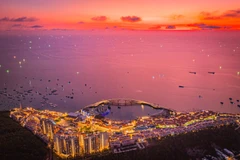
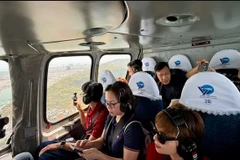
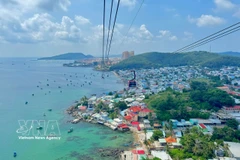
Visitors admire Ho Chi Minh City from above. (Photo: VNA)

Ho Chi Minh City launches helicopter sightseeing tours

Globally, helicopter tourism has become a popular offering in many major destinations. By introducing this experience, Ho Chi Minh City aims to expand its portfolio of high-end tourism products and further enhance its destination image.

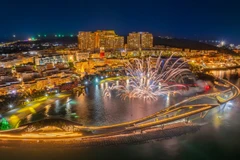
The blending of culture, architecture and art on Phu Quoc is shaping a cosmopolitan city. (Photo: Sun Group)

Phu Quoc: Where the world meets through architecture

The presence of diverse international architectural styles across Phu Quoc, rather than a single traditional architectural system, is not accidental but rooted in the island’s unique development context. Unlike cities with centuries of urban heritage such as Hoi An or Hue, Phu Quoc is a tourism destination that has grown rapidly over just the past few decades, without a clearly layered architectural legacy to inherit.

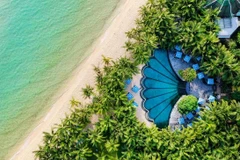
The luxurious resorts ecosystem contribute to elevating Phu Quoc's image in the eyes of international media. (Photo: Sun Group)

Phu Quoc and its luxury resorts "take the leaderboard by storm" in DestinAsian rankings

On March 6, 2026, the prestigious travel magazine DestinAsian officially announced its list of the top 10 islands in Asia for 2026 as part of its Readers' Choice Awards. Not only was it the sole representative from Vietnam, but Phu Quoc also made a remarkable impression by climbing to the runner-up position, continuing an impressive three-year upward trend.

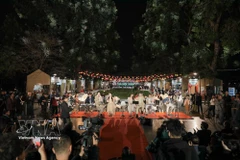
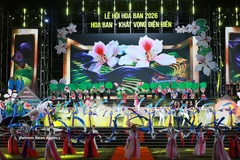
A view of the opening ceremony of the Ban Flower (Bauhinia) Festival 2026 in Dien Bien province on March 8 evening. (Photo: VNA)

Government leader attends Ban Flower Festival 2026 in Dien Bien province

Themed “Hoa Ban – Khat vong Dien Bien,” the festival was a highlight of the Dien Bien Culture and Tourism Week running from March 6 – 12. The annual event celebrated the beauty of the iconic Ban flower and promoted the culture, history and tourism potential of the Northwestern region.

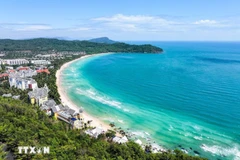
Khem beach in Phu Quoc island of An Giang province. (Photo: VNA)

Phu Quoc strengthens appeal as international arrivals soar in early 2026

Phu Quoc special zone is increasingly affirming its strong appeal to international visitors with impressive growth, positioning the “pearl island” as a standout destination in Southeast Asia and a direct competitor to renowned resort islands such as Bali in Indonesia and Phuket in Thailand.

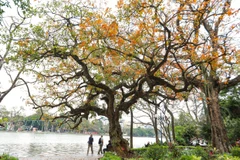
Leaves of loc vung (Barringtonia acutangula tree) change colour beside Hoan Kiem Lake (Photo: VNA)

Hanoi named among world’s 50 most beautiful cities by Condé Nast Traveler

Hanoi’s appearance within the global media ecosystem of Condé Nast Traveler is expected to provide a significant boost to the city’s tourism appeal. Beyond enhancing its credibility as a travel destination, the recognition could also help attract high-end tourism services and encourage higher spending by international visitors.

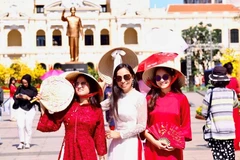
Overseas Vietnamese in traditional ao dai explore Nguyen Hue flower street. (Photo: qdnd.vn)

Overseas Vietnamese amplify Ho Chi Minh City’s tourism appeal

With their understanding of both local traditions and international contexts, OVs are proving to be an effective “soft bridge” in promoting the city globally, contributing to rising international arrivals and reinforcing Ho Chi Minh City’s position as a creative, globally integrated and culturally rich urban tourism destination