Quang Tri seeks to unlock potential of marine tourism’s “golden triangle”

Cua Tung, Cua Viet and Con Co special zone are identified as three key destinations of marine tourism, and to transform this “tourism triangle” into premium and peaceful resorts, a new strategy is needed to enhance attractiveness to high-end travellers seeking private spaces as the strength of these places lies in their pristine and tranquil beauty.

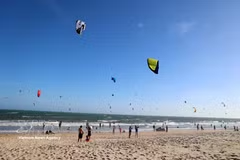
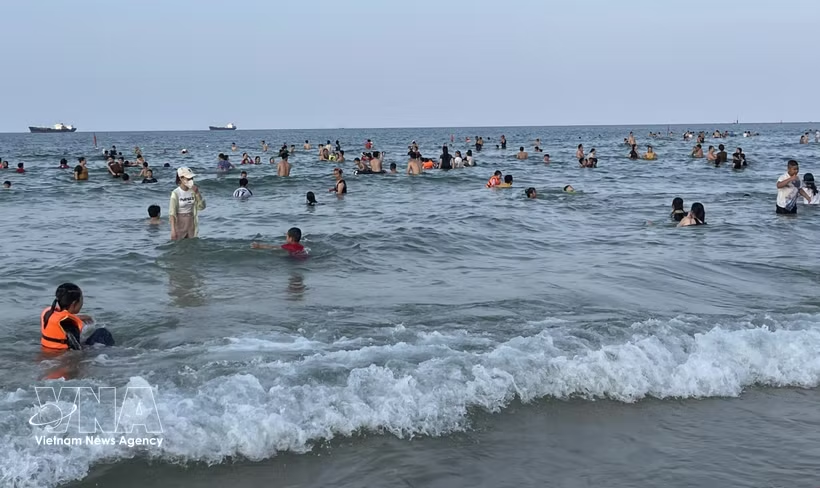
Cua Viet beach is a magnet for both locals and visitors during holidays. (Photo: VNA)

Quang Tri (VNA) – Central Quang Tri province is looking to awaken the untapped potential of its marine tourism by developing Cua Tung, Cua Viet and Con Co special zone into a “golden triangle” of high-end destinations.

Rather than pursuing mass tourism, local authorities and experts are calling for a shift towards premium and experience-driven travel where tranquillity, green architecture and historical depth define the province’s tourism identity.

Natural assets with enduring appeal

Located about 35km north of former Dong Ha city, Cua Tung beach was once considered one of the most beautiful seaside resorts in central Vietnam. Dubbed the “queen of beaches” during the early 20th century, it boasts fine white sand, gentle slopes and a pristine landscape.

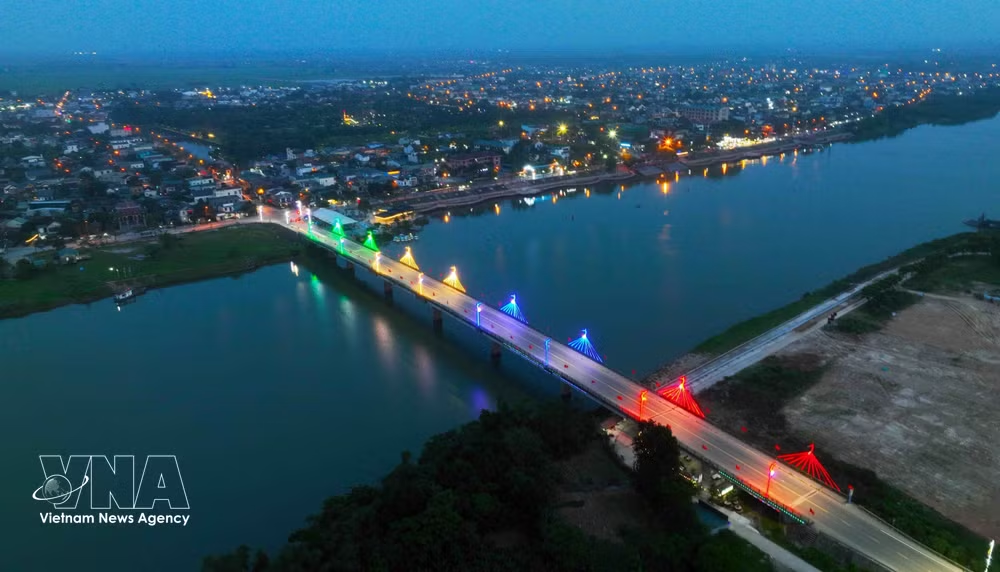
About 15km to the south lies Cua Viet beach, at the mouth of the Thach Han River. The interplay between river currents and ocean waves has formed distinctive stretches of smooth sand. Benefiting from its proximity to Dong Ha and its position at the starting point of the East – West Economic Corridor (EWEC) on the Vietnamese side, Cua Viet has gradually emerged as a gateway for tourism and investment.

Meanwhile, Con Co Island, designated as a special zone, is positioning tourism as its leading economic sector accounting for over 70% of its economic structure. The island is known for its rich marine biodiversity and commitment to environmental protection.

The ongoing construction of Quang Tri Airport, located between Cua Tung and Cua Viet and about 30km from Con Co, is expected to improve accessibility when it becomes operational in 2026.

Strategic vision needed for sustainable growth

Despite its advantages, Cua Tung has faced coastal erosion since the early 2000s due to changes in natural currents following infrastructure development. While restoration solutions are still under study, experts believe the beach retains its unique charm and can be repositioned through careful planning.
vnanet-quangtri.jpg
The Thach Han River in the central province of Quang Tri (Photo: VNA)

Director of the provincial Department of Culture, Sports and Tourism Le Minh Tuan said the resolution of the first Quang Tri Party Congress, for 2025–2030, identifies Cua Tung, Cua Viet and Con Co special zone as three key destinations of marine tourism. To transform this “tourism triangle” into premium and peaceful resorts, a new strategy is needed to enhance attractiveness to high-end travellers seeking private spaces as the strength of these places lies in their pristine and tranquil beauty.

Experts recommend that the three destinations embrace a low-density development approach focused on green architecture and open spaces. Rather than building high-rise hotels, boutique villas and eco-friendly bungalows tucked into casuarina forests or set along natural slopes would help preserve the scenery and attract high-end travellers looking for privacy.

Transport infrastructure should also be designed with sustainability in mind. Electric vehicles, bicycles and pedestrian pathways are recommended within resorts and on Con Co Island to minimise noise and emissions. The road linking Cua Tung and Cua Viet could be upgraded into a scenic coastal route rather than a mixed-use traffic corridor.

Product positioning is another key factor. Instead of focusing on mass entertainment, Quang Tri should develop high-end wellness tourism services, including spa therapies, outdoor yoga and meditation, leveraging the clean sea and fresh air. Controlled coral diving, sea turtle observation and forest conservation tours could attract environmentally conscious visitors.

Equally important is weaving in cultural and historical values. Once a battlefield with landmarks like the Vinh Moc Tunnels and the 17th Parallel, Quang Tri boasts unique heritage treasures. By blending storytelling with art spaces and curated experiences, its tranquillity can be transformed into a rich narrative of remembrance and peace./.

VNA

See more

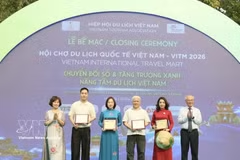
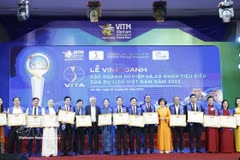
The organisers of VITM 2026 honour sponsors. ( Photo: VNA)

VITM 2026 boosts tourism demand ahead of peak season

According to the organisers, around 4,500 representatives from Vietnamese and international tourism enterprises attended the event, generating more than 25,000 business meetings and partnership exchanges. Approximately 15,000 discounted tours and travel products were offered to visitors.

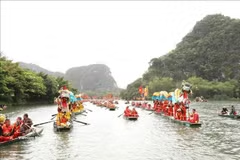
Traditional dragon procession held on the river in Ninh Binh. (Photo: VNA)

Cultural heritage drives sustainable tourism growth in Ninh Binh

In the first two months of 2026, Ninh Binh welcomed over 5.4 million visitors, up 9.9% year-on-year, generating nearly 5.84 trillion VND (221 million USD) in tourism revenue, up 15.9%. During the 2026 Lunar New Year holiday alone, the province received 2.38 million visitors, an 81.4% increase from the previous year, ranking second nationwide.

Outstanding individuals and firms honoured at VITM 2026 (Photo: VNA)

Outstanding individuals, firms honoured at Vietnam International Travel Mart 2026

In 2025, Vietnam’s tourism sector recorded its highest-ever number of visitors, welcoming more than 21.5 million international arrivals, up more than 20% from 2024, and serving over 135.5 million domestic travellers. Tourism revenue also surpassed 1 quadrillion VND (nearly 38 billion USD). The sector has become a bright spot of the economy, with Vietnam ranking among the world’s fastest-growing tourism destinations.

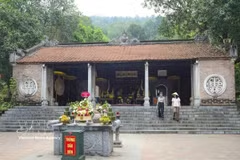
The Ba Trieu Temple in Thanh Hoa province (Photo: VNA)

Thanh Hoa taps digital transformation to boost heritage tourism

With 28 nationally-recognised intangible cultural heritage elements, Thanh Hoa province has prioritised integrating conservation with tourism development. Digital transformation, in particular, is seen as a crucial bridge connecting tradition with innovation, helping heritage sites become more accessible and engaging.

Pristine white-sand beach on Cu Lao Cham Island, Da Nang city, is a magnet for visitors. (Photo: VNA)

Vietnam – a safe destination amid global uncertainties

Despite global tourism headwinds linked to geopolitical conflicts, transport disruptions and surging travel expenses, Vietnam’s tourism sector has sustained strong growth, underscoring the destination’s resilience and rising international profile.

A border guard at the Mong Cai International Border Gate processes exit procedures for passengers at the Bac Luan 1 border gate in Quang Ninh province. (Photo: VNA)

Vietnam, China promote AI application in cross-border tourism cooperation

During the programme, participants will attend intensive courses delivered by AI technology experts, China–ASEAN policy researchers, and tourism specialists. The curriculum focuses on the application of big data in tourism policy planning, the development of cross-border tourism products, and the building of joint tourism brands.

The sea area off the southern coast of Phu Quoc Island. (Photo: VNA)

UK newspaper praises Phu Quoc’s unspoilt charm amid tourism boom

Phu Quoc is positioned as a compelling alternative – even a potential rival to Phuket – for travellers seeking authenticity in Southeast Asia. Its appeal lies not only in scenic beauty and fresh seafood, but also in the harmonious coexistence of modern tourism and enduring local culture.

At an elevation of 1,700 metres above sea level, the summit of Pu Luong is increasingly emerging as an ideal destination for trekking - a form of adventure tourism that combines hiking with nature exploration and physical as well as mental endurance. (Photo: VNA)

Vietnam eyes becoming region’s leading tourism destination

Vietnam has in recent years undergone a notable transformation in its tourism development strategy, placing a strong emphasis on nature-based and eco-tourism. This shift is not merely aligned with global trends, but represents a necessary step towards safeguarding valuable natural resources, while appealing to a growing segment of environmentally conscious travellers.

Foreign tourists in a photo with local residents. (Photo: VNA)

Vietnam serves 6.76 million foreign arrivals in Q1

China and the Republic of Korea (RoK) continued to lead as Vietnam’s largest source markets in the quarter, with 1.4 million and 1.3 million visitors respectively, accounting for around 40% of total arrivals.

A corner of the Phu Quy special zone in Lam Dong province (Photo: VNA)

Phu Quy moves to unlock potential as premier marine tourism hotspot

Under a resolution of the provincial Party Congress for the 2025–2030 term, the locality prioritises spatial planning of the marine economy, focusing on emerging sea-based industries linked with environmental protection and national defence. Located 56 nautical miles offshore, Phu Quy is a central pillar of this vision.