Technology powers tourism growth in mountainous province

Last year, Tuyen Quang welcomed over 3.9 million visitors, and is aiming to attract around 4.1 million arrivals, including around 600,000 foreigners, this year. Tourism continues to be identified as a key economic sector, with development oriented toward sustainability, green growth, and enhanced competitiveness through digitalisation.

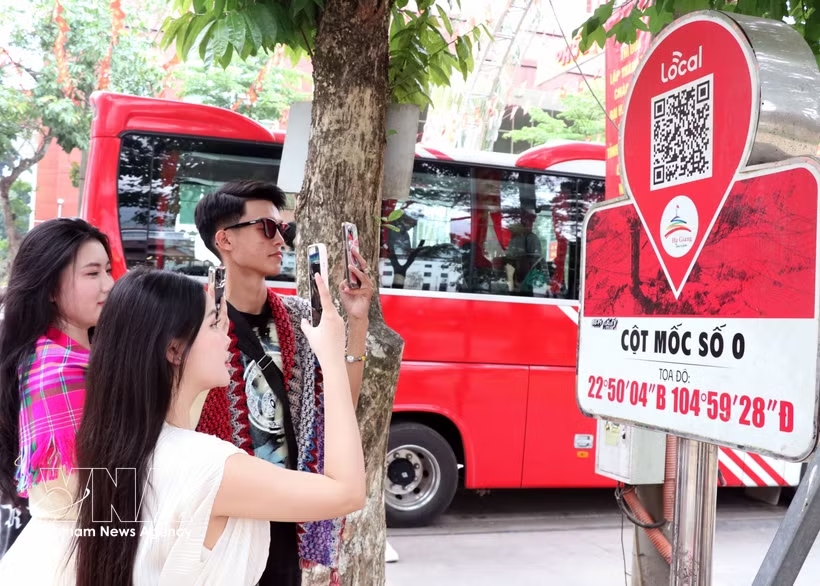
Visitors scan QR codes at Km0 Ha Giang to access tourism information. (Photo: VNA)

Tuyen Quang (VNA) – In recent years, tourism in the northern mountainous province of Tuyen Quang has sustained positive growth, with digital transformation under Resolution 57-NQ/TW steadily taking root in practice and emerging as a key driver of the sector’s development.

Notably, beyond state agencies and businesses, local residents have begun adopting digital tools to promote destinations and operate tourism services, contributing to higher incomes and local economic growth.

Last year, Tuyen Quang welcomed over 3.9 million visitors, and is aiming to attract around 4.1 million arrivals, including around 600,000 foreigners, this year. Tourism continues to be identified as a key economic sector, with development oriented toward sustainability, green growth, and enhanced competitiveness through digitalisation.

To effectively implement Resolution 57, the provincial Department of Culture, Sports and Tourism has been systematising and digitising data on cultural heritage and tourist destinations, making it accessible via the province’s tourism information portal.

Tourist sites, businesses, and service providers have introduced QR codes linked to destination information, positioning, healthcare, accommodation, and dining services, enabling visitors to access information conveniently.

According to Nguyen Thi Hoai, Deputy Director of the department, digital transformation is driving profound changes at the grassroots level, with locals actively using social media, QR codes, and online platforms to promote and operate tourism services.

Sterre Albrecht from Amsterdam, the Netherlands, shared that scanning QR codes at popular sites allowed her to easily access information and better understand local culture.

In tourism-oriented communes such as Thanh Thuy and Na Hang, particularly in the Dong Van Karst Plateau area, digital transformation has evolved from a management tool into a new mode of production for community-based tourism. Local residents are gradually shifting from traditional practices to proactively engaging with the market through digital platforms.

Ma Doan Khanh, Vice Chairman of the People’s Committee of Lung Cu commune, observed that digital tools have significantly changed how local people conduct tourism. Many households now use smartphones, social media, and QR codes to promote services and showcase indigenous culture, helping attract more visitors and boost incomes while bringing local destinations closer to domestic and international tourists.

Service providers, including restaurants and homestays, increasingly use smartphones to produce and share photos and videos online, directly reaching potential customers. QR codes are widely applied to introduce menus, services, and local products such as brocade, corn wine, and agricultural goods. Many households have also joined online booking platforms, expanding their market reach and enhancing business autonomy.

In practice, digital transformation under Resolution 57 has not only improved tourism management and business efficiency but also helped promote the culture and people of Tuyen Quang to a wider audience, gradually shaping a smart, modern, and sustainable tourism ecosystem./.


VNA

See more

At Thung Nham ecological tourism site in Ninh Binh province. (Photo: VNA)

Vietnam’s tourism defies fuel price shock with record Q1 “hat-trick”

According to data released by the National Statistics Office, foreign arrivals in March reached nearly 2.1 million, up 1.3% year-on-year. In total, Vietnam welcomed an estimated 6.76 million foreign tourists in the first quarter, a more than 12% jump from the same period in 2025 and the highest Q1 figure ever recorded.

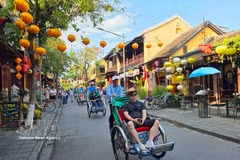
Tourists enjoy a rickshaw tour of Hoi An Ancient Town, Da Nang city. (Photo: VNA)

ITE HCMC 2026 to promote Vietnam’s tourism on global map

With its large scale, the ITE HCMC 2026 aims to promote tourism cooperation between Vietnam and priority markets such as Northeast Asia, Western Europe, North America, Southeast Asia, and Oceania while also boosting visitor arrivals from the Indian market

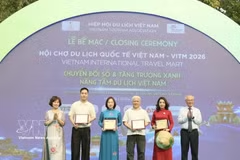
The organisers of VITM 2026 honour sponsors. ( Photo: VNA)

VITM 2026 boosts tourism demand ahead of peak season

According to the organisers, around 4,500 representatives from Vietnamese and international tourism enterprises attended the event, generating more than 25,000 business meetings and partnership exchanges. Approximately 15,000 discounted tours and travel products were offered to visitors.

Traditional dragon procession held on the river in Ninh Binh. (Photo: VNA)

Cultural heritage drives sustainable tourism growth in Ninh Binh

In the first two months of 2026, Ninh Binh welcomed over 5.4 million visitors, up 9.9% year-on-year, generating nearly 5.84 trillion VND (221 million USD) in tourism revenue, up 15.9%. During the 2026 Lunar New Year holiday alone, the province received 2.38 million visitors, an 81.4% increase from the previous year, ranking second nationwide.

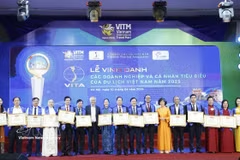
Outstanding individuals and firms honoured at VITM 2026 (Photo: VNA)

Outstanding individuals, firms honoured at Vietnam International Travel Mart 2026

In 2025, Vietnam’s tourism sector recorded its highest-ever number of visitors, welcoming more than 21.5 million international arrivals, up more than 20% from 2024, and serving over 135.5 million domestic travellers. Tourism revenue also surpassed 1 quadrillion VND (nearly 38 billion USD). The sector has become a bright spot of the economy, with Vietnam ranking among the world’s fastest-growing tourism destinations.

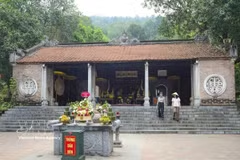
The Ba Trieu Temple in Thanh Hoa province (Photo: VNA)

Thanh Hoa taps digital transformation to boost heritage tourism

With 28 nationally-recognised intangible cultural heritage elements, Thanh Hoa province has prioritised integrating conservation with tourism development. Digital transformation, in particular, is seen as a crucial bridge connecting tradition with innovation, helping heritage sites become more accessible and engaging.

Pristine white-sand beach on Cu Lao Cham Island, Da Nang city, is a magnet for visitors. (Photo: VNA)

Vietnam – a safe destination amid global uncertainties

Despite global tourism headwinds linked to geopolitical conflicts, transport disruptions and surging travel expenses, Vietnam’s tourism sector has sustained strong growth, underscoring the destination’s resilience and rising international profile.

A border guard at the Mong Cai International Border Gate processes exit procedures for passengers at the Bac Luan 1 border gate in Quang Ninh province. (Photo: VNA)

Vietnam, China promote AI application in cross-border tourism cooperation

During the programme, participants will attend intensive courses delivered by AI technology experts, China–ASEAN policy researchers, and tourism specialists. The curriculum focuses on the application of big data in tourism policy planning, the development of cross-border tourism products, and the building of joint tourism brands.

The sea area off the southern coast of Phu Quoc Island. (Photo: VNA)

UK newspaper praises Phu Quoc’s unspoilt charm amid tourism boom

Phu Quoc is positioned as a compelling alternative – even a potential rival to Phuket – for travellers seeking authenticity in Southeast Asia. Its appeal lies not only in scenic beauty and fresh seafood, but also in the harmonious coexistence of modern tourism and enduring local culture.

At an elevation of 1,700 metres above sea level, the summit of Pu Luong is increasingly emerging as an ideal destination for trekking - a form of adventure tourism that combines hiking with nature exploration and physical as well as mental endurance. (Photo: VNA)

Vietnam eyes becoming region’s leading tourism destination

Vietnam has in recent years undergone a notable transformation in its tourism development strategy, placing a strong emphasis on nature-based and eco-tourism. This shift is not merely aligned with global trends, but represents a necessary step towards safeguarding valuable natural resources, while appealing to a growing segment of environmentally conscious travellers.