Hanoi (VNA) – Reimagining origin legends through contemporary stage language, the opening art programme of the Hung Kings Temple Festival and the 2026 Ancestral Land Culture and Tourism Week, reflects the spirit of the Politburo’s Resolution 80-NQ/TW, which places culture on par with the economy, politics and society, focuses on preserving and promoting heritage in modern life.
The Hung Kings Commemoration Day remains Vietnam’s most sacred cultural event, honouring the nation’s founders and symbolising solidarity among Vietnamese people worldwide. In 2026, the festival’s opening ceremony and the Ancestral Land Culture and Tourism Week retain this significance while introducing a fresh artistic approach—bringing heritage out of traditional ritual spaces into contemporary expression.
Set for April 17, the programme is expected to connect cultural identities across Phu Tho, Hoa Binh and Vinh Phuc, according to its general director Xuan Hong.
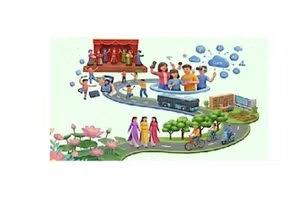
Structured in three chapters, it presents a narrative that moves from origins to the present and towards future aspirations, reflecting a shift in festival organisation: tradition as foundation, heritage as anchor, and development as goal.
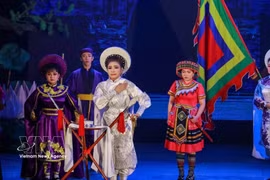
At its core is the spiritual value of Hung Kings worship. From this axis, the performance expands to incorporate legends, historical imprints and regional identities. Playwright Le The Song noted that the highlight lies in reviving familiar origin myths through contemporary theatrical forms.
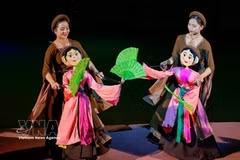
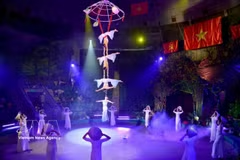
Stories such as Lac Long Quan–Au Co, Saint Giong and Son Tinh–Thuy Tinh are staged using a fusion of dance, lighting and semi-realistic settings. Notably, the narrative of the Hung Kings seeking land to establish the capital is retold through modern lighting and narration, offering a fresh interpretation of a symbolic historical moment.
Rather than simply retelling known stories, the production introduces new expressive layers through physical theatre, elevated staging and the integration of traditional Tuong elements with modern technology. History, therefore, is no longer static but becomes a vivid stage experience, making heritage more accessible, particularly for young audiences.
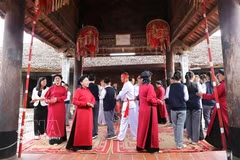
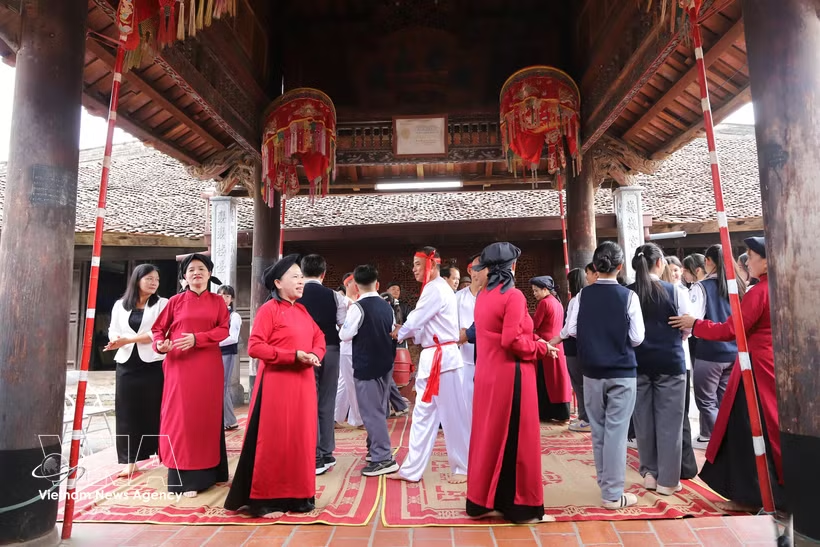
The second chapter highlights traditional art forms within a unified inter-regional context. Xoan singing, Muong gong performances and Duc Bac drum singing are woven into a cohesive narrative rather than presented separately. A large-scale Xoan performance featuring around 200 artisans, performers and students underscores the role of community in sustaining heritage. Meanwhile, Muong cultural space is recreated through sound, ritual elements and folk traditions, preserving authenticity while enhancing public engagement.
The final chapter shifts from the past to contemporary development, linking ancestral roots with national aspirations. Audiences are invited to experience history through a dynamic artistic journey rather than static commemoration.
Experts view the Hung Kings Commemoration Day not only as a ritual but as a living cultural space where past, present and future converge. In line with Resolution 80, such programmes serve as practical platforms to revitalise heritage, reinforcing national identity and social values, towards building a sustainable and modern national culture.
By artistically retelling origin legends and honouring the Hung Kings, the programme evokes patriotism, community spirit and unity in a natural, engaging way. It also demonstrates how heritage can be adapted to contemporary life through new artistic forms, ensuring continued relevance while fostering creativity.
From the perspective of cultural industry development—one of the key pillars of Resolution 80—festival art programmes also unlock significant economic potential. Beyond cultural value, well-organised festival programmes linked with tourism and media can contribute to the development of cultural industries and enhance Vietnam’s cultural soft power, positioning heritage-based events as distinctive national cultural brands in the international arena./.