Ho Chi Minh City book street – An "undercurrent” sustains reading culture in digital age

Launched on January 9, 2016, the street started as a modest 140-metre stretch that few expected would have such a big impact on Vietnam’s publishing scene.

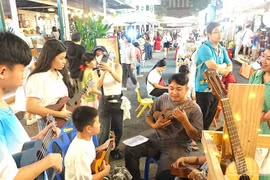
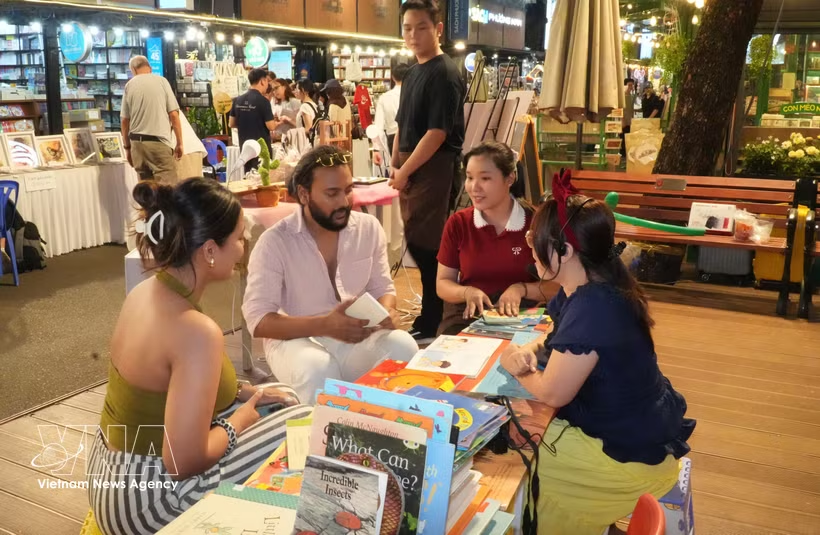
Ho Chi Minh City Book Street attracts a large number of vistors. (Photo: VNA)

Ho Chi Minh City (VNA) – Located in the heart of Ho Chi Minh City, beside two iconic heritage landmarks of the Saigon Notre-Dame Cathedral and the Saigon Central Post Office, Nguyen Van Binh Book Street has, over a decade of formation and development, become an “undercurrent” nurturing reading culture and shaping the humanistic urban identity of the southern largest hub.

Launched on January 9, 2016, the street started as a modest 140-metre stretch that few expected would have such a big impact on Vietnam’s publishing scene. As the country’s first dedicated book street, it came to life through a mix of passionate publishers’ visions and supportive municipal policies.

From 19 initial booths, the street has expanded to 30, featuring more than 20 reputable publishers and distributors nationwide. Over the past decade, it has welcomed millions of visitors, circulated nearly 7 million books, and generated over 433 billion VND (16.4 million USD) in revenue.

According to Le Hoang, Director of the Ho Chi Minh City Book Street Company, the establishment of this street was never solely about book sales but about creating a cultural anchor for the community. Over the years, it has evolved into a sustainable knowledge ecosystem.

Tran The Thuan, Director of the municipal Department of Culture and Sports, described the book street as a milestone in cultural development and a pioneering model of socialised reading culture operating effectively in a friendly and distinctive space.

Publishers also regard it as a special “red address” for book lovers. Hosting book launches and author-reader exchanges here has become a top choice, helping bridge the gap between publishers, authors, and readers in a uniquely engaging environment.

Amid the rapid rise of audiovisual entertainment and digital reading, the book street continues to assert itself as a “fortress” preserving the value of printed books. With over 3,000 events organised, averaging at least one cultural activity per day, it has blurred the lines between authors and readers.

Beyond its role as a local cultural institution, Nguyen Van Binh Book Street has emerged as a “cultural ambassador” and a symbolic destination for international visitors. Its harmonious blend of knowledge and nature leaves a lasting impression.

International tourists, such as visitors from Australia, have praised the space for its thoughtful design and rich cultural atmosphere, noting that few book streets elsewhere offer such a unique and immersive experience.

Nguyen Nguyen, Director of the Authority of Publication, Printing and Distribution under the Ministry of Culture, Sports and Tourism, described the site as a “symbol of a knowledge city,” where books are no longer hidden away but vividly integrated into everyday urban life.

Beyond economic and tourism value, the street also promotes social good through initiatives such as donating books to remote areas and building libraries for border guards. In this sense, books become not only vessels of knowledge but also bridges of compassion and cultural values.

A decade may not be long for a cultural institution, but Nguyen Van Binh Book Street has already become a quiet sanctuary where people reconnect with core human values. With its solid foundation, it stands as a gateway to knowledge for generations to come, affirming the identity of a modern, compassionate, and culturally rich city./.
VNA

See more

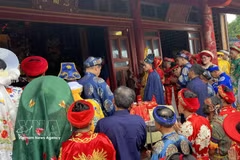
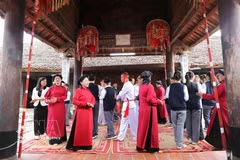
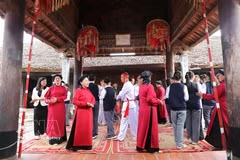
A ritual at Hue Nam Temple Festival (Photo: VNA)

Hue Nam Temple Festival: From imperial relic to distinctive cultural celebration in Hue

Historically known as Ngoc Tran Son Tu, the temple was renamed Hue Nam during the reign of King Dong Khanh in the late 19th century, symbolising royal gratitude to the Mother Goddess. It is also the only temple in Hue that harmoniously combines royal ceremonial elements with folk religious practices, creating a distinctive blend of court ritual and popular belief.

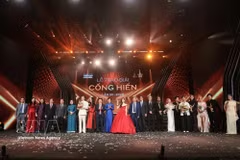
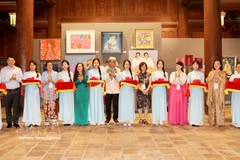
Participants in the 20th Cong hien (Devotion) Awards presentation ceremony in Hanoi on April 15 (Photo: VNA)

Devotion Awards mark two decades of honouring excellence in music, sports

Nguyen Thien Thuat, Editor-in-Chief of the The Thao & Van Hoa newspaper and Head of the organising board of the awards, said, noting that their achievements reflect the spirit of the Politburo’s Resolution No. 80, which emphasises preserving national cultural values while selectively absorbing the essence of world culture.

Artisans and students take part in cultural activities and exchanges in the Xoan singing performance space at Hung Lo ancient communal house in Phu Tho province (Photo: VNA)

Ancestral legends revived through contemporary performance

Beyond cultural value, well-organised festival programmes linked with tourism and media can contribute to the development of cultural industries and enhance Vietnam’s cultural soft power, positioning heritage-based events as distinctive national cultural brands in the international arena.

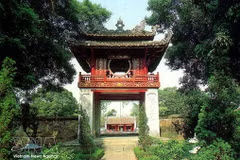
Khue Van Cac (Khue Van Pavilion) stands as a defining cultural symbol of Hanoi, closely associated with Vietnam’s long-standing tradition of valuing education and honouring knowledge. (Photo: VNA)

Greater efforts needed for heritage to shape Hanoi’s identity

As suggested by UNESCO experts, heritage should be approached as an integrated system encompassing space, people and everyday life. This perspective can inform urban planning, cultural tourism development and the creation of clear economic drivers.

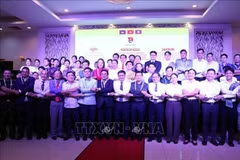
Participants at the gathering (Photo: VNA)

Lao, Cambodian students welcome traditional New Year in Ho Chi Minh City

In his speech, Vice Chairman of the municipal People’s Committee Nguyen Manh Cuong said the municipal Party organisation, authorities and people always value the close ties and solidarity among Vietnam, Laos and Cambodia. He described the three nations’ longstanding ties, forged through shared hardships, as an invaluable spiritual asset and a bedrock for sustainable development.

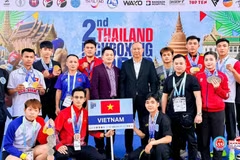
Vietnamese kickboxers win 32 gold medals at the Kickboxing World Cup 2026. (Photo: Vietnam Kickboxing Federation)

Vietnam finish third at Kickboxing World Cup 2026

According to Vu Duc Thinh, President of the Vietnam Kickboxing Federation, the strong results reflected careful preparation by local training centres and the determination of Vietnamese fighters. The team’s participation, funded largely through socialised and local resources, also demonstrated growing support for the development of kickboxing in Vietnam.

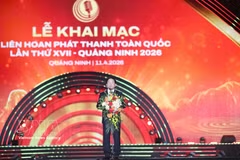
Politburo member, Secretary of the Party Central Committee and Head of the Party Central Committee’s Commission for Information, Education and Mass Mobilisation Trinh Van Quyet speaks at the event (Photo: VNA)

National Radio Festival opens in Quang Ninh

The opening night was combined with an artistic programme titled “sounds of the new era,” drawing around 50,000 spectators. The programme was structured in three chapters: Origins of Sound, Heritage Sound, and Sound of the New Era.

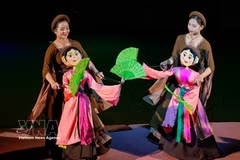
Vietnamese puppetry faces pressure to adapt to modern lifestyles, particularly amid growing competition from diverse entertainment forms (Photo: VNA)

Vietnamese puppetry seeks renewal amid preservation challenges

People’s Artist Nguyen Hoang Tuan, Chairman of the Hanoi Theatre Association, noted that while northern Vietnam had 27 puppetry guilds in 1986, only 14 remain today. Many traditional plays and original scripts have been lost, hurting restoration and preservation efforts.