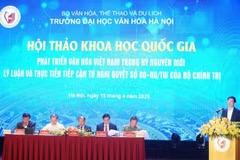
Hanoi (VNA) – Amid deepening globalisation and international integration and the increasingly important role of culture in strengthening national soft power, the Politburo's Resolution No. 80-NQ/TW outlines a strategic vision for cultural development, emphasising proactive international cultural integration as a key, long-term task to bring Vietnamese cultural and artistic values closer to global audiences.
Spreading Vietnamese culture to the world
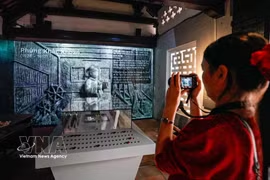
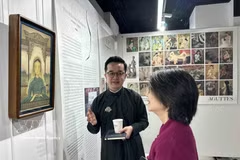
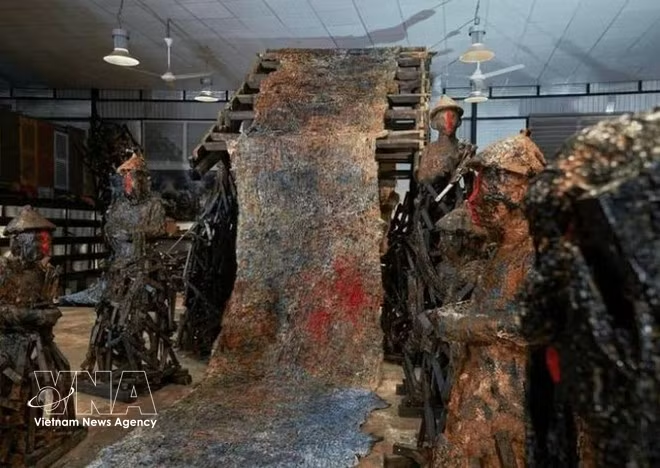
The Tam (Silkworm) exhibition by artist Le Huu Hieu at the 61st Venice Biennale marks a notable milestone in promoting Vietnamese culture through contemporary art. For the first time, Vietnam has established a national pavilion at one of the world’s most prestigious art events.
Presented in Venice, Italy, the installation combines traditional beliefs, cultural symbols and contemporary Vietnamese life through a modern artistic language rooted in national identity. The silkworm symbolises growth, transformation and renewal, serving as a metaphor for both human journeys and the evolution of Vietnamese culture. The inclusion of live silkworms turns the exhibition space into a “living entity,” reflecting culture as a dynamic process rather than static heritage.
Using materials such as jackfruit wood, lacquer, silk and gold leaf alongside symbolic motifs including houses, guardian spirits and the five elements, the work reflects Vietnamese worldviews and folk knowledge while engaging global themes such as sustainability, community and identity.
Hieu’s solo exhibition not only marks a personal milestone but also opens new opportunities for Vietnamese artists to access international art platforms more sustainably.
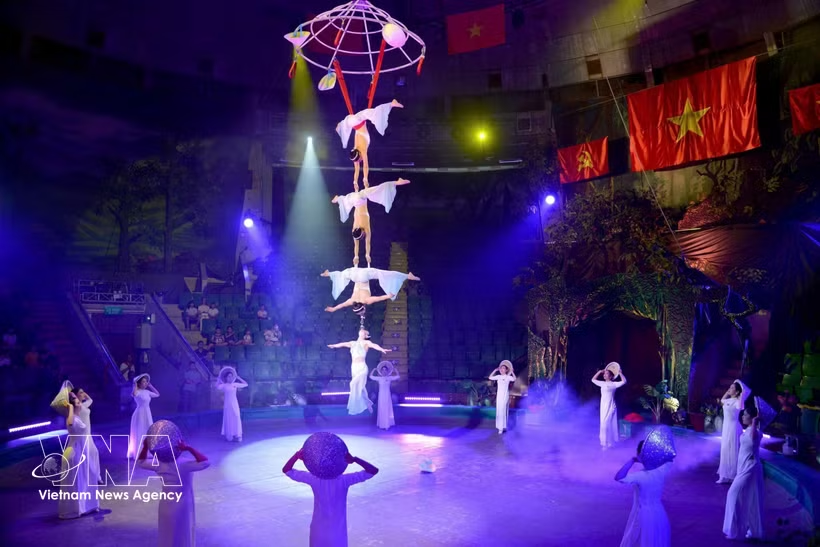
In early March, artists from the Vietnam Circus Federation obtained strong results at the Golden Elephant International Circus Festival 2026 in Girona, Spain, where all three Vietnamese performances won awards. “Duo Love” received the Silver Elephant award, “Du non” (conical hat swing) won the Bronze Elephant, and “De kiem tren du” (sword balancing on swing) earned the Special Prize.
The achievements further affirm the growing international standing of Vietnamese circus arts and have opened opportunities for cooperation and long-term touring contracts in Europe, including a proposed one-year engagement with Germany’s renowned Roncalli Circus and invitations to major international festivals.
Integration to strengthen national soft power
From contemporary art exhibitions in Italy to circus successes in Europe, Vietnamese cultural and artistic activities are increasingly asserting their presence globally. These achievements promote the country’s image while demonstrating the creativity and integration capacity of Vietnamese culture.
According to People’s Artist Xuan Bac, Director of the Performing Arts Department under the Ministry of Culture, Sports and Tourism, such successes reflect effective investment and international cooperation aligned with Resolution 80-NQ/TW, which stresses preserving national cultural values while actively integrating internationally.
The resolution affirms that expanding international cultural cooperation will enhance national capacity, prestige and soft power. Cultural integration is defined as proactive participation in global cultural flows, with Vietnam contributing as a creative and responsible actor with a distinct identity.
Experts highlight that Resolution 80 positions culture as a development pillar and a key endogenous resource. In today’s competitive world, a nation's strength is measured not only by economic or military power but also by its ability to project values and shape international perceptions through culture. Promoting Vietnamese culture abroad therefore represents a long-term strategy to elevate national standing.
To achieve this, the resolution calls for professional communication strategies to promote Vietnam’s image internationally, with culture serving as a bridge introducing a nation defined by rich identity, creativity and responsibility. Through exhibitions, festivals and exchanges, Vietnamese culture continues to expand its global reach, enhancing national branding and soft power while enabling Vietnam to share its story with the world as a culturally rich, dynamic and responsible nation./.