Energy security seen as future cornerstone of Vietnam’s growth drive

For Vietnam, the goal should extend beyond self-sufficiency. With the right approach, the country could position itself as a regional hub for energy production and storage, underpinning its long-term growth ambitions.

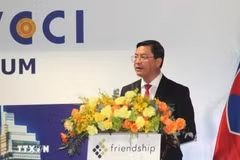
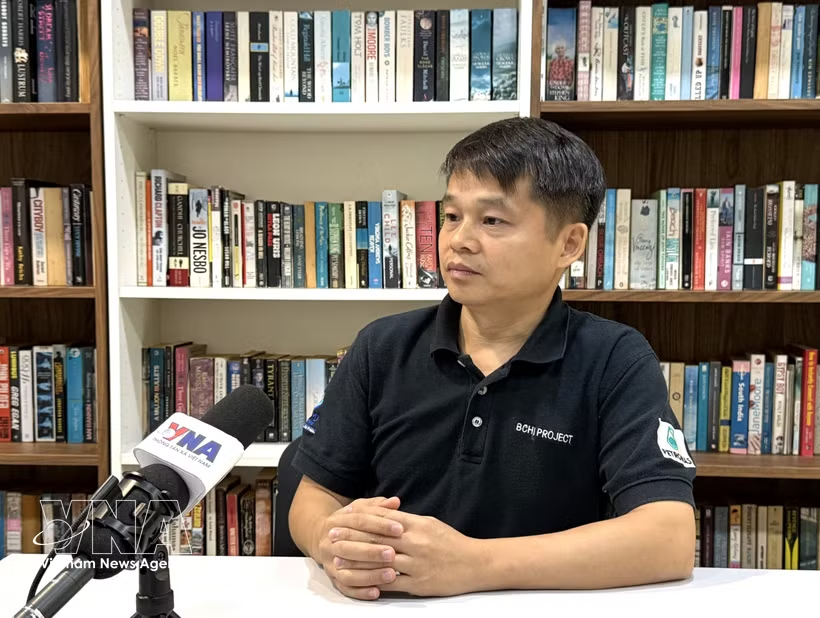
Oil and gas engineer Luong The Huan of Toyo Engineering & Construction Malaysia (Photo: VNA)

Kuala Lumpur (VNA) – Proper implementation of the Politburo’s Resolution 70 on national energy security, alongside favourable global dynamics, could enable Vietnam to transform current challenges into a competitive edge, according to oil and gas engineer Luong The Huan of Toyo Engineering & Construction Malaysia.

Amid mounting geopolitical tensions disrupting global fuel supplies, Huan described the resolution as a vital basis for enhancing self-reliance and sustaining growth momentum. In remarks to a Vietnam News Agency correspondent in Kuala Lumpur, he called the current period a “golden window” for Vietnam to reposition itself as a regional energy hub.

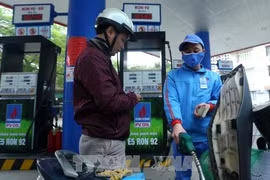
He pointed out that instability in the Middle East since early 2025 has significantly impacted global energy markets. The closure of the Strait of Hormuz has disrupted about one-fifth of global oil and gas flows, pushing up prices and prompting countries to draw on strategic reserves.

Vietnam, he noted, faces notable risks due to its dependence on imported crude oil for domestic refining. As the economy accelerates, supply disruptions could stoke inflation and place businesses under dual pressure from higher energy costs and interest rates.

Based on his experience in Malaysia, Huan proposed a set of coordinated measures. In the short term, he recommended improving energy governance, tightening price management to prevent speculation, and rolling out fiscal and monetary support such as tax and fee cuts and flexible lending policies. He also underscored the role of remote working and other modern practices in reducing energy consumption.

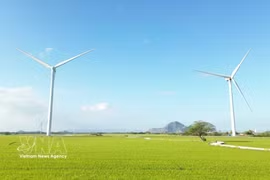
Over the long term, he called for a comprehensive restructuring of Vietnam’s energy strategy, with a balanced mix of conventional and renewable sources, including oil and gas, hydropower, solar and nuclear energy. Building large-scale reserves and boosting domestic refining capacity, he added, will be key to ensuring supply security.

Looking ahead, Huan forecast a global shift towards greater energy autonomy, with countries diversifying supply sources while accelerating green transition and digitalisation.

For Vietnam, he stressed, the goal should extend beyond self-sufficiency. With the right approach, the country could position itself as a regional hub for energy production and storage, underpinning its long-term growth ambitions./.
VNA

See more

The new infrastructure system will not only meet immediate needs but also create new growth poles, helping reshape the economic landscape. (Photo: VNA)

Construction sector striving for high-growth target

The construction sector faces mounting pressure to keep major projects on schedule while managing costs and stabilising markets. Yet, with gains from institutional reform, infrastructure investment, and growth model transformation, it remains well positioned to serve as a key growth engine.

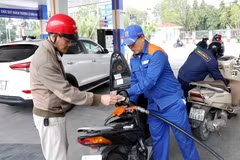
Fuel taxes are slashed to 0% from April 16 under a National Assembly resolution. (Illustrative photo: VNA)

Fuel taxes cut to 0% from April 16

Accordingly, the environmental protection tax on petrol (excluding ethanol), diesel, kerosene, mazut, and aviation fuel has been cut to 0 VND per litre. These products are also exempt from VAT declaration and payment, while still eligible for input VAT credit.

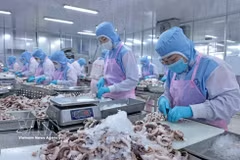
Workers process seafood for export. (Photo: VNA)

Vietnam’s long-term investment appeal remains intact: EuroCham

Up to 93% of European enterprises said they would recommend Vietnam as an investment destination – one of the highest endorsement levels in the history of the BCI survey. This indicates that investors are clearly distinguishing between short-term operational challenges and their long-term strategic outlook.

Vietnamese Ambassador to the RoK Vu Ho honours coffee processing firms and artisans. (Photo: VNA)

Vietnam's pavilion opens at Coffee Expo Seoul 2026

Nguyen Nam Hai, Chairman of VICOFA, said Vietnam’s coffee exports to the RoK exceeded 196 million USD in 2025, up 37.8% year-on-year. In the first quarter of this year, export value reached nearly 45 million USD, indicating strong growth potential.

A farmer harvests lemons in Vietnam. (Illustrative photo: VNA)

Protocol signed for pomelo, lemon exports to China

Pomelo and lemon are among Vietnam’s most advantageous agricultural products. The country currently has around 106,000 hectares of pomelo cultivation, placing it among the world’s major producers.

A view of the press conference on reviewing the banking industry’s Q1 performance in Hanoi (Photo: VNA)

Bank credit supports high GDP growth in Q1 2026

The SBV has set a credit growth target of 15% for 2026, with adjustments depending on the actual situation, ensuring inflation control, macroeconomic stability, support for economic growth, and the safety of the credit institution system.

Vietnamese Ambassador to Germany Nguyen Dac Thanh speaks at the Vietnam – Bavaria business roundtable in Munich. (Photo: VNA)

Vietnam – Bavaria roundtable strengthens business ties

Addressing a recent Vietnam–Bavaria business roundtable in Munich, Vietnamese Ambassador to Germany Nguyen Dac Thanh underscored the strong momentum of the Vietnam–Germany Strategic Partnership, particularly across trade, investment and economic cooperation.