Turning Vietnam’s medicinal plants into high-value economic sector

The global market for medicinal plants is projected to expand from about 230 billion USD in 2021 to over 430 billion USD by 2028, with annual growth exceeding 11%, driven by rising demand for natural products.

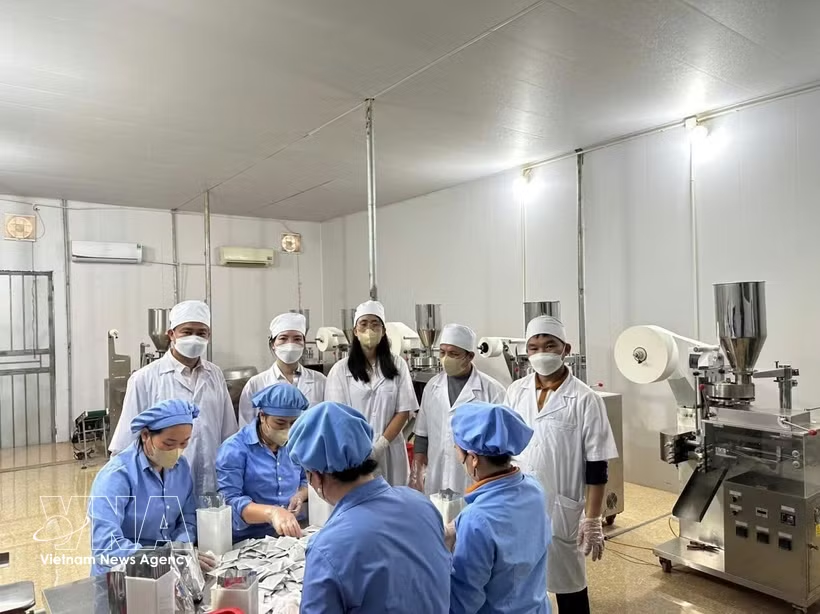
Pu Mat Medicinal Herbs JSC in Con Cuong commune, Nghe An province, has developed a line of products, including milk thistle extract and Gymnema sylvestre extract that meet OCOP 4-star standards. (Photo: VNA)

Hanoi (VNA) – Vietnam possesses abundant medicinal plants, and the growing use of herbal ingredients in cosmetics, beverages, daily food products, and tourism is opening up new development space. However, a key challenge remains how to transform this potential into a high-value-added economic sector.

Expanding application areas

​With 65 years of development, the National Institute of Medicinal Materials under the Ministry of Health has played a leading role in researching and developing medicinal plants, herbal products, and traditional medicine. To meet rising demand, it has recently shifted focus to high-quality product lines, particularly in beverages and cosmetics.

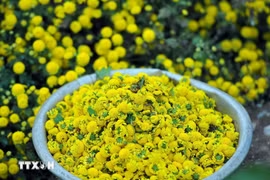
A multi-purpose approach is also emerging among businesses. The Ninh Binh Golden Camellia Park, developed by Vu Gia Herbal Co. Ltd., has gained attention as a large-scale cultivation area for the valuable plant listed among 100 medicinal species prioritised for development in the 2020–2030 period.

​Beyond traditional whole-flower tea, the company has diversified into products such as facial mists, skincare essences, sunscreen, and cleansers. Research indicates that bioactive compounds in the leaves are nearly equivalent to those in the flowers, enabling the production of tea bags and soluble powders. By combining cultivation with experiential tourism, the firm is building a value chain from breeding to deep processing.

​Experts divide the medicinal product pyramid into three tiers. The largest base includes food, beverages, and household goods, followed by health supplements, while herbal medicines and traditional remedies occupy the top tier. Current trends show strong expansion at the base level, targeting daily consumption.

​According to Phan Van Hieu, Chairman of CVI Pharmaceutical and Cosmetics JSC, technological advances are boosting consumer confidence in herbal products. Demand is rising for daily-use items that support health and lifestyle, provided their origin and quality are transparent. In response, CVI has developed herbal-based cosmetics using domestic extracts, particularly for sensitive groups such as pregnant women and children.

​Businesses are also tapping into medicinal materials for food and tourism. In Thanh Hoa, a company plans to introduce home-grown medicinal vegetable models using trays or boxes for urban households, alongside larger-scale farming. The initiative, featuring around 10 common varieties, aims to revive traditional herbal gardens, promote daily use, and encourage preventive healthcare.
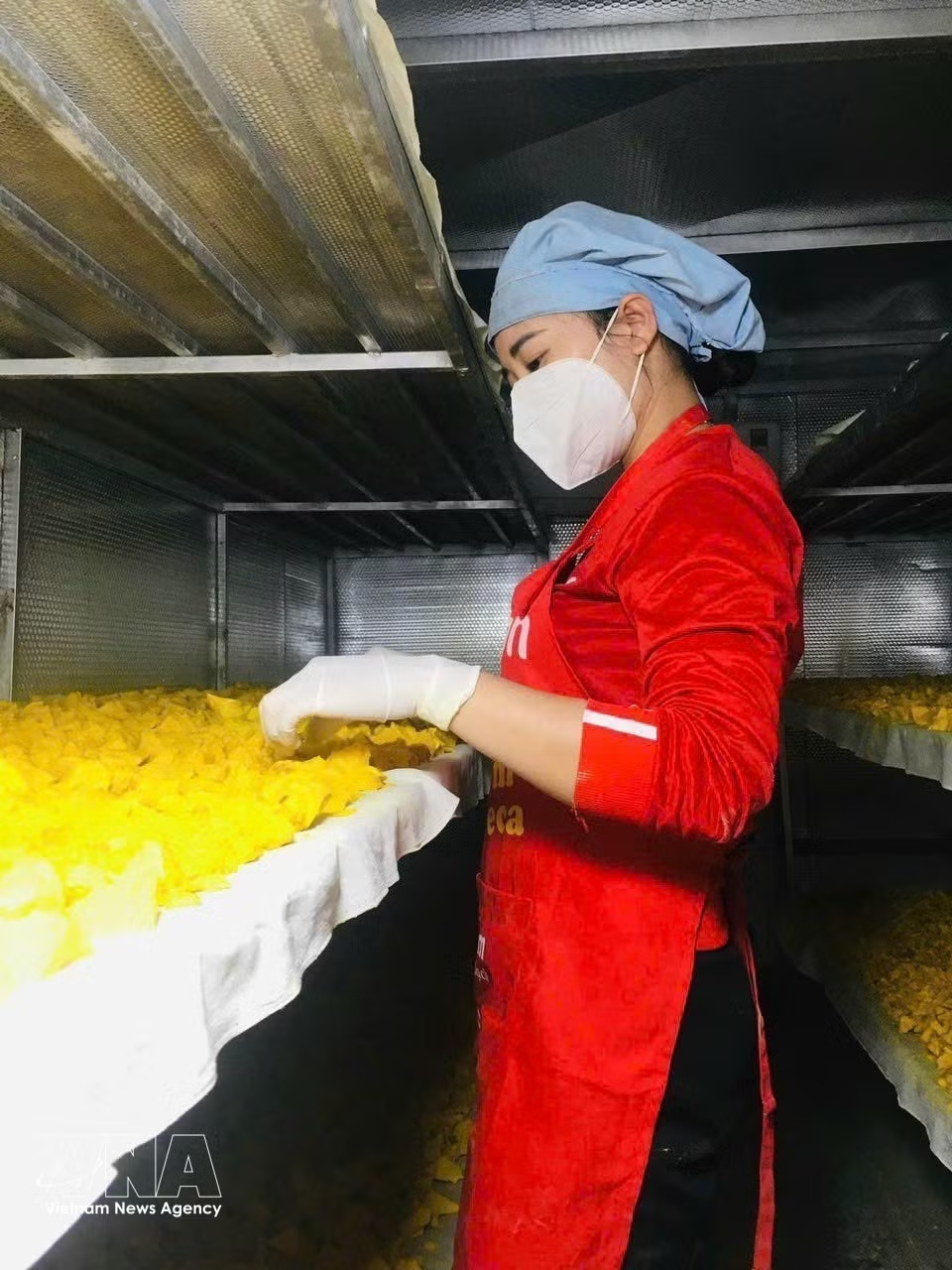
An agricultural cooperative specialising in producing turmeric starch in Nghe An province has worked to exploit and preserve the native medicinal plant ecosystem, creating products with high economic value. (Photo: VNA)

An agricultural cooperative specialising in producing turmeric starch in Nghe An province has worked to exploit and preserve the native medicinal plant ecosystem, creating products with high economic value. (Photo: VNA)

New approach to development

​Tran Minh Ngoc, Director of the National Institute of Medicinal Materials, said integrating medicinal plants into multiple economic sectors is a global trend. The global market is projected to expand from about 230 billion USD in 2021 to over 430 billion USD by 2028, with annual growth exceeding 11%, driven by rising demand for natural products.

​Advances in bioactive compound analysis, artificial intelligence, and big data are reshaping research and product development, creating both opportunities and challenges for Vietnam. The priority is to combine modern scientific advances with traditional knowledge to produce high-value products and sustainable livelihoods for farmers.

​The Politburo’s Resolution No. 72-NQ/TW calls for promoting the multi-purpose value of medicinal materials, shifting from treatment to proactive healthcare. Meanwhile, Resolution the Politburo's No. 57-NQ/TW identifies science, technology, and digital transformation as key drivers of socio-economic growth.

​Experts stressed that a new development approach is needed, with science and technology as the central lever to standardise raw materials, ensure quality, and enable deep processing. Stronger links between research institutions and businesses are essential to develop standards for promising medicinal plants, some of which are not yet included in the official pharmacopoeia.

​A representative of Traphaco JSC also highlights the need to connect medicinal plant development with tourism and build integrated value chains led by enterprises. Without a stable domestic supply chain, Vietnam risks continued reliance on imports, limiting its ability to fully unlock the value of its rich medicinal resources.

​Looking ahead, the institute plans to expand research beyond medicines and functional foods to include nutrition and daily consumption products, contributing to the integration of medicinal plants into everyday life and community healthcare, Ngoc stated./.​

VNA

See more

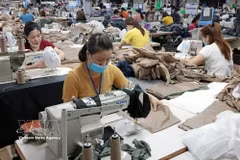
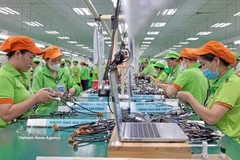
Producing garment products for export (Photo: VNA)

Export orders surge despite global headwinds

By late April, C&D Import-Export Co., Ltd., a wood and plywood exporter, had secured orders through the end of Q2. According to C&D Chairman Nguyen Tran Luat, contracts for Q3 are still being negotiated on a monthly basis rather than long-term deals. However, contrary to earlier concerns, order volumes in Q2 have risen sharply as buyers stockpile amid fears of prolonged geopolitical tensions, oil price volatility and shipping disruptions.

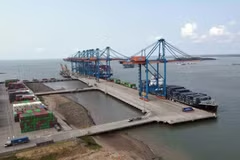
Germalink port's first phase is in operation (Photo: VNA)

Mega projects to transform Ho Chi Minh City urban landscape

Leading the charge in this massive building spree is the new central city square in the core of the Thu Thiem new urban area. Spanning more than 20 ha, it’s the crown jewel of the Central Square and new administrative center complex.

Passengers check in at Tan Son Nhat Airport on April 24, 2026. (Photo: VNA)

Tan Son Nhat airport braces for holiday surge with 750 daily flights

According to the airport authority, on average, daily flights will increase by around 12% from normal levels, with about 450 domestic and 300 international flights each day. Passenger numbers are expected to climb by 14%, with roughly 75,000 domestic travellers and 50,000 international passengers per day.

The Joint Stock Commercial Bank for Foreign Trade of Vietnam (Vietcombank) partners with Alipay+ to introduce cross-border QR payments which allows customers to use its VCB Digibank app abroad. (Photo: Vietcombank)

Vietnam, RoK launch cross-border QR payment service

The service was launched in Hanoi on April 23 by National Payment Corporation of Vietnam (NAPAS) in cooperation with GLN International, with Bank for Investment and Development of Vietnam and Hana Bank as settlement banks.

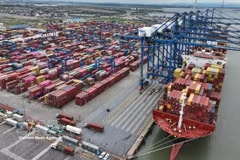
Hai Phong International Container Port in Hai Phong City. (Photo: VNA)

Vietnam establishes itself as one of region’s most dynamic manufacturing and supply bases

The country’s stable political and economic environment provides a critical foundation for long-term sourcing strategies. At the same time, Vietnam has demonstrated a strong ability to scale up manufacturing, supported by a continuously expanding industrial base capable of meeting both high-volume demand and increasingly complex technical and quality requirements.

Illustrative photo (Source: VNA)

Dung Quat bio-ethanol plant launches its first batch of E100 product

Thanks to efforts to mobilise all available resources and accelerate maintenance and repair work, the resumption took place in February, with the plant delivering its first shipment of more than 462 cubic metres of finished ethanol (E100) to the Binh Son Refining and Petrochemical JSC serving the Government-directed E10 petrol blending programme.

A panoramic view of the Trong Dong Stadium's construction site in Hanoi. (Photo: VNA)

Hanoi, Ho Chi Minh City named among Top 5 fastest-growing cities globally

In this context, Vietnam stands out prominently as Ho Chi Minh City ranks second globally, while Hanoi takes fifth place in the growth potential ranking. The simultaneous presence of both Vietnamese megacities in the global top tier reflects not only strong growth potential, but also the country’s increasingly prominent role in regional value chains.

An overview of the working session (Photo: VGP)

North-South high-speed railway must ensure optimal early operation: Deputy PM

Chairing a working session with several ministries, agencies and authorities from Hanoi and Ho Chi Minh City in Hanoi on April 22, Deputy Prime Minister Pham Gia Tuc underscored railway projects’ significance, saying that they will deliver substantial contributions to Vietnam’s long-term double-digit growth targets and unlock numerous development opportunities.

The State Bank of Vietnam sets the daily reference exchange rate at 25,113 VND/USD on April 24, 2026, up 8 VND from the previous day. (Illustrative photo: Getty images)

Reference exchange goes up on April 24

With the current trading band of +/- 5%, the ceiling rate applicable for commercial banks during the day is 26,369 VND/USD, and the floor rate 23,857 VND/USD.

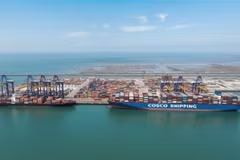
COSCO SHIPPING AQUARIUS is successfully handled at Hai Phong Port on April 22, 2026. (Photo baochinhphu.vn)

Hai Phong port receives ultra-large container vessel

Measuring 400 metres in length with a deadweight tonnage of 197,087 DWT, the vessel, which links key hubs including Shanghai, Ningbo, Singapore, Rotterdam and Hamburg, is among the world’s largest container ships and the heaviest ever handled by Hai Phong’s port system.