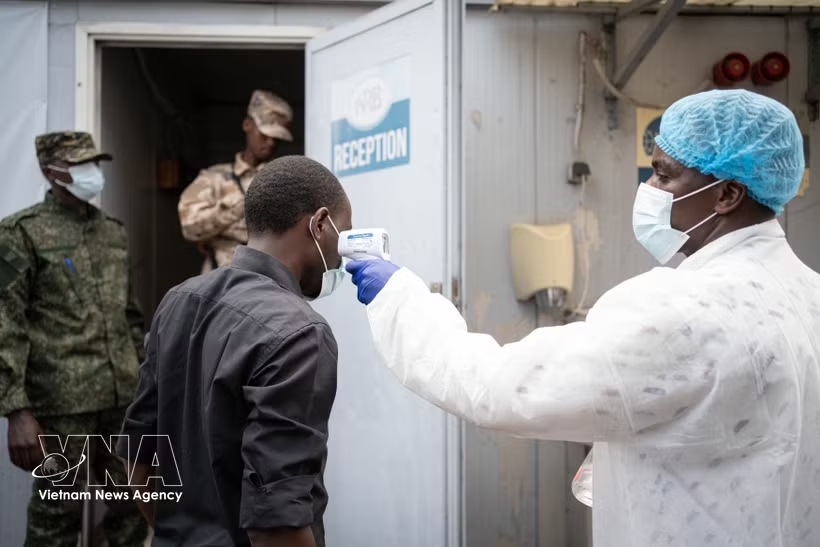
Hanoi (VNA) – The Ministry of Health (MoH) is intensifying surveillance and disease prevention measures amid growing concerns over the evolving Ebola outbreaks in the Democratic Republic of the Congo and Uganda, aiming to prevent the virus from entering the country.
The ministry on May 22 held an online meeting on Ebola supervision and prevention involving preventive health agencies and local health departments nationwide.
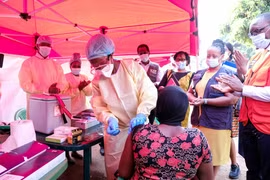
According to representatives of the World Health Organisation (WHO) in Vietnam, the Ebola situation remains complex in both the Congo and Uganda. WHO assessed the risk of spread as high in affected countries and within the region, but low globally, including Vietnam, while urging countries to maintain proactive prevention measures. In the Congo, four healthcare workers in Ituri province died from the Bundibugyo strain of Ebola on May 5.
By May 18, authorities had recorded 516 suspected cases, including 131 deaths in Ituri and North Kivu provinces.
Uganda has also confirmed two imported cases from the Democratic Republic of the Congo, including one elderly male patient who died on May 14 after developing severe symptoms.
Hoang Minh Duc, director of the Vietnam Administration of Disease Prevention, said Ebola is an extremely dangerous Group A infectious disease capable of spreading rapidly, with fatality rates of up to 90%.
The virus spreads from wild animals such as fruit bats, porcupines and primates to humans, before transmitting through direct contact with blood, body fluids or contaminated objects.
Among the six strains under the Orthoebolavirus genus, the current outbreaks in the Congo and Uganda have been linked to the Bundibugyo strain. However, vaccines and specific treatments are currently available only for the Ebola strain, not for Sudan or Bundibugyo.
Vietnam has so far recorded no Ebola cases. While the risk of an outbreak entering the country remains low, authorities warned that imported infections through travellers from affected areas cannot be ruled out.
Following WHO’s alert, the Ministry of Health instructed localities to strengthen monitoring of inbound travellers, especially those arriving from outbreak areas, while preparing rapid response teams and outbreak response plans. Leading institutions including the National Institute of Hygiene and Epidemiology and the Pasteur Institute in Ho Chi Minh City are now capable of conducting Ebola testing using realtime PCR and gene sequencing under biosafety level III conditions.
Specialised diagnostic reagents are also being procured under WHO guidance and are expected to arrive in Vietnam within seven to 10 days.
The ministry is continuing to coordinate with WHO and international organisations to update outbreak developments while strengthening training for localities on surveillance, testing and infection control.
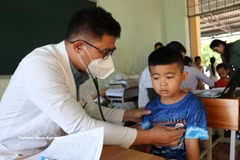
Health authorities advised that common Ebola symptoms include fever, fatigue, headache, muscle pain, sore throat, vomiting, diarrhoea, abdominal pain and skin rash, with some cases involving haemorrhaging. The incubation period ranges from two to 21 days.
People returning from outbreak areas were urged to monitor their health and promptly report to medical facilities if symptoms develop.
Concluding the meeting, MoH Deputy Minister Nguyen Thi Lien Huong instructed authorities to review outbreak information, develop comprehensive response scenarios and strengthen hospital preparedness, border screening and rapid response capacity.
Specialised institutes were also directed to organise inspections, update WHO recommendations and conduct training programmes to ensure readiness for all possible outbreak scenarios./.