Vietnamese scientists develop nanovitexin from mung bean husks to support diabetes treatment

The breakthrough is expected to support diabetes prevention and treatment while opening up broader biomedical applications.

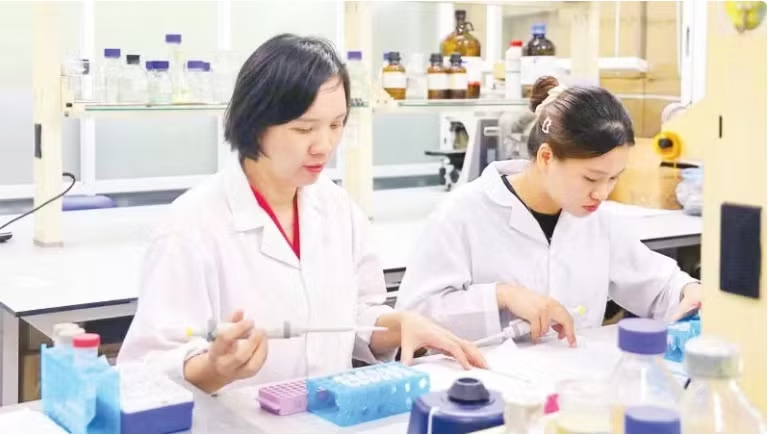
Research on extracting the bioactive compound vitexin from mung bean husks has contributed to improving the effectiveness of diabetes treatment. (Photo: nhandan.vn)

Hanoi (VNA) – Scientists from the Vietnam Academy of Science and Technology (VAST) have successfully developed nanovitexin from mung bean husks, creating a material with significantly enhanced properties compared to conventionally extracted vitexin.

The breakthrough is expected to support diabetes prevention and treatment while opening up broader biomedical applications.

According to the International Diabetes Federation, more than 11% of the world’s adult population was living with diabetes in 2025. Often referred to as a “silent killer,” the disease can cause serious complications affecting the cardiovascular system, liver, eyes and other organs.

While a range of anti-diabetic medicines is available, many remain costly and may cause undesirable side effects. As a result, scientists have increasingly turned their attention to natural bioactive compounds derived from plants as potential alternatives or complementary therapies.

Vitexin, a natural compound found in mung bean husks and several other plants, has been shown to possess various pharmacological properties, including anti-diabetic effects. However, its poor water solubility limits absorption in the body, with only about 4.9–5.8% absorbed in the small intestine, significantly reducing its effectiveness when administered orally.

To overcome these limitations, researchers from the VAST’s Institute of Biology and Institute of Materials Science applied nanotechnology to formulate vitexin into nano-sized particles, improving both its solubility and absorption. The project focused on developing a technological process for producing nanovitexin as a raw material for health supplements supporting diabetes prevention and treatment.

Dr. Ngo Thi Hoai Thu of the Institute of Biology, who led the research, said nano drug-delivery systems can significantly improve the bioavailability of poorly soluble compounds, enhance their stability under environmental conditions and increase their pharmacological effectiveness.

With a particle size of only 50–70 nanometres, nanovitexin demonstrates superior cellular uptake compared to conventional vitexin. It also shows strong antioxidant activity, helping protect cells from oxidative stress-related damage.

Researchers said nanovitexin offers particular promise in blood glucose management through its ability to inhibit starch-degrading enzymes. It may also help reduce gastrointestinal side effects commonly associated with conventional anti-diabetic drugs.

Beyond diabetes applications, the material could be used in products supporting liver detoxification and neuroprotection, while helping extend drug activity and reduce dosing frequency.

According to the project evaluation council, one of the team’s key achievements was the successful development of a technological process for producing nanovitexin from vitexin extracted from mung bean husks for biomedical applications. The resulting products are of high quality and show strong potential for technology transfer and commercialisation, paving the way for the development of new health-support products derived from natural materials./.
VNA

See more

At the launch of the 14th national red journey blood donation campaign in Ho Chi Minh City on June 11. (Photo: VNA)

National Red Journey blood donation campaign 2026 launched

Addressing the opening ceremony, Associate Professor, Dr. Nguyen Ha Thanh, Director of the NIHBT and head of the campaign’s organising committee, said the Red Journey is a symbol of dedication, compassion and social responsibility, and the campaign carries the hopes of millions of voluntary blood donors and helps bring life-saving opportunities to patients in urgent need of blood transfusions.

Da Nang will roll out a citywide health screening and periodic health check-up programme for all residents on July 1. (Illustrative photo: VNA)

Da Nang to launch citywide health screening programme on July 1

Director of the municipal Department of Health Tran Thanh Thuy said the city has developed a comprehensive plan for conducting free periodic health examinations and screening services throughout 2026, and prepared the necessary human resources, facilities and digital infrastructure to ensure effective implementation.

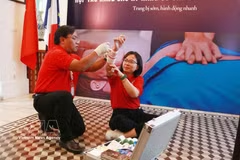
Staff from the Ho Chi Minh City First Aid Centre demonstrate first aid skills. (Photo: VNA)

Vietnam, France cooperate to build community first-aid network

The agreement focuses on establishing hundreds of first-aid stations across Long Chau’s pharmacy and vaccination network, standardising first-aid training for medical and pharmaceutical students, and expanding community health education activities nationwide.

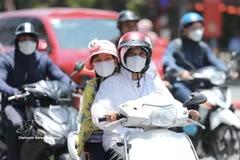
In Hanoi, the temperature recorded in Lang Ha at 1 pm on May 26 reached 40 degrees Celsius. (Photo: VNA)

Proactive response needed to cope with extreme weather: Experts

Health experts warned that prolonged heat exposure could cause heatstroke, heat exhaustion and other serious health conditions. High-risk groups include the elderly, children, pregnant women, people working or exercising outdoors for long periods, and those suffering from chronic illnesses such as hypertension, chronic obstructive pulmonary disease, asthma and diabetes.

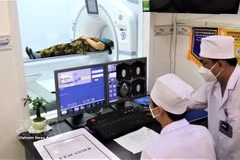
Ho Chi Minh City plans over 95 million USD for universal health screenings in 2026. (Illustrative photo: VNA)

Ho Chi Minh City earmarks over 95 million USD for universal health screenings in 2026

Ho Chi Minh City's free health examination programme, set to begin on May 25, is carried out at qualified healthcare facilities, mobile clinics at schools, factories and businesses, community-based screening sites arranged by local authorities, as well as through home visits to elderly residents, people living alone and those with limited mobility.

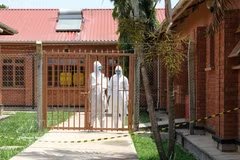
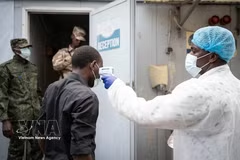
Healthcare workers are employed in an isolation and treatment area for patients infected with the Ebola virus in Entebbe, Uganda. (Photo: Xinhua/VNA)

Health Ministry calls for stronger preparedness against Ebola

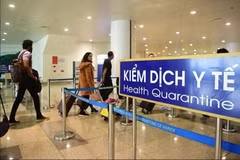
Medical facilities were instructed to strengthen surveillance, especially for individuals who have travelled to or returned from outbreak-hit countries or areas within the previous 21 days. They were also asked to strictly enforce infection control measures, including protective procedures, screening, triage and isolation protocols for suspected or confirmed Ebola cases.

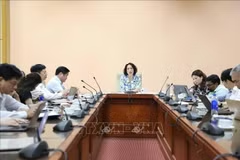
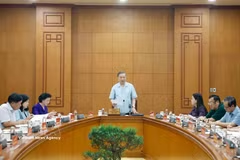
Party General Secretary and State President To Lam speaks at a working session Party Committee of the Ministry of Health on Vietnamese traditional medicine in Hanoi on May 20 (Photo: VNA)

Top leader calls for historic transformation of traditional medicine

Highlighting strategic orientations for the sector, Party General Secretary and State President To Lam requested that traditional medicine be incorporated into the country’s overall development strategy in the new era. He called for the building of a national traditional medicine ecosystem linked to the development of the health economy and national soft power.