15-day battle to save a German tourist with septic shock, multiple organ failure

Critically ill with septic shock and multiple organ failure, Mr. David Schmidt, a German tourist, received dedicated treatment from doctors for 15 days despite having no family members by his side.

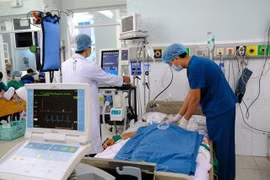
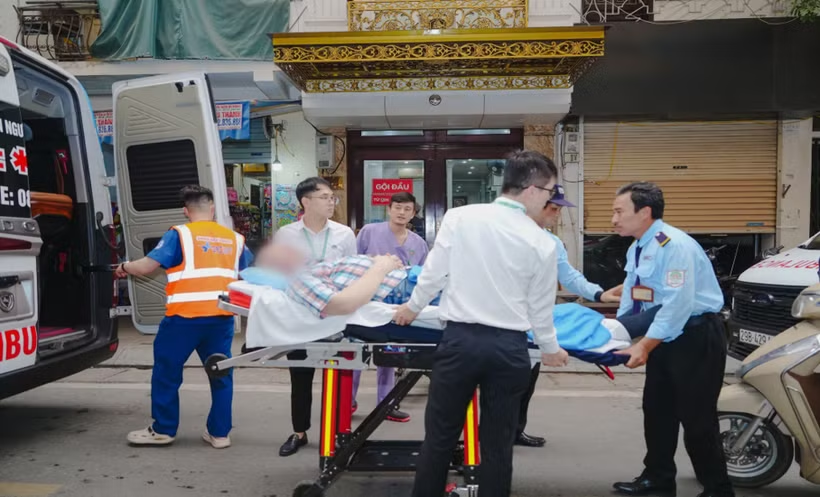
The patient was admitted to the Emergency Department in critical condition. (Photo: Hong Ngoc General Hospital)

Hanoi (VNA) – Critically ill with septic shock and multiple organ failure, Mr. David Schmidt, a German tourist, received dedicated treatment from doctors for 15 days despite having no family members by his side.

While traveling in Hanoi, Mr. David developed abdominal pain, repeated vomiting, and diarrhea. Upon examination at Hong Ngoc General Hospital, he was diagnosed with a severe gastrointestinal infection and was advised to be admitted for inpatient treatment. However, he declined admission as he wished to return to his home country.

Just a few hours later, Mr. David was brought back to the Emergency Department in a state of profound exhaustion, impaired consciousness, and an SpO₂ level that had dropped to 88 percent while breathing room air. The patient was immediately resuscitated, while in depth examinations and specialized laboratory tests were performed to determine the cause.

Laboratory results showed that the disease was progressing rapidly and severely. The marker used to assess heart failure was more than 57 times higher than normal, while the infection marker was nearly 900 times above the reference limit. Renal function continued to deteriorate, and arterial blood gas results showed that the patient had developed respiratory failure.

Mr. David was diagnosed with septic shock, severe bloodstream infection, pneumonia complicated by ARDS, severe multiple organ failure, and a very high risk of death. The intensive care team immediately initiated mechanical ventilation, endotracheal intubation, and central venous catheterization, while also coordinating with the German Embassy to contact the patient’s family.
2.png
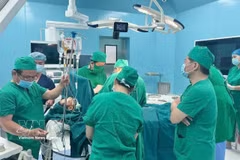
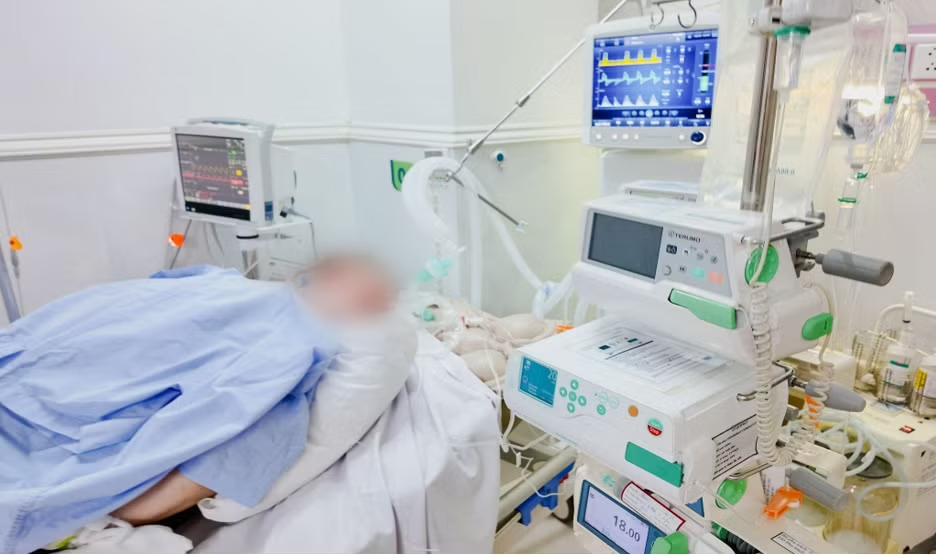
The patient received intensive treatment from the medical team at Hong Ngoc General Hospital. (Photo: Hong Ngoc General Hospital)

Even before contact could be established with his family, doctors coordinated multidisciplinary care, applied advanced intensive care techniques, and fought minute by minute to save the patient’s life.

After 24 hours of emergency treatment, the patient’s condition remained complex, with cardiac arrhythmias, episodes of tachycardia reaching up to 170 beats per minute, and severe respiratory acidosis. The doctors immediately initiated broad spectrum antibiotics, continuous renal replacement therapy, sedation and neuromuscular blockade, albumin supplementation, ventilator optimisation, and prone position ventilation to improve respiratory function and control the infection.

“To ensure maximum safety for the patient, we organised online consultations with tertiary hospitals. The specialists all agreed with the treatment strategy and intensive care indications being implemented at Hong Ngoc General Hospital” said Dr. Pham Thi Ninh Van, MD, Specialist Level I, Emergency Medicine and Intensive Care Department, Hong Ngoc General Hospital, who directly treated the patient.
3.png
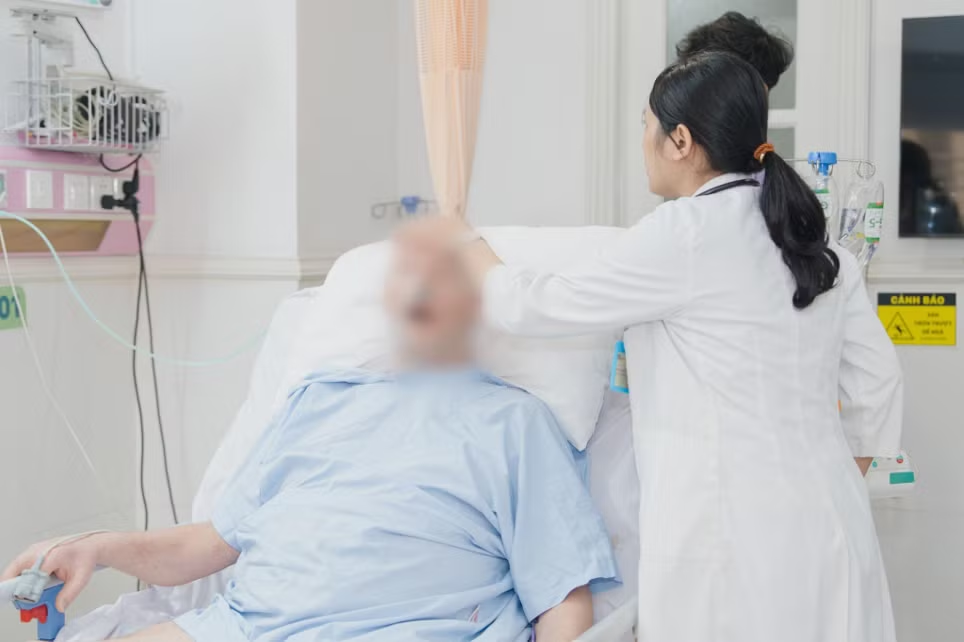
The patient was monitored around the clock by the medical team. (Photo: Hong Ngoc General Hospital)

As the patient had both heart failure and septic shock, medication administration and fluid resuscitation had to be calculated with great caution. Over the following 48 hours, a PiCCO system was placed for continuous hemodynamic monitoring and fluid management, helping optimize treatment.

“If the medication dose is too strong, the heart may not be able to tolerate it; however, if the dose is insufficient, the infection cannot be brought under control. Therefore, physicians must continuously monitor hemodynamics using PiCCO to adjust medications and intravenous fluids with precision down to the milliliter” Dr. Van explained.

Blood culture results confirmed that the patient had a bloodstream infection caused by Klebsiella pneumoniae originating from the gastrointestinal tract. Based on these findings, doctors optimised the antibiotic regimen, leading to markedly improved treatment outcomes.

After three days of intensive resuscitation, the patient’s clinical indicators began to improve, and he gradually emerged from critical condition. However, he continued to receive continuous renal replacement therapy as his cardiac and renal function had not yet fully recovered. By day 7, his respiratory function had improved markedly. After 15 days of treatment, the endotracheal tube was removed. The patient was able to breathe on his own with oxygen delivered via a nasal cannula, sit up, eat, drink, and call his family in Germany.

4.png
The patient’s condition improved markedly after 15 days of treatment. (Photo:Hong Ngoc General Hospital)

After nearly one month of treatment, his inflammatory markers and organ function indicators had almost returned to normal, and he was considered fit to return to his home country.

According to Dr. Van, this was a case of gastrointestinal infection with exceptionally rapid and dangerous progression, leading to septic shock and multiple organ failure within a short period of time. Such cases require early detection and intensive resuscitation from the very first hours to increase the patient’s chance of survival.

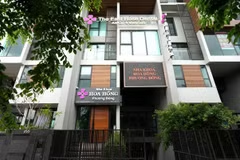
Hong Ngoc General Hospital has been awarded the Surgical Education Centre accreditation by the Royal College of Surgeons of England, recognizing its professional expertise, quality of care, and patient safety in accordance with international standards. The hospital has also invested in modern medical equipment, enabling the treatment of many severe and critical cases and supporting clinical specialties in complex emergency situations.

Addresses:

- 55 Yen Ninh Street, Ba Dinh District, Hanoi

- 8 Chau Van Liem Street, Tu Liem, Hanoi

Hotline: 024 3927 5568 ./.

VNA

See more

At the launch of the 14th national red journey blood donation campaign in Ho Chi Minh City on June 11. (Photo: VNA)

National Red Journey blood donation campaign 2026 launched

Addressing the opening ceremony, Associate Professor, Dr. Nguyen Ha Thanh, Director of the NIHBT and head of the campaign’s organising committee, said the Red Journey is a symbol of dedication, compassion and social responsibility, and the campaign carries the hopes of millions of voluntary blood donors and helps bring life-saving opportunities to patients in urgent need of blood transfusions.

Da Nang will roll out a citywide health screening and periodic health check-up programme for all residents on July 1. (Illustrative photo: VNA)

Da Nang to launch citywide health screening programme on July 1

Director of the municipal Department of Health Tran Thanh Thuy said the city has developed a comprehensive plan for conducting free periodic health examinations and screening services throughout 2026, and prepared the necessary human resources, facilities and digital infrastructure to ensure effective implementation.

Students play football during a break atthe Hai Xuan Secondary School in Ninh Binh province . (Photo: VNA)

Vietnam targets annual health screening for all students by 2030

By 2030, all educational institutions are expected to have separate medical rooms equipped with essential medicines and healthcare equipment, adequate access to safe drinking water and sanitation facilities, and school meal services that comply with food safety regulations.

Staff from the Ho Chi Minh City First Aid Centre demonstrate first aid skills. (Photo: VNA)

Vietnam, France cooperate to build community first-aid network

The agreement focuses on establishing hundreds of first-aid stations across Long Chau’s pharmacy and vaccination network, standardising first-aid training for medical and pharmaceutical students, and expanding community health education activities nationwide.

In Hanoi, the temperature recorded in Lang Ha at 1 pm on May 26 reached 40 degrees Celsius. (Photo: VNA)

Proactive response needed to cope with extreme weather: Experts

Health experts warned that prolonged heat exposure could cause heatstroke, heat exhaustion and other serious health conditions. High-risk groups include the elderly, children, pregnant women, people working or exercising outdoors for long periods, and those suffering from chronic illnesses such as hypertension, chronic obstructive pulmonary disease, asthma and diabetes.

Ho Chi Minh City plans over 95 million USD for universal health screenings in 2026. (Illustrative photo: VNA)

Ho Chi Minh City earmarks over 95 million USD for universal health screenings in 2026

Ho Chi Minh City's free health examination programme, set to begin on May 25, is carried out at qualified healthcare facilities, mobile clinics at schools, factories and businesses, community-based screening sites arranged by local authorities, as well as through home visits to elderly residents, people living alone and those with limited mobility.

Healthcare workers are employed in an isolation and treatment area for patients infected with the Ebola virus in Entebbe, Uganda. (Photo: Xinhua/VNA)

Health Ministry calls for stronger preparedness against Ebola

Medical facilities were instructed to strengthen surveillance, especially for individuals who have travelled to or returned from outbreak-hit countries or areas within the previous 21 days. They were also asked to strictly enforce infection control measures, including protective procedures, screening, triage and isolation protocols for suspected or confirmed Ebola cases.

Party General Secretary and State President To Lam speaks at a working session Party Committee of the Ministry of Health on Vietnamese traditional medicine in Hanoi on May 20 (Photo: VNA)

Top leader calls for historic transformation of traditional medicine

Highlighting strategic orientations for the sector, Party General Secretary and State President To Lam requested that traditional medicine be incorporated into the country’s overall development strategy in the new era. He called for the building of a national traditional medicine ecosystem linked to the development of the health economy and national soft power.

Deputy Prime Minister Pham Thi Thanh Tra speaks at the programme “Organ and Tissue Donation Day May 20 – Giving is Forever”. (Photo: VNA)

Deputy PM calls for stronger organ donation movement to save more lives

Vietnam has gradually mastered some of the world’s most complex transplant techniques since the country’s first successful kidney transplant in 1992. As of 2025, Vietnam had conducted 10,878 organ transplants, with 34 licensed hospitals now capable of performing transplant procedures.

The meeting between the delegation from Military Hospital 175 and Mayor of Leipzig Burkhard Jung at Leipzig City Hall (Photo: VNA)

Healthcare cooperation shines in Vietnam – Germany ties

The partnership between Military Hospital 175 and medical institutions in Leipzig has been recognised as a highlight of Vietnam – Germany healthcare cooperation, as well as of the sister-city relationship between Ho Chi Minh City and Leipzig.