Hanoi (VNA) – The spirit of the Politburo's Resolution No. 72-NQ/TW on breakthrough measures to strengthen healthcare protection, improve public health and raise service quality is being translated into practical initiatives nationwide, delivering visible progress.
One of the resolution’s key priorities is to continue improving healthcare services by placing people at the centre, while enhancing grassroots healthcare capacity and accelerating digital transformation.
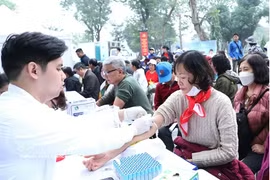
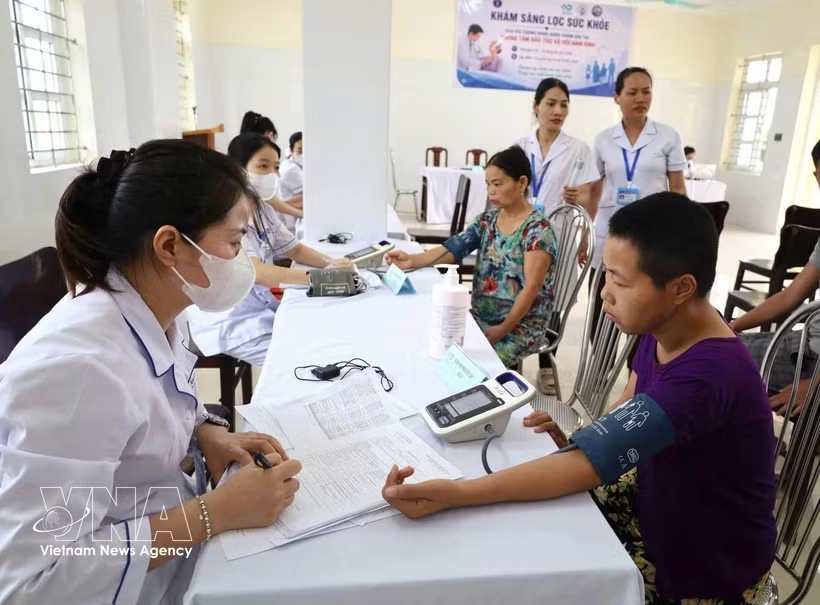
In the central city of Hue, a free periodic health check-up and screening programme for 2026–2030 is being implemented with the goal of ensuring that 100% of local residents receive at least one health examination annually. All health information will be recorded and updated through electronic health records, creating a foundation for lifelong management.
A notable feature of the programme is the shift from a treatment-based approach towards preventive healthcare, focusing on early risk detection and long-term health monitoring. Priority is being given to vulnerable groups, including older people, those with disabilities, low-income households, people with meritorious services and patients with chronic illnesses.
Alongside Hue, Ho Chi Minh City is accelerating the development of electronic health records to support digital healthcare management. By mid-June 2026, the community health platform of the southern metropolis had updated health data for more than 2.3 million residents. The database is expected to support early disease detection, strengthen preventive healthcare and promote data-driven governance across the health sector.
In the northern province of Phu Tho, healthcare facilities are increasingly using patient satisfaction as a benchmark for service quality. Hospitals have stepped up administrative reforms, expanded information technology applications, improved treatment environments and introduced advanced medical techniques locally.
Beyond improving treatment services, attention is also being directed towards vulnerable children. In the northern mountainous province of Lai Chau, a programme has been launched to provide free medical screening and surgery for children with disabilities and congenital conditions from disadvantaged backgrounds. More than 300 children are expected to receive examinations, with eligible cases undergoing surgery supported by specialists from central-level hospitals.
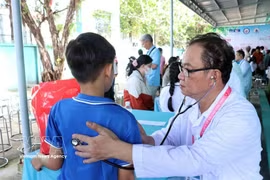
In line with Resolution 72-NQ/TW, preventive healthcare continues to be identified as a key task to safeguard public health at an early stage. Many localities are proactively implementing disease prevention measures, strengthening surveillance capacity and improving readiness to respond to public health risks.
The north-central province of Thanh Hoa’s health sector is intensifying monitoring of seasonal infectious diseases including hand-foot-mouth disease, dengue fever, measles and whooping cough, while preparing medicines, supplies and treatment plans for potential outbreaks. Prevention efforts are being combined with vaccination campaigns, public awareness activities and community engagement.

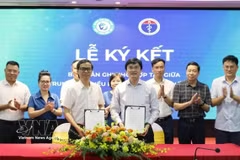
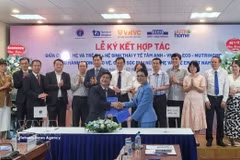
In the central province of Gia Lai, cooperation with the Tay Nguyen Institute of Hygiene and Epidemiology is being promoted to enhance epidemiological surveillance, support early detection and improve technical capacity at grassroots healthcare facilities. Joint efforts focus on infectious and non-communicable disease prevention, immunisation, nutrition, food safety, digital health transformation and health data management, particularly in remote, ethnic minority and border areas.
Alongside strengthening preventive healthcare, many provinces are investing in modern and integrated healthcare systems.
Bac Ninh is implementing a healthcare development project for the 2026–2035 period, with a vision to 2045, aiming to enhance healthcare protection and improve public health services. The initiative has an estimated investment of nearly 18.2 trillion VND (691.75 million USD) and is designed to meet the healthcare needs of more than 3.6 million residents.
Progress across localities indicates that Resolution 72-NQ/TW is gradually being translated into concrete programmes and action plans tailored to local conditions./.