Ho Chi Minh City (VNA) – Ho Chi Minh City plans to introduce robotic surgery at its gateway hospitals as part of a broader strategy to build a network of high-quality regional medical hubs, expanding public access to advanced healthcare while easing patient overload at major inner-city hospitals.
Leaders of the municipal Party Committee made this statment at a working session with the municipal Department of Health and related agencies on July 4, regarding the development of the city's gateway hospital network.
Gateway hospitals delivering positive results
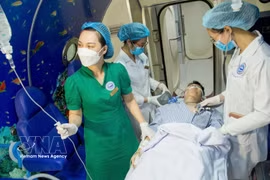
According to the municipal Department of Health, developing gateway hospitals is a key pillar of the city's strategy to establish a regional specialised healthcare system. The network is designed to permanently relieve overcrowding at major downtown hospitals while strengthening strong inter-regional emergency care and treatment network.
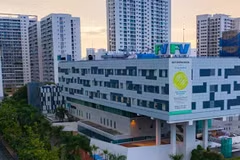
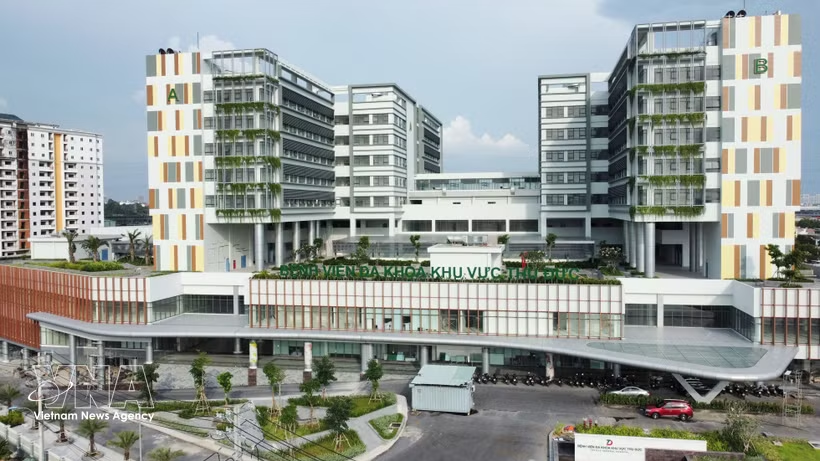
In 2025, the city completed upgrades to three key gateway hospitals, including Thu Duc, Hoc Mon and Cu Chi General Hospitals. Each now has 1,000 beds and internationally standardised medical equipment, forming new healthcare hubs around the city. These facilities have rapidly improved their clinical capacity through technical transfers and training from leading tertiary hospitals.
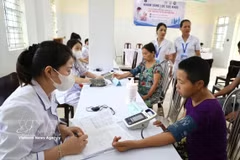
After one year of operation, Thu Duc General Hospital has been treating more than 3,500 outpatients and over 750 inpatients daily. It has partnered with leading hospitals to develop advanced services, including training surgeons in gastrointestinal and urological laparoscopic procedures and abdominal aortic stent graft implantation; mechanical thrombectomy for stroke patients and surgical intensive care; developing pediatric and neonatal intensive care teams; and training staff in open-heart surgery, and transfering cardiac surgery techniques.
Cu Chi General Hospital has also recorded rising patient numbers, fewer referrals to higher-level facilities and more successful treatment of complex cases after receiving technical support from eight major hospitals.
The three gateway hospitals are steadily mastering specialised procedures. Cu Chi and Hoc Mon hospitals have expanded trauma care, neurosurgery, joint replacement and cardiovascular interventions, while Thu Duc hospital has improved cardiovascular, surgical and orthopaedic services. Together, these hospitals are helping ease the burden on inner-city healthcare facilities, which receive around half of their patients from neighbouring provinces in the Southeast region.
Developing gateway hospitals into specialised healthcare hubs
At the working session, Standing Deputy Secretary of the municipal Party Committee Nguyen Phuoc Loc said the city has significantly increased public investment in healthcare over the past two years.
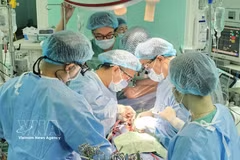
Besides developing the new Pham Ngoc Thach University of Medicine campus and its teaching hospital, the city has equipped the three gateway hospitals with advanced technologies, including CT, MRI, DSA and ECMO systems, as well as 18-22 modern operating theatres comparable to those at top-tier hospitals.
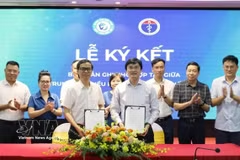
Notably, Thu Duc and Hoc Mon hospitals will also receive robotic surgery systems. Specialists from Binh Dan Hospital are ready to transfer techniques and train medical teams to perform robotic procedures.
The municipal authorities aim to develop the three facilities into highly specialised hospitals. In the near term, they will be upgraded to fully qualified Grade-I hospitals capable of serving as tertiary referral centres, raising the city's total number of Grade-I and tertiary hospitals to 25.
Despite strong investment, the demand for hospital beds continues to outpace supply in the gateway areas because of rapid population growth. The municipal authorities therefore plan to continue expanding bed capacity while improving the quality of medical services.
To further strengthen its multi-tiered, multi-hub healthcare system, particularly the gateway hospital network, and bring quality healthcare closer to residents, Loc said the southern metropolis will introduce incentives for highly skilled medical professionals working at gateway hospitals, provide official accommodation for rotating specialists, strengthen cooperation between hospitals and medical universities, and expand residency training programmes to build a high-quality workforce.
The city will also propose changes to health insurance reimbursement policies to facilitate technical support from top-tier hospitals and ensure sustainable funding for the expanding healthcare network, he said.
The long-term goal is to transform gateway hospitals into specialised medical centres that bring advanced healthcare, including robotic surgery, closer to residents while ensuring more equitable access to high-quality medical services across the city./.