Hanoi (VNA) – The Population Law, which took effect on July 1, marks a major shift in Vietnam's demographic policy by introducing broader and targeted support for different groups, from young families and pregnant women to children and the elderly, to sustain fertility, improve population quality, and enhance living standards.
Policies closer to workers' everyday needs
Young workforce, who are at the stage of starting families and having children, and those employed in industrial parks, are among the groups most directly affected by the new law. Since the law came into force, many have paid close attention to new provisions on maternity benefits, childcare and family welfare.
Female workers welcomed the extension of maternity leave to seven months for women giving birth to a second child, saying the additional month will provide more time to care for newborns and recover before returning to work.
Male workers also expressed support for the new provision granting fathers leave when their wives give birth, saying it will enable them to share childcare responsibilities during the critical early days after delivery.
Many young couples said new measures, including support for social housing and childbirth incentives, will give them greater confidence to plan for children after achieving greater financial stability.
Trade unions have also reported strong interest among members, with most inquiries focusing on practical benefits such as incentives for women who have two children before the age of 35 in low-fertility areas and access to social housing.
According to Luu Hong Van, Chairman of the Trade Union of Hanel Plastic Foam JSC in Hanoi, said these policies address workers' everyday concerns by helping them secure stable employment, better housing and improved conditions for raising children. He said that the company will continue raising awareness among union members about their rights while listening to concerns arising during implementation, ensuring timely feedback to safeguard workers' legitimate rights and interests.
Workers' feedback shows that the Population Law’s new policies has drawn attention not only for expanding benefits but also for addressing practical everyday demands.

From a single policy to tailored solutions
Vietnam is facing significant demographic challenges. The country's total fertility rate has fallen to around 1.93 children per woman, below the replacement level of 2.1, while many provinces and cities are experiencing persistently low birth rates. Regional fertility disparities, sex imbalance at birth and the need to improve population quality have also created new policy demands.
Against this backdrop, the Population Law reflects a shift from the traditional family planning approach to a broader population-and-development strategy. Rather than applying a uniform policy nationwide, it introduces measures tailored to the needs of different population groups throughout their lives.
Young families remain a key focus. The law includes longer maternity leave for women giving birth to a second child, paternity leave, incentives for women who have two children before the age of 35 in low-fertility localities, and priority access to social housing. These provisions are detailed in Government Decree No. 168/2026/ND-CP, which also took effect on July 1 to ensure nationwide implementation.
Experts said the new policies are designed not only to encourage childbirth but also to address the practical concerns facing young families, including childcare, housing and social welfare. By easing these pressures, the measures are expected to help couples make reproductive decisions based on their own aspirations.
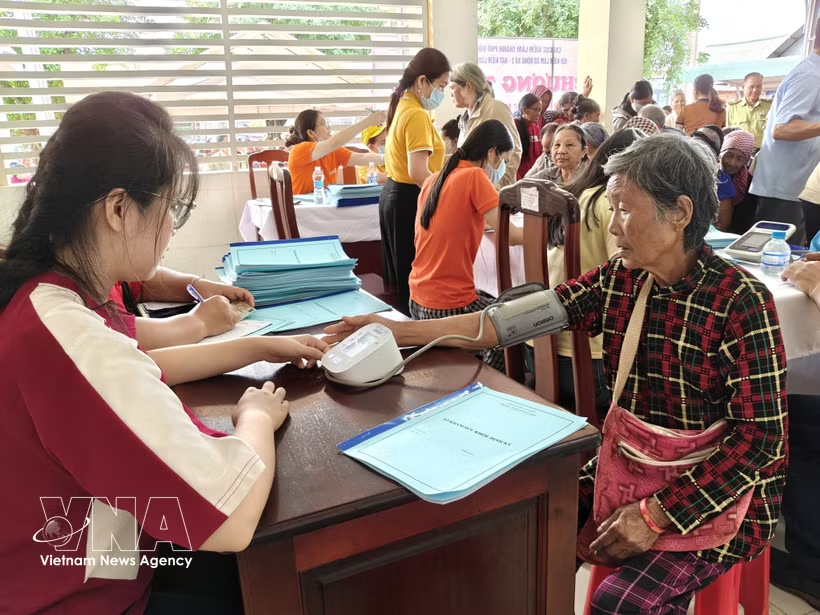
Beyond young families, the law expands support for other population groups. It strengthens reproductive healthcare as well as prenatal and newborn screening programmes to detect health risks early and improve population quality from birth. For older people, it promotes healthcare services, community-based care models and greater social participation in elderly care to help Vietnam adapt to rapid population ageing.
The targeted policy approach represents a significant departure from previous regulations, which primarily focused on controlling fertility. By addressing the specific needs of different population groups, the new law lays a stronger foundation for sustainable population development, higher-quality human resources and improved quality of life./.