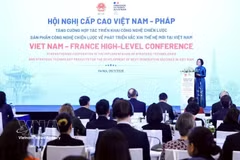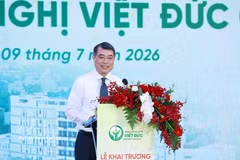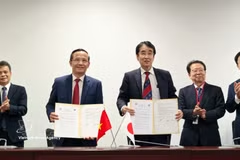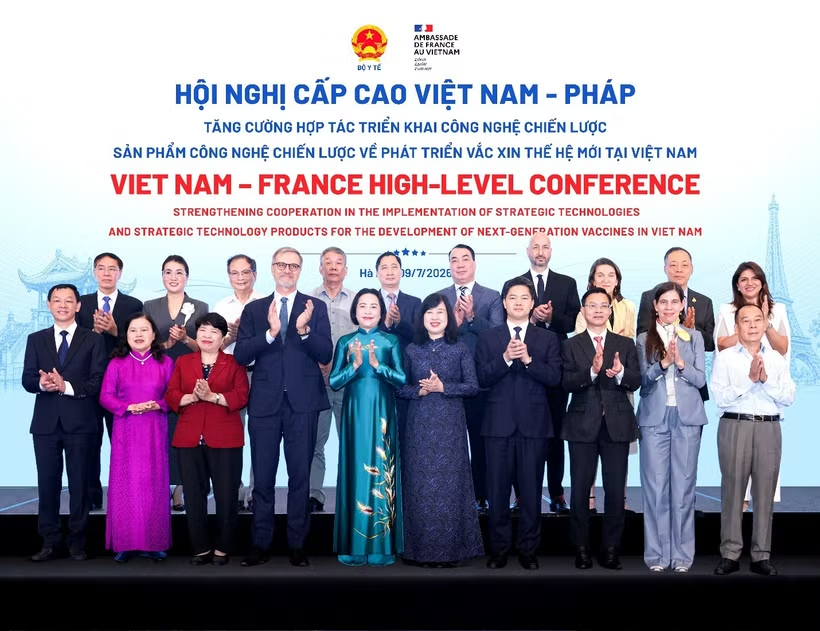
Hanoi (VNA) - The Ministry of Health and the French Embassy co-hosted the Vietnam–France High-Level Conference on next-generation vaccine technologies in Hanoi on July 9.
The conference provided a platform for senior Vietnamese and French leaders to exchange knowledge and experience in strategic medical technologies, with a particular focus on preventive medicine – a traditional area of strength for France, which boasts a long-established and advanced high-technology vaccine manufacturing industry, a robust global supply chain, and world-leading research and innovation capabilities.
This is also an area of strategic priority for Vietnam, as Vietnam seeks to strengthen healthcare capabilities, meet the growing demand for disease prevention and healthcare, ensure health security, proactively respond to infectious disease outbreaks, and contribute to the Government's double-digit economic growth targets.
The conference also marked a significant milestone in the ongoing collaboration toward the localisation of vaccine manufacturing between Sanofi and VNVC, which was signed in Paris in October 2024, coinciding with Party General Secretary To Lam's official visit to France and the elevation of bilateral relations to a Comprehensive Strategic Partnership.
In the opening remarks, Minister of Health Dao Hong Lan underscored that in recent years, particularly in the aftermath of the COVID-19 pandemic, health security has transcended the realm of public health to become intrinsically linked to national security and sustainable development. For Vietnam, achieving self-sufficiency in vaccine research, manufacturing, and supply represents one of the most critical pillars for protecting public health, strengthening the resilience of the healthcare system, and contributing to long-term economic growth.
In this context, the Ministry of Health is vigorously implementing the Party and State's strategic directives on science, technology, innovation, and digital transformation, with vaccines identified as a strategic technology product, aimed at enhancing national self-sufficiency and affirming Vietnam's position in the global biotechnology and healthcare value chain.
Through this initiative, the collaboration will contribute to enhancing domestic vaccine manufacturing capabilities, ensuring stable supply for the National Immunization Program, and advancing the long-term objective of positioning Vietnam as a regional hub for vaccine manufacturing and innovation.
French Ambassador to Vietnam Olivier Brochet affirmed that the conference stands as a testament to the strength, maturity, and long-term vision of the Vietnam–France Comprehensive Strategic Partnership in the field of healthcare.
The Ambassador highlighted that for decades, healthcare has been one of the strongest and most dynamic pillars of the bilateral relationship between France and Vietnam. In 2025, Vietnam imported 486 million USD worth of pharmaceutical products from France, with vaccines accounting for a significant share of these imports and playing an important role in improving public health.
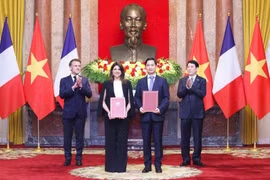
The agreement exchanged during French President Emmanuel Macron's State visit to Vietnam in May 2025 provided a framework for the progressive development of vaccine manufacturing technology, alongside the development of local expertise, quality management, and compliance with the highest standards of research, manufacturing, and safety.
He further expressed that this shared ambition will be reflected very soon in the signature of a renewed intergovernmental agreement on health cooperation between France and Vietnam, which will provide a modern and ambitious framework for the partnership, bringing together medical training, hospital cooperation, research, public health, and innovation, and preparing a new chapter adapted to the health challenges of tomorrow.
Stephen Alix, Head of Vaccines International at Sanofi, shared that with over 100 years of experience in vaccine manufacturing, Sanofi views this as a long-term project on research collaboration, human resource development, manufacturing capability building, and the assurance of international standards in quality and safety.
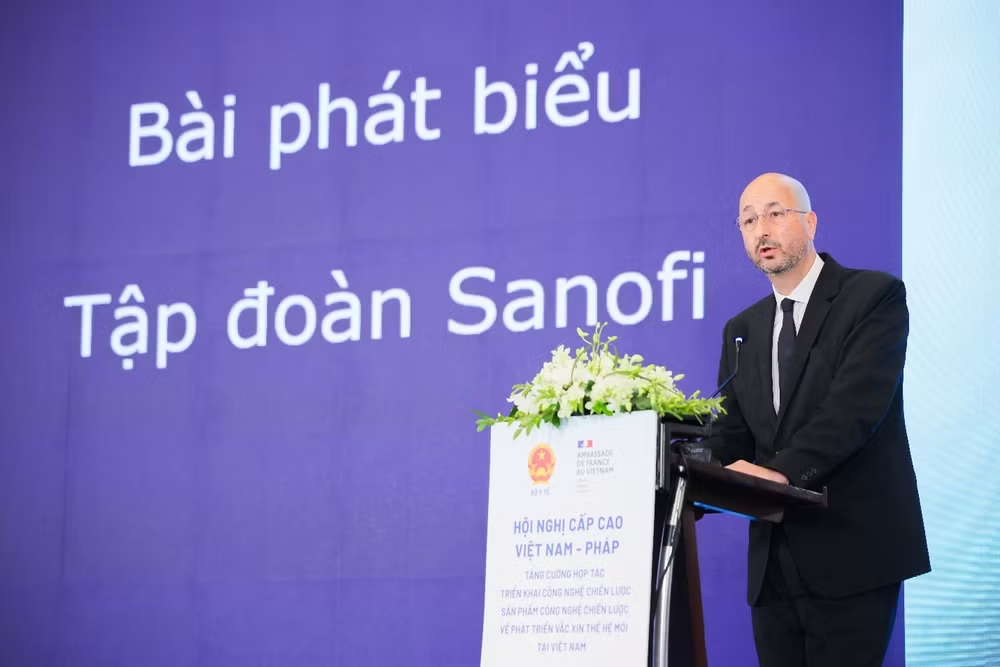
He noted that the combination of Sanofi's technological capabilities and global expertise with VNVC's investment, research, and operational foundations will create the critical conditions necessary for the development of next-generation vaccine manufacturing capabilities in Vietnam.
"Sanofi is committed to a long-term partnership with Vietnam and VNVC in research, global knowledge sharing, human resource development, and the advancement of high-quality vaccine manufacturing capabilities – contributing to Vietnam's vaccine self-sufficiency and strengthening national health security," said Mr. Stephen Alix.
Ngo Chi Dung, Chairman of the Board of Directors and General Director of Vietnam Vaccine Joint Stock Company (VNVC), affirmed that in this new phase of national development, the private sector is committed to taking a more active role in strategic technology fields, contributing alongside the State to build national capabilities in science, technology, and healthcare. In that spirit, VNVC has made long-term investments to develop a comprehensive vaccine and immunization ecosystem, from a network of nearly 300 modern vaccination centers nationwide, to advancing scientific research and international cooperation, and in particular, investing in the construction of the VNVC Vaccine and Biological Manufacturing Plant – a large-scale, modern facility designed to progressively acquire strategic and core vaccine manufacturing technologies while proactively developing independent research, manufacturing, and supply capabilities in accordance with the highest international standards.
The VNVC Vaccine and Biological Manufacturing Plant represents an initial investment of over VND 2,500 billion, spanning more than 26,000 m² in Tay Ninh Province, and is designed to meet international standards including EU-GMP, WHO-GMP, and US FDA, with a designed production capacity of approximately 100 million vaccine doses per year.
In accordance with the cooperation roadmap with Sanofi, both parties are advancing the localization of manufacturing for several high-demand essential vaccines for children and adults. The VNVC Vaccine and Biological Manufacturing Plant is expected to commence operations by the end of 2027, progressively acquiring technology, manufacturing processes, quality management systems, and workforce training to international standards under the guidance of Sanofi experts. The first batches of vaccines are expected to be manufactured in Vietnam as early as 2028./.