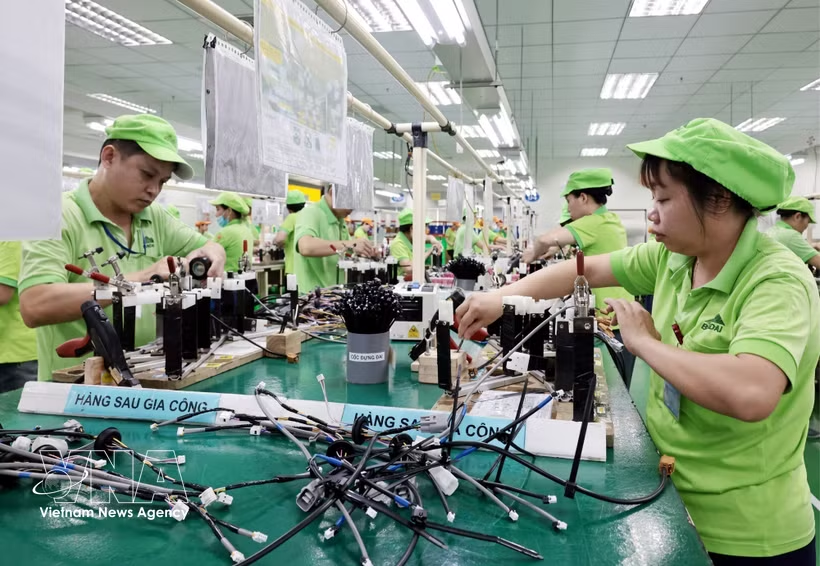
Hanoi (VNA) – The Politburo’s Resolution No. 10-NQ/TW on developing the foreign-invested sector places strong emphasis on promoting the green and digital economy, coupled with technology transfer and stronger linkages with domestic enterprises.
Experts said the resolution could become a strategic lever for Vietnam’s sustainable development, but pose major challenges related to infrastructure capacity and environmental standards.
Building a green investment ecosystem
Commenting on the resolution’s orientation to develop a synchronised foreign investment ecosystem linked with logistics, data and energy infrastructure, Associate Professor and Dr. Nguyen The Chinh, Vice President of the Vietnam Association of Environmental Economics (VIASEE) and former Director of the Institute of Strategy and Policy on Natural Resources and Environment, said high logistics costs and the pressure to secure clean-energy autonomy remain Vietnam’s most pressing weaknesses.
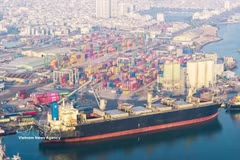
According to Chinh, Vietnam’s logistics costs are still high compared with regional peers, raising production costs and reducing national competitiveness. Inadequate connectivity among transport infrastructure, warehousing systems and the slow adoption of digital technologies and big data have created bottlenecks in the circulation of goods, hindering high-quality FDI inflows.
At the same time, the challenge of ensuring clean energy security has become a critical issue as multinational corporations increasingly apply stringent ESG standards and commit to achieving net-zero emissions. An unstable energy system or a slow transition to renewable energy could significantly erode Vietnam’s attractiveness to international investors.
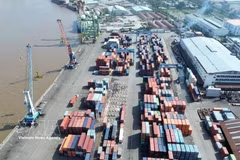
To address these challenges by 2030 with a vision to 2045, he proposed Vietnam modernise transport and logistics infrastructure in a synchronised manner by upgrading and integrating road, rail, aviation and maritime networks, and develop modern ports, terminals and logistics hubs. Digital transformation and automated monitoring should also be applied to improve transparency and operational efficiency.
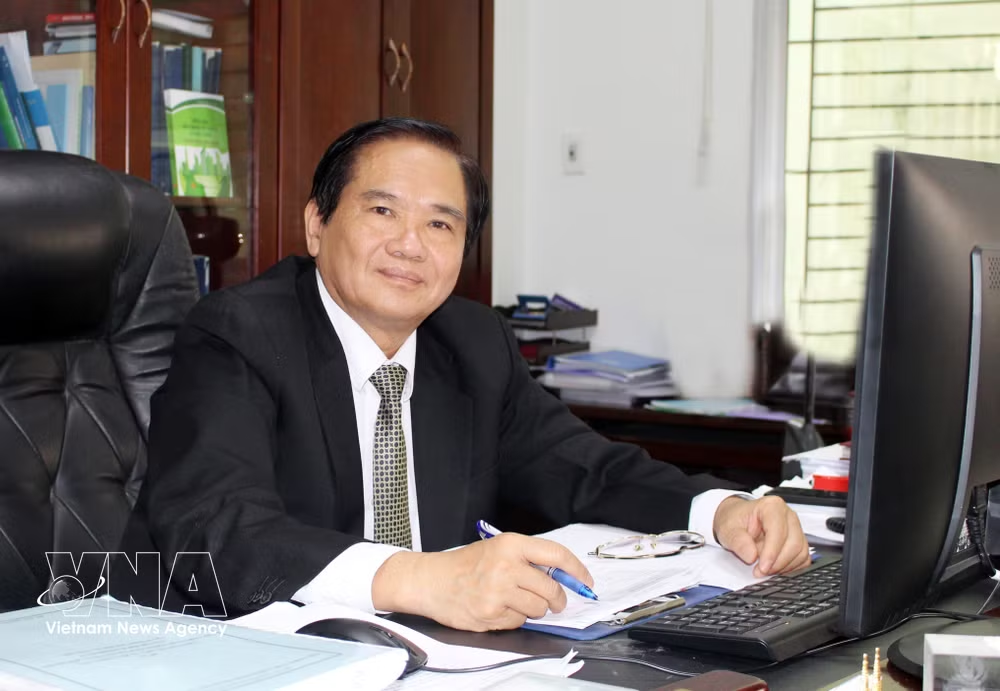
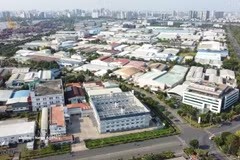
He stressed that Vietnam needs to accelerate the development of internationally standardised green industrial parks and economic zones, support enterprises in implementing net-zero commitments, expand renewable energy transmission infrastructure under Power Development Plan VIII, and fully leverage the country’s long coastline for wind and solar power development. The early implementation of the Ninh Thuan nuclear power project will also help provide a stable baseload power supply.
Need for controlled policy experimentation
Resolution No. 10 sets a strategic goal of shifting towards developing a national strategic investment platform. From an international economic perspective, Associate Professor, Dr. Nguyen Thuong Lang of the National Economics University said Vietnam urgently needs to change its management mindset and create new development spaces amid the global shift of FDI towards higher quality and greater technological content.
He suggested stronger decentralisation and greater autonomy for localities so they can proactively attract investment based on their competitive advantages. Expanding development space to the inter-regional level will create sufficient market scale and supporting ecosystems to attract multinational corporations and global financial institutions to mega-projects worth tens or even hundreds of billions of US dollars, he said.
Lang also proposed piloting a regulatory sandbox in one to three key economic localities before scaling up nationwide. Breakthrough models such as free trade zones and free ports could be tested in infrastructure-ready centres including Hai Phong and Da Nang, while high-potential localities such as Hue should not be overlooked.
To realise the vision of Resolution No. 10, he recommended establishing empowered regional coordination bodies, creating a dedicated legal framework for pilot free trade zones and free ports, and harmonising inter-provincial procedures, including industrial land funds, compensation mechanisms and a national one-stop process for major infrastructure projects./.