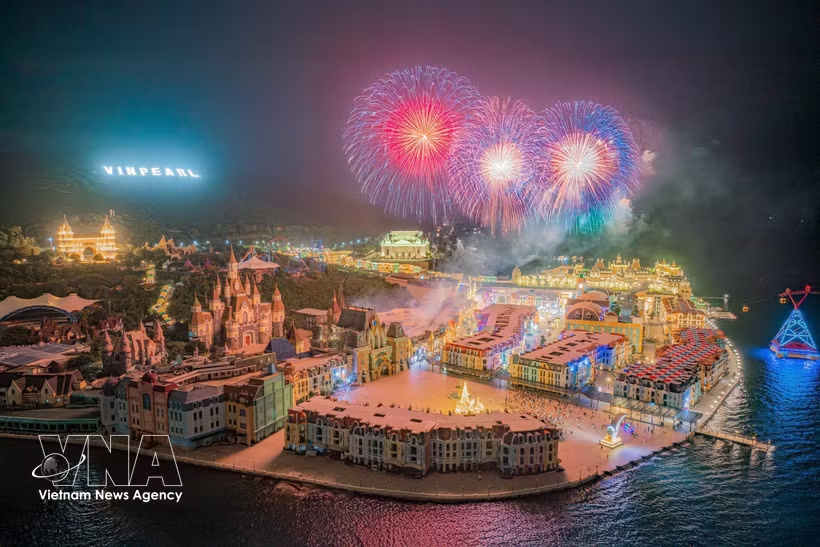
Hanoi (VNA) – Stronger coordination among the tourism, culture, trade and transport sectors is needed to build a more integrated and competitive night-time economy for the south central province of Khanh Hoa, according to experts.
With its coastline, islands and diverse landscapes, Khanh Hoa has become one of Vietnam's leading tourism destinations, particularly for international visitors. However, while visitor numbers continue to grow, night-time tourism remains largely fragmented and lacks comprehensive planning, requiring more efforts to further exploit this potential sector.
Untapped driver of double-digit growth
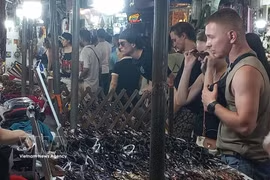
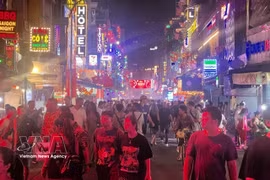
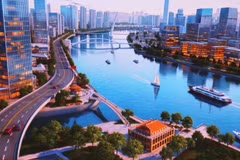
Arriving in Cam Ranh close to midnight, visitors can still find bustling streets and busy restaurants, highlighting the considerable revenue potential of the province's night-time economy.
Following the merger with neighbouring Ninh Thuan province, Khanh Hoa now offers an even wider range of tourism experiences, from beach resorts and nature exploration to cultural heritage and local cuisine.
To maximise the economic value of night-time tourism, the provincial People's Committee has introduced a plan to implement the province's night-time economy development scheme.
Evening attractions now include Vinpearl Land on Hon Tre island, Marina Beach Club Nha Trang, pedestrian streets in Nha Trang and Phan Rang wards, as well as 24-hour dining and shopping services.
Tourists can also enjoy performances such as the Tata Show at VinWonders, the Chum Show at the Do Theatre, Legendary Lights at Nha Trang Ancient Craft Village and weekend street performances at Tran Phu Park.
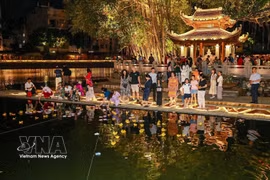
Among the most distinctive products are the monthly Moonlight over the Ancient Towers and The Sacred Land of Agarwood programmes, presented in a semi-realistic theatrical format. Night cruises on Nha Trang Bay featuring sightseeing, music and cuisine have also become popular, while many luxury hotels and resorts regularly organise evening entertainment programmes.
Khanh Hoa is home to five UNESCO-recognised heritage sites, three special national relic sites, five national treasures and renowned bays including Van Phong, Nha Trang, Cam Ranh and Vinh Hy. These assets provide a strong foundation for developing high-quality, sustainable and distinctive tourism products while reinforcing the province's position as a leading destination in Vietnam and Southeast Asia.
According to the provincial Department of Culture, Sports and Tourism, Khanh Hoa welcomed around 9.2 million visitors in the first half of 2026, up 52.93% year-on-year. International arrivals exceeded 3.8 million, while tourism revenue reached an estimated 33.893 trillion VND (1.3 billion USD), up 32.95%. Tourism revenue has become a key driver supporting the province's target of achieving double-digit economic growth.
Bui Minh Thang, Vice Chairman of the Khanh Hoa Tourism Association, said Russian visitors account for around 80% of international arrivals. Their average stay of 10-15 days is considerably longer than that of visitors from other markets. Khanh Hoa's year-round warm climate, Vietnam's visa exemption policy for Russian citizens, competitive prices, appealing cuisine and the friendliness of local people continue to make the province an attractive destination for Russian tourists.
Long-term planning, stronger policy support needed
Director of the provincial Department of Culture, Sports and Tourism Thai Thi Le Hang said developing night-time tourism is essential to diversify tourism products, improve competitiveness, extend visitor stays and increase spending.
She said the sector plays an important role in implementing the Politburo's Resolution No. 09-NQ/TW on Khanh Hoa's development and the provincial Party Committee's Resolution No. 01-NQ/TU on achieving double-digit growth during 2025-2030.
Tourism and services have been identified as one of the province's four key growth pillars, with tourism serving as a spearhead economic sector.
Despite encouraging progress, Hang acknowledged that challenges remain. Night-time tourism activities are still small in scale, lacking large integrated developments because of the absence of comprehensive planning.
Coordination among the tourism, culture, trade and transport sectors remains limited, while shortages of skilled workers, the lack of investment incentives and insufficient promotion have prevented local destinations from building distinctive brands, she added.
Tran Quang Minh, Director of Nha Trang Tourism Services Co., Ltd., said most tourism products have been developed independently by tourism companies. Although safety is well managed, the absence of a common development strategy has weakened cooperation and reduced the overall value generated by tourism.
Experts say Khanh Hoa should accelerate planning for dedicated night-time tourism zones, introduce clearer management regulations, develop signature tourism products, encourage private investment in cultural performances, light festivals, international food streets and traditional cultural spaces, expand night tours combining gastronomy, entertainment and cultural performances, promote smart tourism applications using digital technology and virtual reality, and strengthen tourism promotion and partnerships to unlock the full potential of the province's night-time economy./.
VNA