Hanoi (VNA) – Building on Vietnam's long-standing tradition of peaceful diplomacy and President Ho Chi Minh's enduring teaching that diplomacy is indispensable for an independent nation, second only to national defence, Vietnam is entering a new era of the nation's rise with a bold and forward-looking foreign policy vision, marked by the introduction of the Politburo's Resolution 06-NQ/TW.
The issuance of the resolution on May 19, 2026, on implementing the foreign policy adopted at the 14th National Party Congress was a significant milestone. For the first time, foreign affairs have been defined as a "vital and regular" task on a par with national defence and security.
The resolution sets out a vision of enabling Vietnam's "heartbeat to resonate with that of the world, breathe in step with the spirit of the times, contribute to peace shaping, foster prosperity, and build a stronger and higher international standing for the country and nation.”
As the country's frontline and key instrument for identifying and addressing potential conflicts early and from afar, Resolution No. 06, read alongside Resolution No. 59-NQ/TW on international integration in the new context issued in January 2025, forms a unified strategic framework that elevates foreign affairs to a driving force serving the country's development aspirations through 2030 and its vision for 2045.
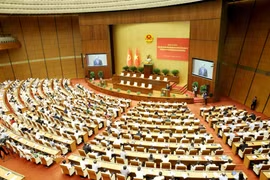
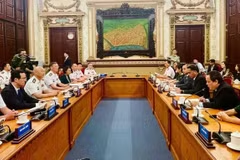
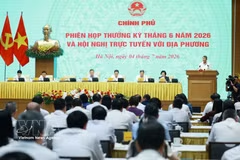
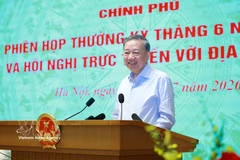
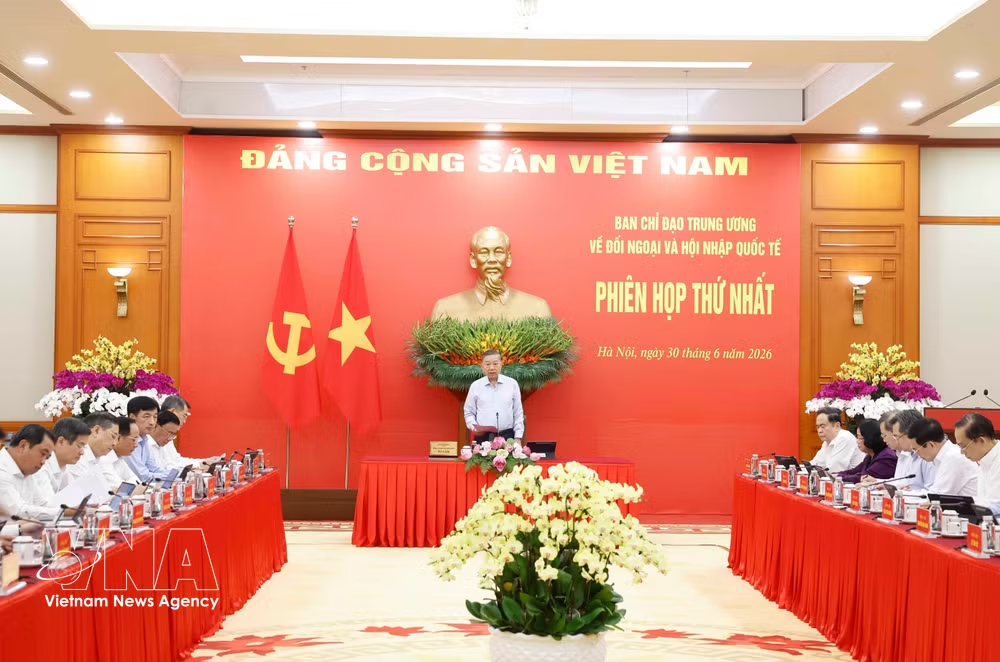
Strong political determination has been shown to turn that strategic vision into tangible outcomes. A key step came with the establishment of the Central Steering Committee for Foreign Affairs and International Integration, which held its inaugural meeting on June 30 under the chair of Party General Secretary and State President To Lam, who serves as the head of the committee, with the participation of key leaders.
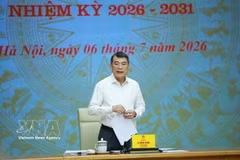
Prime Minister Le Minh Hung highlighted the importance of diplomacy in supporting Vietnam's goal of achieving double-digit economic growth. He stressed the need to consolidate traditional export markets while attracting high-quality foreign investment capable of strengthening the country's strategic autonomy.
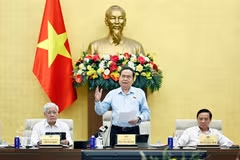
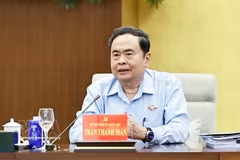
National Assembly Chairman Tran Thanh Man pointed to the requirement for the early completion of legal documents governing coordination among the Party diplomacy, State diplomacy and people-to-people diplomacy, while further enhancing the role of parliamentary diplomacy.
From a strategic perspective, Permanent member of the Party Central Committee's Secretariat Tran Cam Tu emphasised that Party diplomacy must deliver more substantive results to reinforce political trust with partners.
Party General Secretary and State President Lam instructed the committee to adopt the principle of "six clarities" – clear responsibilities, clear tasks, clear timelines, clear accountability, clear deliverables and clear authority. He urged the committee to move swiftly with a spirit of decisive action, calling for work to be carried out immediately, properly, drastically, effectively and through to completion.
The coordinated launch of the new institutional framework provides a solid foundation for Vietnam's diplomacy to undergo a transformative shift in mindset, from one centred on participation, adaptation and receptiveness to one characterised by proactive shaping, building and meaningful contribution.
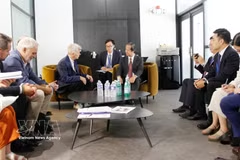
According to former Deputy Foreign Minister Ambassador Pham Quang Vinh, Vietnam is no longer content simply to participate in or adapt to international developments. Instead, the country is proactively positioning itself within the mainstream of global affairs, keeping pace with the world's evolving dynamics. This shift is reflected in Vietnam's changing approach to international economic engagement.
Rather than focusing solely on attracting foreign investment, the country is increasingly prioritising high-quality projects in strategic sectors such as semiconductors, artificial intelligence and advanced technologies. At the same time, Vietnam is strengthening connections with leading innovation hubs worldwide while participating more actively in shaping emerging international rules on areas, such as trade digital commerce.
In doing so, Vietnam is putting into practice President Ho Chi Minh's observation that "substance is like the gong, while diplomacy is like its sound; only when the gong is strong can its sound carry far.” Building a nation with self-reliance and strategic autonomy will enhance its internal strength.
A recent milestone underscoring Vietnam's increasingly international judicial standing came on June 18, when Assoc. Prof. Dr. Nguyen Thi Lan Anh was elected a judge of the International Tribunal for the Law of the Sea (ITLOS) for the 2026–2035 term at the United Nations headquarters in New York.
Winning the highest number of votes among candidates from the Asia-Pacific region in the first round of voting, she became the first Vietnamese national to serve on the prestigious international judicial body.
The election marked more than an individual achievement. It reflected growing international recognition of Vietnam's legal expertise and its increasing contribution to the development and application of international law. It also demonstrated the country's transition from being primarily a participant in the international legal order to becoming an active contributor to the promotion of a rules-based, fair and transparent international system.
Beyond the legal arena, Vietnam has continued to reinforce its international standing through practical and responsible contributions to addressing common global challenges.
Echoing Party General Secretary and State President Lam's message at the Shangri-La Dialogue that Vietnam, having experienced the devastation of war, deeply understands the value of peace, the country has been consistently ready to work with the international community to address shared challenges.
That commitment was demonstrated vividly following the devastating earthquakes that struck Venezuela on June 24. The devastating earthquakes claimed more than 1,400 lives and left over 50,000 people missing, prompting Vietnam to respond swiftly with humanitarian assistance.
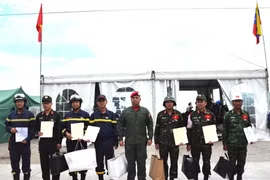
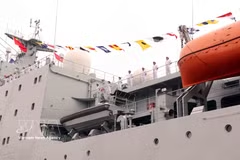
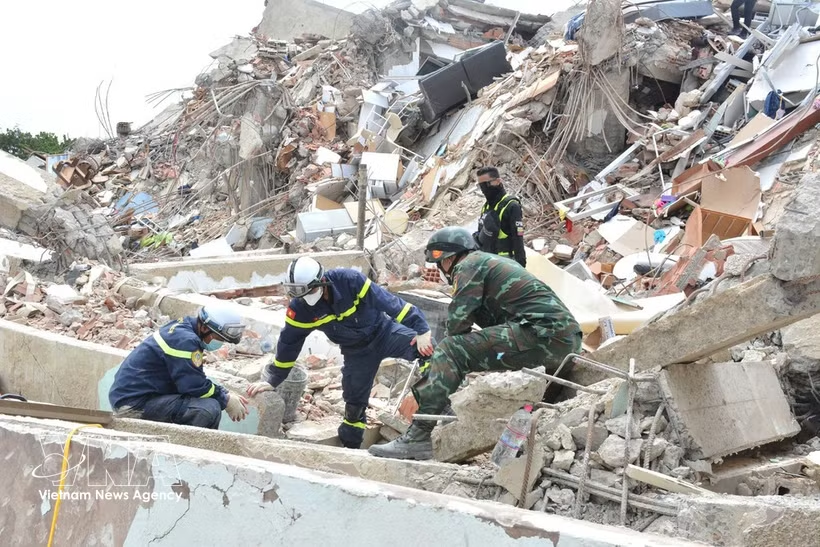
On June 28, an 82-member rescue contingent from the Vietnam People's Army, led by Major General Pham Van Ty, was deployed with advanced search-and-rescue equipment, medical personnel, eight rescue dogs, and nearly 90 tonnes of relief supplies, including medicines, tents, generators and food. On the same day, the Ministry of Public Security dispatched a 42-member professional rescue team led by Senior Colonel Pham Hung Duong, carrying more than 20 tonnes of essential supplies and medicines.
As noted by General Nguyen Tan Cuong, Chief of the General Staff of the Vietnam People's Army and Deputy Minister of National Defence, the cross-border humanitarian mission demonstrated Vietnam's growing capability and credibility in international disaster response. The rescue teams also achieved significant results, successfully pulling 57 earthquake victims from the rubble.
The dedication and professionalism displayed by Vietnamese military personnel and public security officers during the rescue operation in Caracas earned widespread appreciation from local residents and authorities, who expressed their profound gratitude for Vietnam's solidarity and timely humanitarian assistance.
On the evening of July 3 (local time), Venezuela's Acting President Delcy Rodríguez visited the Vietnamese rescue team's base camp to expressed her thanks and present a letter of appreciation. She also awarded a Medal of Merit to the Vietnamese search-and-rescue dog unit in recognition of their outstanding contribution to locating missing victims.
Through Vietnamese Ambassador to Venezuela Vu Trung My, the Venezuelan leader conveyed a letter of appreciation to Party General Secretary and State President To Lam and conferred upon him the Hero of Venezuela medal in recognition of Vietnam’s humanitarian support, spirit of international solidarity and timely assistance to the Venezuelan people during their time of hardship. The gesture underscored Venezuela’s deep gratitude for Vietnam’s swift and meaningful response, while highlighting the growing international recognition of Vietnam as a responsible and reliable partner, ready to contribute to global humanitarian efforts and disaster relief.
The convergence of stronger national capabilities at home with responsible, humanitarian contributions abroad is shaping a more comprehensive, modern and professional Vietnamese diplomacy for a new era.
That progress has been underpinned by close coordination among the three pillars of diplomacy under the Party's leadership, together with a diplomatic corps that is both politically steadfast and professionally competent, guided by the spirit of the "six dares" in safeguarding national interests.
Vietnam's diplomacy imbued with a new identity that fits a new era, will continue to help the country navigate all challenges with confidence, further elevate its international standing in line with its growing stature, and steadily advance its aspiration of standing shoulder to shoulder with the world's major powers./.