Ho Chi Minh City remains leading destination for international visitors

Beyond its traditional strengths in city tours, MICE tourism, shopping and cuisine, the city now offers a broader range of attractions, including coastal areas, eco-tourism sites, traditional craft villages, industrial tourism and cultural, historical and spiritual destinations.

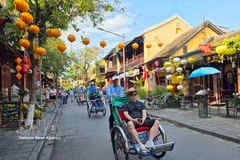
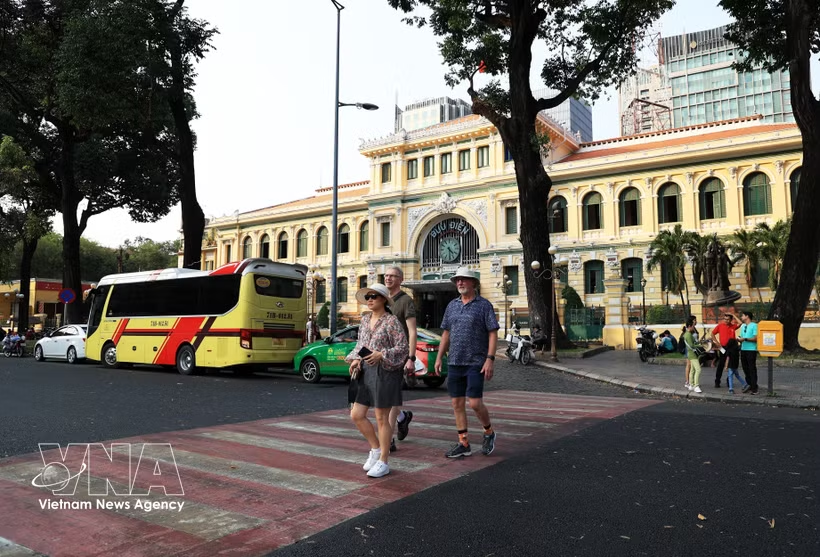
Foreign tourists visit the Central Post Office in Ho Chi Minh City. (Photo: VNA)

Ho Chi Minh (VNA) – Ho Chi Minh City continued to reinforce its position as one of Vietnam's leading tourism destinations in the first half of 2026, driven by a sustained recovery of international arrivals and higher visitor spending.

In June alone, travel service revenue stood at almost 4.15 trillion VND (nearly 158 million USD), rising 29.4% from the previous month and 29.1% year-on-year. Revenue from accommodation and food services reached 21.53 trillion VND last month, up 8.8% from May and 21.6% from a year earlier, reported the municipal Department of Tourism.

During the January–June period, travel service revenue surpassed 19.13 trillion VND, up 10% from the same period in 2025. Accommodation and food service revenue climbed 14.3% year-on-year to 119.3 trillion VND, while the passenger transport volume increased 8.3% to nearly 283.7 million trips.

The department attributed the impressive tourism growth to a sharp rebound in international tourism and increased spending by foreign visitors. International arrivals rose by nearly 50% in the first half of the year while tourism revenue from this market grew by more than 60%, reflecting the success of tourism promotion campaigns and efforts to diversify tourism products.

The city has maintained its role as one of Vietnam's top tourism hubs, particularly for international travellers.

Vo Anh Tai, Deputy General Director of Saigontourist Group, said international visitors' demand for cultural and artistic experiences is growing rapidly, with many travellers seeking a deeper understanding of local heritage and identity, which are suitable products for developing the night-time economy as they encourage visitors to stay longer and spend more on accommodation, dining, shopping and entertainment.

Tai added that the expansion of Ho Chi Minh City's administrative boundaries and cultural heritage space has created favourable conditions for developing integrated tourism experiences that combine urban attractions with cultural and natural assets.
vnanet-potal-tour-noi-do-thanh-pho-ho-chi-minh-soi-dong-dip-le-304-7976494.jpg
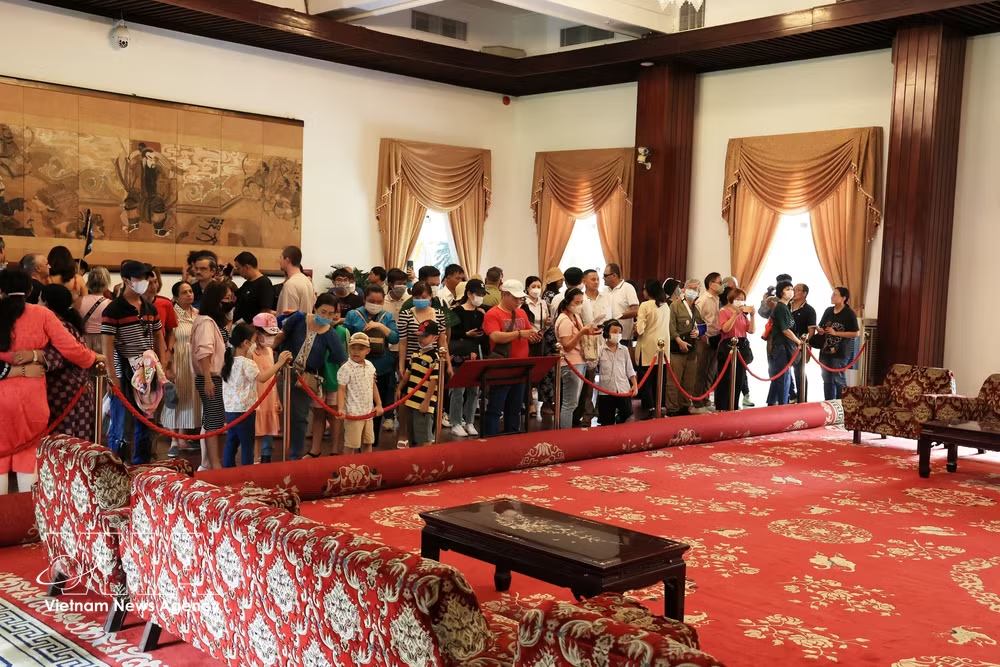
International tourists visit the Independence Palace, a famous historical destination in Ho Chi Minh City. (Photo: VNA)

Recently, digital travel platform Agoda reported that searches for accommodation in Vietnam by travellers from China surged 164% in the first five months of 2026 compared with the same period last year, making it the fastest-growing international source market. Indonesia, the Philippines, Thailand and Poland were also among the fastest-growing markets.

The figures highlight Vietnam's growing appeal to international visitors thanks to its mix of vibrant cities, rich cultural experiences and diverse natural landscapes, from mountains and forests to beaches and islands. Food tours, heritage experiences, shopping and coastal holidays continue to attract travellers, particularly from Southeast Asia.

Le Truong Hien Hoa, Deputy Director of the municipal Department of Tourism, said Ho Chi Minh City has entered a new stage of tourism development following the expansion of its administrative boundaries.

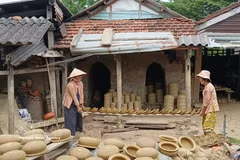
Beyond its traditional strengths in city tours, MICE tourism, shopping and cuisine, the city now offers a broader range of attractions, including coastal areas, eco-tourism sites, traditional craft villages, industrial tourism and cultural, historical and spiritual destinations. By integrating these tourism resources into a unified ecosystem, it aims to shift from promoting individual attractions to offering multi-value tourism experiences, laying the foundation for more sustainable growth in the years ahead./.
VNA

See more

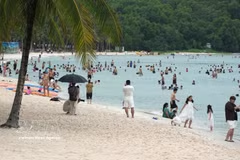
Tourists enjoy Khem beach in Phu Quoc special zone, An Giang province. (Photo: VNA)

Phu Quoc strengthens global tourism appeal ahead of APEC 2027

To improve its tourism image and experience for tourists, the special zone has launched the campaign titled "Every Phu Quoc resident is a tourism ambassador" and established a tourism rapid response team to protect and assist holiday-makers.

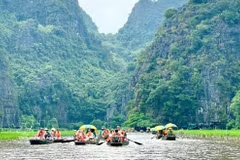
Ninh Binh is praised for its limestone mountains, rice fields and winding rivers. (Photo: VNA)

French magazine spotlights Vietnam as destination for diverse experiences

Paris Match says Vietnam's appeal extends beyond its landscapes and luxury resorts. Its unique combination of nature, history, cultural heritage and local life offers travellers a wide range of authentic experiences, making the country an increasingly attractive destination for international travellers.

Minister Counsellor Pham Quang Huy (in black) introduces Vietnam's pavilion to WTO Director-General Ngozi Okonjo-Iweala. (Photo: VNA)

Vietnam's pavilion draws crowds at WTO Open Day 2026

Vietnam's pavilion emerged as one of the highlights of the World Trade Organisation (WTO) Open Day 2026 in Geneva on July 5, attracting a steady stream of visitors eager to savour authentic Vietnamese cuisine. Many said the experience had inspired them to visit Vietnam in the near future.

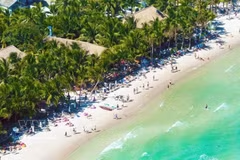
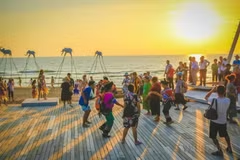
Visitors enjoy the sunset at Sunset Sanato Beach in Phu Quoc. (Photo: VNA)

Tourism emerges as key driver of economic growth

Vietnam’s tourism performance has been widely regarded as a bright spot at a time when the global tourism industry continues to face significant challenges, including geopolitical tensions, armed conflicts in several regions, slowing global economic growth, rising oil prices and higher travel costs.

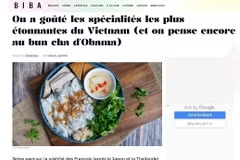
Biba Magazine spotlights must-try Vietnamese dishes in a recent article. (Photo published by VNA)

French magazine highlights must-try dishes in Vietnam

According to Biba Magazine, Vietnam's regional culinary diversity, fresh ingredients and refined cooking techniques have elevated its cuisine far beyond iconic dishes such as pho and spring rolls, making it one of the country's most memorable attractions for international visitors.

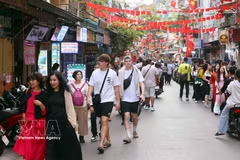
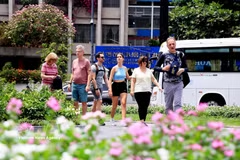
International tourists stroll through downtown Ho Chi Minh City. (Photo: VNA)

FIT boom creates new opportunities for Vietnam's tourism

According to Nguyen Trung Khanh, Director General of the Vietnam National Authority of Tourism (VNAT), FIT has become one of the defining trends in post-pandemic tourism. Increasingly, travellers are seeking flexibility, personalised experiences and authentic cultural engagement, prompting destinations worldwide to rethink their tourism products, services and marketing strategies.

The “5 Cua O” heritage train brings new experience to travellers (Photo: VNA)

Heritage trains carve new niche in Vietnam’s tourism strategy

On a weekend morning, the “5 Cua O” (Hanoi Five Gates) heritage train pulled out of Hanoi Railway Station to the strains of “xam tau dien” - a traditional folk music echoing through a community carriage. Outside the window, the bustle of the Old Quarter gradually receded and the iron span of the historic Long Bien Bridge slid into view.

Sun PhuQuoc Airways launches two new routes to Chengdu

Sun PhuQuoc Airways launches two new routes to Chengdu

As the first airline to operate scheduled nonstop flights between Phu Quoc and Chengdu, Sun PhuQuoc Airways is also introducing launch offers of up to 20% off fares, complimentary Sun World Hon Thom Cable Car tickets, and exclusive privileges across the integrated Sun Group ecosystem.

Secretary of the Party Committee of Khanh Hoa province Tran Phong (right) meets with Indian Ambassador to Vietnam Tshering Wangchuk Sherpa. (Photo: VNA)

Khanh Hoa looks to draw more travellers from India

Indian arrivals to Vietnam have risen sharply from around 100,000 before 2016 to 750,000 in 2025, 4.5 times higher than in 2019, driven by expanding direct air routes. The number of Vietnamese visitors to India has also maintained an average annual growth rate of 17–20%.