Da Nang's centuries-old craft villages enrich visitor experiences to boost tourism

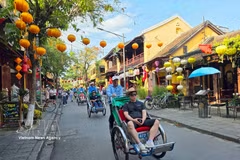
Da Nang is home to nearly 70 craft villages and traditional craft villages, along with around 3,000 craft establishments; many of these have become popular tourist attractions.

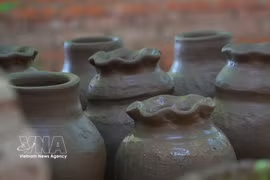
Thanh Ha pottery village boasts a history spanning nearly 500 years and is renowned for its ceramic and terracotta products, crafted using traditional pottery-making techniques passed down through generations. (Photo: VNA)

Da Nang (VNA) – Da Nang is expanding tourism offerings at its centuries-old traditional craft villages, creating more immersive visitor experiences as the central city seeks to preserve cultural heritage while attracting more domestic and international tourists.

Following its merger with Quang Nam province, the city's tourism space has expanded significantly. Greater emphasis has also been placed on connecting traditional craft villages, creating favourable conditions for developing distinctive tourism routes that are competitive and capable of encouraging visitors to extend their stay.

The city is home to nearly 70 craft villages and traditional craft villages, along with around 3,000 craft establishments. Many of these have become popular tourist attractions, including the Non Nuoc stone carving village, Nam O fish sauce village, Thanh Ha pottery village, Kim Bong carpentry village, and Tra Que vegetable village. Together, they welcome millions of visitors each year for sightseeing and hands-on cultural experiences.

Recently, the Da Nang Tourism Promotion Centre, in collaboration with several partners, surveyed craft villages surrounding the ancient town of Hoi An as part of efforts to strengthen connections among craft villages and develop themed tourism routes serving divsese international tourist segments, including MICE and cruise passengers.

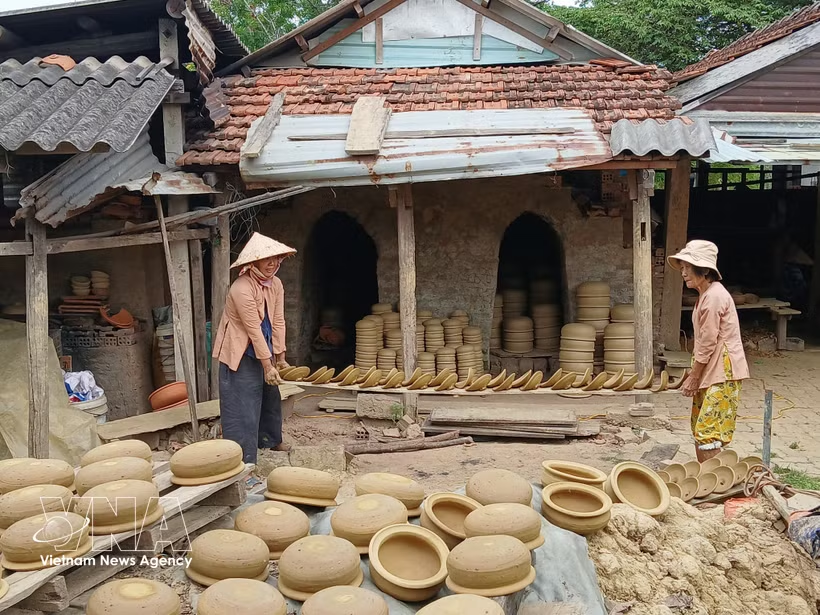
Located on the banks of the Thu Bon River, Thanh Ha pottery village has preserved its ceramic-making tradition for nearly 500 years. Once focused on producing household pottery, the village began embracing tourism in 2011 by shifting toward handicrafts and souvenir products while offering hands-on pottery-making experiences.

Visitors can tour the village, learn about centuries-old pottery-making techniques and create their own works under the guidance of local artisans. The tourism-driven transformation has helped stabilise incomes for potters while preserving the traditional craft.

Thanh Ha is currently home to 32 pottery workshops, including four specialising in traditional ceramics and employing around 70 artisans. The opening of a new inland waterway pier has further improved visitor access to the village.

Together with Kim Bong carpentry village, Cam Kim mat-weaving village and Tra Que vegetable village, Thanh Ha forms part of a cultural belt surrounding Hoi An ancient town, reflecting the region's long-standing commercial and craft heritage.

Another major attraction is Non Nuoc stone carving village, located at the foot of the Marble Mountains. Recognised as a National Intangible Cultural Heritage, the more than 400-year-old village has adapted its products to meet growing demand from export markets and tourists while preserving traditional craftsmanship.
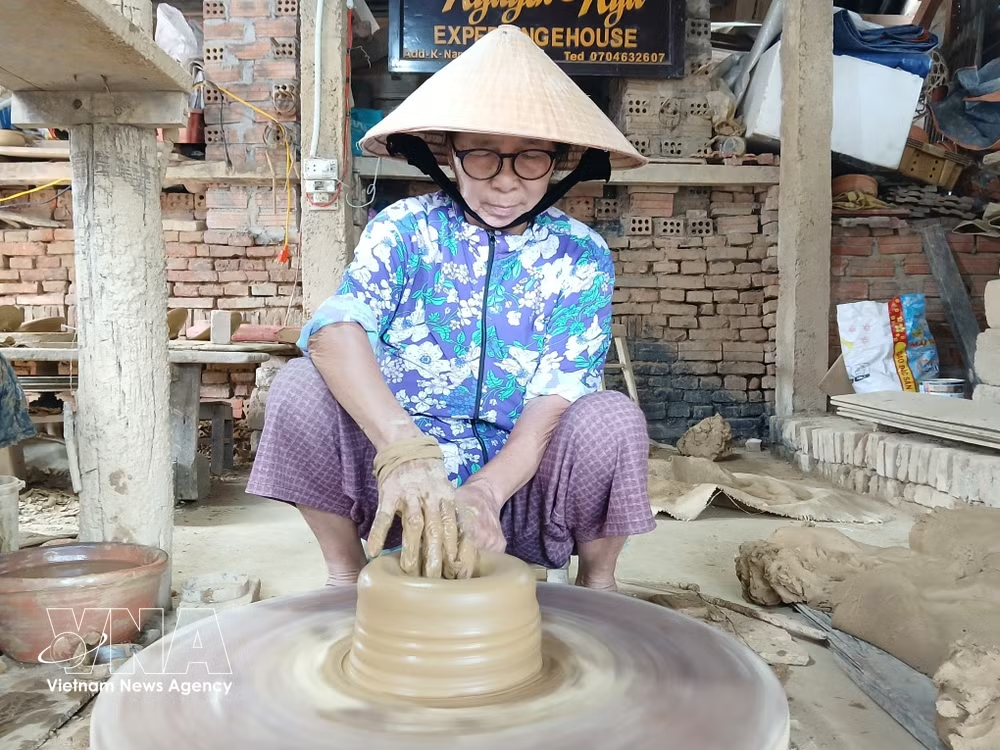
vnanet-thanh-ha-pottery-village.jpg
An artisan shapes pottery by hand at Thanh Ha pottery village in Hoi An Tay ward, Da Nang city. (Photo: VNA)

To promote the village, local authorities recently organised the "Soul of Non Nuoc stone – the mark of Da Nang" sculpture competition, aiming to showcase artisans' skills, attract visitors and encourage the preservation of the centuries-old craft.

Da Nang has also approved a programme to preserve and promote the artistic value of Non Nuoc stone carving through 2030, with a vision to 2045. The initiative seeks to integrate heritage conservation with tourism development, expand markets for handicraft products and improve livelihoods for artisans.

According to Van Ba Son, Deputy Director of the Da Nang Department of Culture, Sports and Tourism, most traditional craft villages possess distinctive characteristics and unique cultural identities. Developing tourism in these villages would help preserve and promote their heritage while expanding markets for locally made products.

He said that connecting craft villages across the newly expanded city is a key strategy for developing attractive themed tourism routes that support sustainable tourism growth. The villages will be linked based on their distinctive cultural and historical values, landscapes, and traditional products.

Despite their considerable potential, tourism development in several craft villages in Da Nang has yet to fully capitalise on their strengths, Son said, noting that to make craft village tourism a key pillar of the city's development strategy in the new phase, stronger collaboration from businesses and more proactive participation by local communities will be essential./.


VNA

See more

Visitors enjoy the sunset at Sunset Sanato Beach in Phu Quoc. (Photo: VNA)

Tourism emerges as key driver of economic growth

Vietnam’s tourism performance has been widely regarded as a bright spot at a time when the global tourism industry continues to face significant challenges, including geopolitical tensions, armed conflicts in several regions, slowing global economic growth, rising oil prices and higher travel costs.

Biba Magazine spotlights must-try Vietnamese dishes in a recent article. (Photo published by VNA)

French magazine highlights must-try dishes in Vietnam

According to Biba Magazine, Vietnam's regional culinary diversity, fresh ingredients and refined cooking techniques have elevated its cuisine far beyond iconic dishes such as pho and spring rolls, making it one of the country's most memorable attractions for international visitors.

International tourists stroll through downtown Ho Chi Minh City. (Photo: VNA)

FIT boom creates new opportunities for Vietnam's tourism

According to Nguyen Trung Khanh, Director General of the Vietnam National Authority of Tourism (VNAT), FIT has become one of the defining trends in post-pandemic tourism. Increasingly, travellers are seeking flexibility, personalised experiences and authentic cultural engagement, prompting destinations worldwide to rethink their tourism products, services and marketing strategies.

The “5 Cua O” heritage train brings new experience to travellers (Photo: VNA)

Heritage trains carve new niche in Vietnam’s tourism strategy

On a weekend morning, the “5 Cua O” (Hanoi Five Gates) heritage train pulled out of Hanoi Railway Station to the strains of “xam tau dien” - a traditional folk music echoing through a community carriage. Outside the window, the bustle of the Old Quarter gradually receded and the iron span of the historic Long Bien Bridge slid into view.

Sun PhuQuoc Airways launches two new routes to Chengdu

Sun PhuQuoc Airways launches two new routes to Chengdu

As the first airline to operate scheduled nonstop flights between Phu Quoc and Chengdu, Sun PhuQuoc Airways is also introducing launch offers of up to 20% off fares, complimentary Sun World Hon Thom Cable Car tickets, and exclusive privileges across the integrated Sun Group ecosystem.

Secretary of the Party Committee of Khanh Hoa province Tran Phong (right) meets with Indian Ambassador to Vietnam Tshering Wangchuk Sherpa. (Photo: VNA)

Khanh Hoa looks to draw more travellers from India

Indian arrivals to Vietnam have risen sharply from around 100,000 before 2016 to 750,000 in 2025, 4.5 times higher than in 2019, driven by expanding direct air routes. The number of Vietnamese visitors to India has also maintained an average annual growth rate of 17–20%.

The cave, Thang (Victory) Cave, is named after a local resident who first identified its location. (Photo: Published by VNA)

New cave with rare stalactites, cave pearls discovered in Phong Nha – Ke Bang

Located between Voi (Elephant) Cave and Ma Da Lake in the Ma Da Valley, within the park’s strictly protected zone, the cave measures about 3,000 metres in length and 70 metres in average width, with several chambers extending beyond 100 metres. It has two entrances leading to separate branches. While the main entrance covers about 5 sq.m, the exit is narrow, allowing passage for only one adult at a time.

From Da Nang, tourists can easily access attractions such as Sun World Ba Na Hills with its iconic Golden Bridge. (Photo: VNA)

Da Nang emerges as hub for multi-destination travel

Da Nang’s appeal has been further strengthened after being ranked second on Lonely Planet’s list of Asia’s most attractive summer destinations. The recognition underscores the city’s growing role as a tourism and leisure hub in the region.

Con Dao tops Travel + Leisure’s list of the world’s 30 hidden islands around the world for off-the-grid adventure and seclusion. (Photo: VNA)

Con Dao named world’s top hidden island destination

According to the Vietnam National Authority of Tourism, Con Son, the largest island in the Con Dao archipelago, is renowned for its dramatic granite cliffs, pristine beaches and crystal-clear waters off Vietnam’s southeastern coast.

Visitors explore the Hue Imperial Citadel. (Photo: VNA)

Vietnam shines as Southeast Asia’s “gem”: French daily

The publication said Hanoi often leaves visitors with an immediate impression of energy and vitality, marked by its busy streets and constant movement. Beneath the bustling urban rhythm, however, lies a city rich in history and culture, featuring iconic landmarks such as the Temple of Literature, Hoan Kiem Lake, the Hanoi Opera House, the Ho Chi Minh Mausoleum and the One Pillar Pagoda.