Heritage trains carve new niche in Vietnam’s tourism strategy

On a weekend morning, the “5 Cua O” (Hanoi Five Gates) heritage train pulled out of Hanoi Railway Station to the strains of “xam tau dien” - a traditional folk music echoing through a community carriage. Outside the window, the bustle of the Old Quarter gradually receded and the iron span of the historic Long Bien Bridge slid into view.
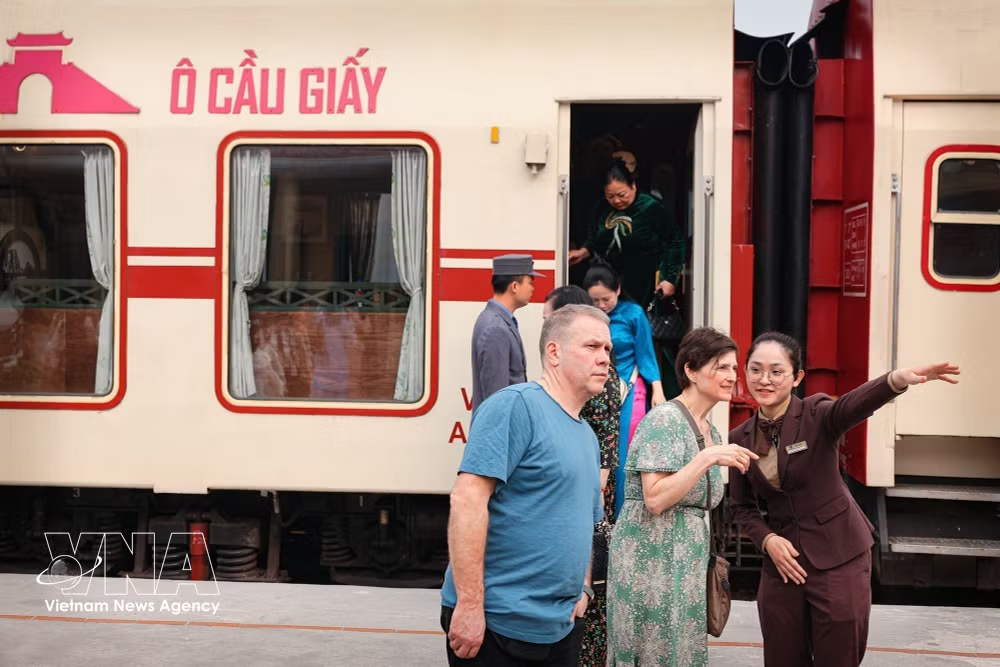
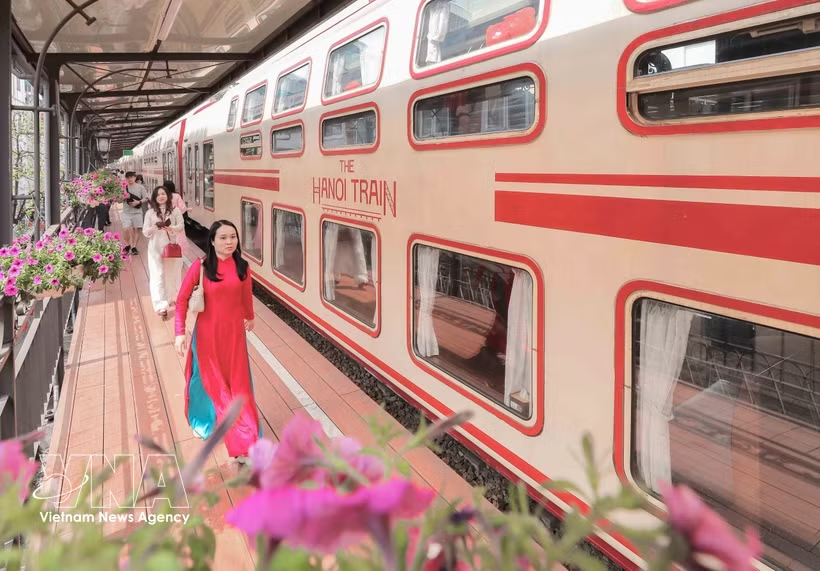
The “5 Cua O” heritage train brings new experience to travellers (Photo: VNA)

Hanoi (VNA) - Heritage train services are reshaping Vietnam’s tourism landscape, turning every ride into an immersive encounter with the country’s terrain and people.

Local identity on board

On a weekend morning, the “5 Cua O” (Hanoi Five Gates) heritage train pulled out of Hanoi Railway Station to the strains of “xam tau dien” - a traditional folk music echoing through a community carriage. Outside the window, the bustle of the Old Quarter gradually receded and the iron span of the historic Long Bien Bridge slid into view.

vnanet-r.jpg
Tourists explore “5 Cua O” heritage train's journey (Photo: VNA)

Unlike a standard commuter run, the onboard atmosphere is a cultural immersion. Passengers travelling from the capital to Bac Ninh move through recreated heritage spaces, with “xam” folk performances, stories of old Hanoi and the warmth of the service crew. Less than a year after launch, the train has drawn roughly 70,000 passengers.

The “Hoa Phuong Do” (Flamboyant Flower) train on the Hanoi–Hai Phong route stands out with a modern, polished design. Inspired by the port city’s signature red flower, its 20 newly built carriages wear a striking blue, white and red livery. Indochine-style VIP compartments blend Asian aesthetics with contemporary touches, while drinks and regional cuisine accompany views of the northern countryside before arrival in the bustling coastal city.

On the central coast, the “Central Heritage Connection” train from Hue to Da Nang offers something starker. The line clings to the Hai Van Pass, with Lang Co Bay glittering on one side and mist-shrouded mountains rearing on the other. It is widely seen as one of Vietnam’s most beautiful coastal rail stretches.

Artists from Hue and Da Nang perform folk tunes and Hue chamber songs on board, as local dishes are prepared and served, telling the region’s story through its flavours.

vnanet-screenshot-2026-06-25-110903.png
A music performance on the “Central Heritage Connection” train (Photo: nhandan.vn)

Further north, the Hanoi–Lao Cai route, which feeds the hill station of Sapa, stands out for long-distance comfort. Tourist sleepers, such as Chapa Express, Sapaly Express, Victoria Express and Livitrans, offer wood-panelled cabins, soft beds and a cosy, highland-inspired atmosphere.

From novelty to mainstay

Green tourism expert Phung Quang Thang said the emergence of heritage trains signals that rail tourism is catching up with global demand for low-carbon, experience-rich travel. With proper investment, he argued, the model could become a signature Vietnamese tourism product.

Despite early traction, the segment still has room to become more polished. Experts suggested that route-specific photo books, special publications, postcards, poetry collections and souvenirs could enrich the emotional pull of a trip, turning a train ride into a lasting memory.

Another idea is linking artists directly to the rail experience. Literary, musical, visual arts and photo works have already been created on board, with meaningful interaction unfolding between artists and passengers en route.

Hoang Gia Khanh, Director General of Vietnam Railways, said heritage trains tell the country’s story in a modern experiential language, which projects a nation reforming and integrating while still holding onto its cultural identity. If done well, each journey can carry Vietnam’s image, culture and people a little further across the global tourism map./.


VNA

See more

Sun PhuQuoc Airways launches two new routes to Chengdu

Sun PhuQuoc Airways launches two new routes to Chengdu

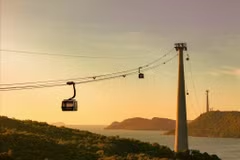
As the first airline to operate scheduled nonstop flights between Phu Quoc and Chengdu, Sun PhuQuoc Airways is also introducing launch offers of up to 20% off fares, complimentary Sun World Hon Thom Cable Car tickets, and exclusive privileges across the integrated Sun Group ecosystem.

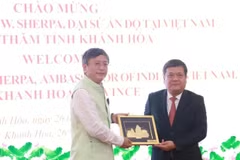
Secretary of the Party Committee of Khanh Hoa province Tran Phong (right) meets with Indian Ambassador to Vietnam Tshering Wangchuk Sherpa. (Photo: VNA)

Khanh Hoa looks to draw more travellers from India

Indian arrivals to Vietnam have risen sharply from around 100,000 before 2016 to 750,000 in 2025, 4.5 times higher than in 2019, driven by expanding direct air routes. The number of Vietnamese visitors to India has also maintained an average annual growth rate of 17–20%.

The cave, Thang (Victory) Cave, is named after a local resident who first identified its location. (Photo: Published by VNA)

New cave with rare stalactites, cave pearls discovered in Phong Nha – Ke Bang

Located between Voi (Elephant) Cave and Ma Da Lake in the Ma Da Valley, within the park’s strictly protected zone, the cave measures about 3,000 metres in length and 70 metres in average width, with several chambers extending beyond 100 metres. It has two entrances leading to separate branches. While the main entrance covers about 5 sq.m, the exit is narrow, allowing passage for only one adult at a time.

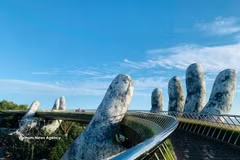
From Da Nang, tourists can easily access attractions such as Sun World Ba Na Hills with its iconic Golden Bridge. (Photo: VNA)

Da Nang emerges as hub for multi-destination travel

Da Nang’s appeal has been further strengthened after being ranked second on Lonely Planet’s list of Asia’s most attractive summer destinations. The recognition underscores the city’s growing role as a tourism and leisure hub in the region.

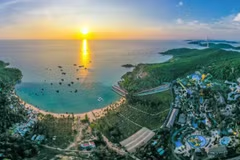
Con Dao tops Travel + Leisure’s list of the world’s 30 hidden islands around the world for off-the-grid adventure and seclusion. (Photo: VNA)

Con Dao named world’s top hidden island destination

According to the Vietnam National Authority of Tourism, Con Son, the largest island in the Con Dao archipelago, is renowned for its dramatic granite cliffs, pristine beaches and crystal-clear waters off Vietnam’s southeastern coast.

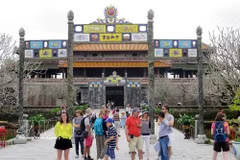
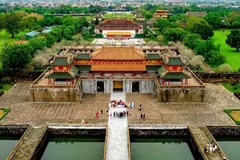
Visitors explore the Hue Imperial Citadel. (Photo: VNA)

Vietnam shines as Southeast Asia’s “gem”: French daily

The publication said Hanoi often leaves visitors with an immediate impression of energy and vitality, marked by its busy streets and constant movement. Beneath the bustling urban rhythm, however, lies a city rich in history and culture, featuring iconic landmarks such as the Temple of Literature, Hoan Kiem Lake, the Hanoi Opera House, the Ho Chi Minh Mausoleum and the One Pillar Pagoda.

Seen from above, Hue Imperial Citadel glows brilliantly at the heart of the heritage city. (Photo: nhandan.vn)

Heritage resources fuel Hue’s new growth ambitions

Hue is simultaneously stepping up efforts to attract investment into tourism, services and cultural industries. In the first five months of 2026, the city secured more than 19 trillion VND in newly registered investment capital, with projects planned in coastal tourism, lagoon-based ecotourism, cultural spaces along the Perfume River, convention and exhibition centres, night-time economy projects and cultural innovation hubs.

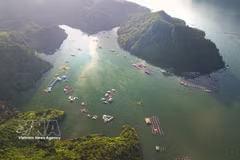
With its crystal-clear waters and majestic scenery, Hoa Binh lake, located within the reservoir area of the Hoa Binh Hydropower Plant, has become an unmissable destination for visitors to Phu Tho province. (Photo: VNA)

Phu Tho moves to unlock tourism potential after administrative mergence

With coordinated efforts in planning, infrastructure development, product diversification, human resources training, digital transformation and destination branding, Phu Tho is well-positioned to transform tourism into a spearhead economic sector and a new engine of sustainable growth in the years ahead.

The Eye Mountain, one of the signature attractions of the Non Nuoc Cao Bang UNESCO Global Geopark. (Photo: VNA)

Cao Bang seeks to boost sustainable tourism

During the first five months of 2026, Cao Bang welcomed nearly 1.3 million visitors, generated 1.43 trillion VND (54.3 million USD) in tourism revenue, and recorded an average accommodation occupancy rate of 53%.

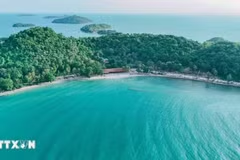
The natural beauty of Kem Beach, one of the world’s 50 most beautiful beaches, helps Phu Quoc captivate visitors from around the globe (Photo: Fabl Belek)

Phu Quoc surpasses Bali among Asia’s best islands in Travel + Leisure ranking

Phu Quoc, also called Pearl Island, rose to second place on the list of Asia-Pacific’s best islands, moving up one position from 2025 and surpassing many renowned destinations such as Bali (Indonesia), Palawan (the Philippines), Langkawi (Malaysia), and Sumba (Indonesia). Ranked only behind Koh Samui (Thailand), Pearl Island was also the sole representative from Vietnam to appear in this year’s ranking.

Vietnam tourism – A journey of endless discovery

Vietnam tourism – A journey of endless discovery

Vietnam possesses an exceptionally rich tourism offering. From the mist-covered mountains of the North to the turquoise beaches of the central region and the fertile waterways of the South, each destination presents its own distinctive charm, attracting both domestic and international visitors and contributing to the diverse appeal of the country's tourism sector.