Buon Ma Thuot named among world's best culinary destinations by National Geographic

Dak Lak produces around 30% of Vietnam’s total coffee output and is home to some of the world’s finest Robusta beans. Coffee culture in the province is far more than an industry; it is a living tradition deeply embedded in daily life, intertwined with the customs of indigenous ethnic communities such as the Ede and M’nong, and the region’s vast green highlands. Visitors to Buon Ma Thuot can enjoy coffee experiences found nowhere else.

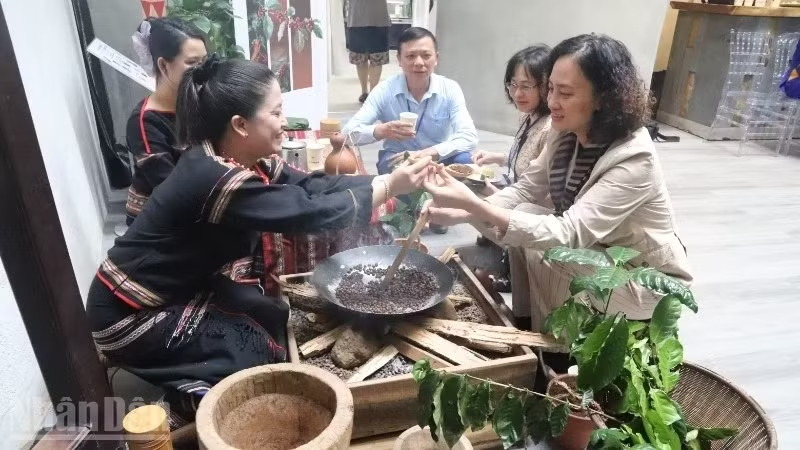
Visitors experience traditional coffee roasting by the Ede ethnic community. (Photo: nhandan.vn)

Hanoi (VNA) – Buon Ma Thuot, the coffee capital of Vietnam in the central province of Dak Lak, has been named by National Geographic as one of the world's best culinary destinations in its prestigious “Best of the World 2026” list.

According to the provincial Department of Culture, Sports and Tourism, the recognition places Buon Ma Thuot alongside some of the globe’s most iconic food destinations, bringing Vietnam’s coffee heritage and the unique culinary culture of the Central Highlands into the international spotlight.

Dak Lak produces around 30% of Vietnam’s total coffee output and is home to some of the world’s finest Robusta beans. Coffee culture in the province is far more than an industry; it is a living tradition deeply embedded in daily life, intertwined with the customs of indigenous ethnic communities such as the Ede and M’nong, and the region’s vast green highlands. Visitors to Buon Ma Thuot can enjoy coffee experiences found nowhere else.

These include farm-to-cup journeys through sprawling coffee plantations, where visitors can pick, roast and brew their own coffee; traditional Ede coffee ceremonies passed down through generations; and a thriving café scene featuring hundreds of independent coffee houses, ranging from century-old colonial villas to open-air gardens overlooking mist-covered valleys.

Notably, the geographical indication “Buon Ma Thuot Coffee” is legally protected in more than 30 countries, underscoring the exceptional quality and distinctiveness of coffee grown in the region. The unique combination of nutrient-rich basalt soil, elevations of 400 – 800 metres above sea level, and the Central Highlands’ tropical climate creates a flavour profile that coffee experts describe as bold, full-bodied and highly aromatic.
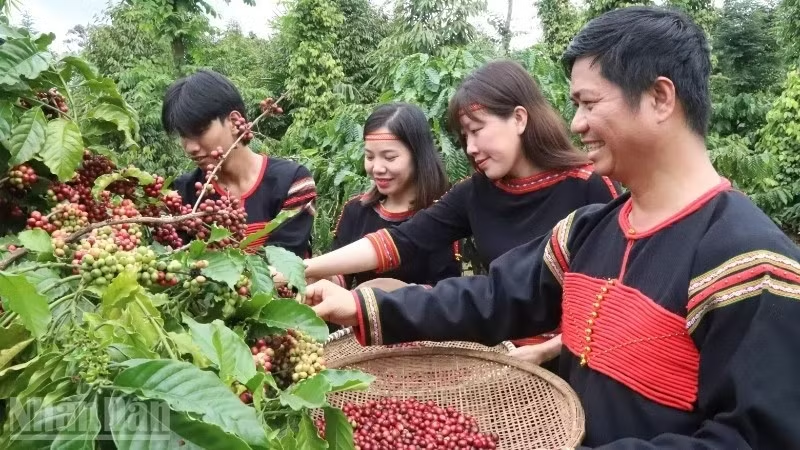
img-0063.jpg
Dak Lak produces around 30% of Vietnam’s total coffee output and is home to some of the world’s finest Robusta beans. (Photo: nhandan.vn)

The recognition by National Geographic is a source of pride not only for Buon Ma Thuot and Dak Lak, but for Vietnam as a whole, said Nguyen Son Hung, head of the tourism management division under the provincial Department of Culture, Sports and Tourism.

“We warmly invite travellers and coffee lovers from around the world to experience first-hand what makes our coffee culture truly unique. Buon Ma Thuot is more than a destination – it is an emotion, a story and a cup of coffee that visitors will never forget,” he added./.


VNA

See more

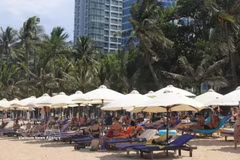
Russian tourists enjoy their time on a beach in Nha Trang, Khanh Hoa province. (Photo: VNA)

Vietnam, Russia seek solutions for surging tourism demand

Over 600,000 Russian tourists came to Vietnam in 2025, nearly reaching the record level seen before the COVID-19 pandemic, and the momentum has continued to accelerate in 2026 with more than 500,000 Russian arrivals in the Southeast Asian country in the first four months.

Ba Be Lake covers over 500 hectares of water surface and is surrounded by primary forests and a majestic cave system. (Photo: Internet)

Thai Nguyen aims to turn tourism into economic spearhead

In the new development phase, local authorities identify tourism as an important economic sector helping drive economic restructuring, generate jobs, improve local living standards, and uphold the unique cultural, historical and natural heritage values of Vietnam’s premier tea-growing land.

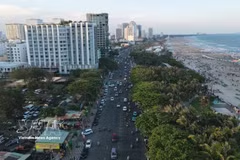
A bird's eye view of Vung Tau ward, Ho Chi Minh City (Photo: VNA)

Vung Tau stays the course on ASEAN clean tourism journey

Long known as a popular seaside getaway for domestic and international travellers, Vung Tau boasts an extensive coastline, sandy beaches and a unique landscape combining mountains, forests and the sea, making it well suited for resort, leisure and marine tourism.

An aerial view of Lien village in Lao Cai province (Photo: vietnamtourism.gov.vn)

Social media helps bring local tourism destinations closer to visitors

Social media promotion by young people has helped create livelihoods for local communities, benefiting homestay owners, local guides, transport providers and sellers of regional specialties, particularly in remote areas with limited promotional resources but rich tourism potential.

The Chao Show by the Ho Chi Minh City-based the company Dau An Show presents the flavours of Vietnam’s three regions through nine signature Vietnamese dishes. (Photo: VNA)

Ho Chi Minh City boosts tourism appeal through culinary, cultural experiences

According to Vu Ngoc Lam, Country Director of Agoda Vietnam, travellers are becoming more selective when choosing accommodation, prioritising properties with strong reviews, quality amenities and distinctive dining options. This trend reflects a growing emphasis on the overall travel experience, alongside peer-based quality assurance.

Nam Luc waterfall is situated in Nam Luc 2 village, more than 20 kilometres from the centre of Sin Ho commune, at an altitude of 1,600-1,800 metres above sea level. (Photo: VNA)

Nam Luc waterfall: A hidden “white silk ribbon” in Lai Chau

Located amid the mist-covered mountains of the Sin Ho plateau in the mountainous northwestern province of Lai Chau, the Nam Luc waterfall is emerging as one of the region’s most compelling new destinations for trekking enthusiasts and nature lovers.