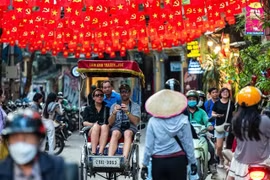
Tourism rebounds strongly as Hanoi expands cultural, night-time experiences

Hanoi aims to welcome around 9.04 million international visitors and more than 27 million domestic tourists in 2026, with total tourism revenue projected at roughly 160 trillion VND.

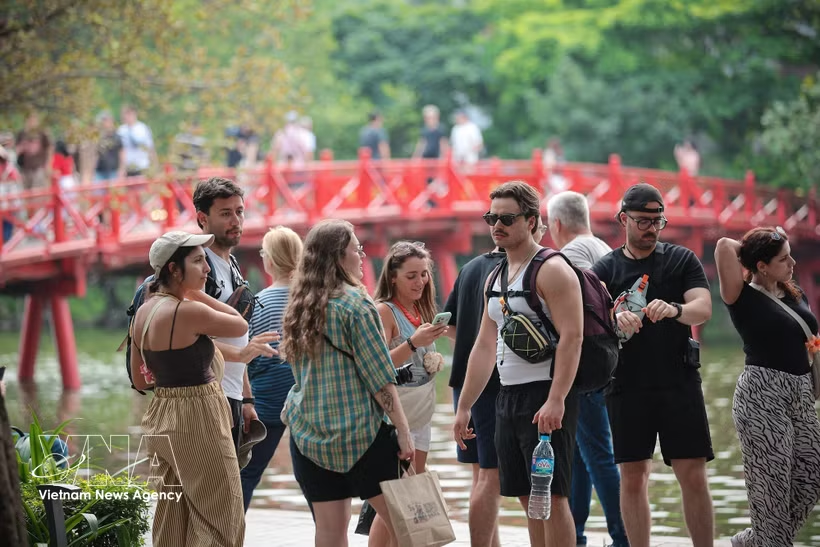
The Huc bridge leading to Ngoc Son Temple, one of Hanoi’s iconic architectural landmarks, remains a popular check-in spot for international visitors. (Photo: VNA)

Hanoi (VNA) – Hanoi’s tourism sector recorded strong growth in the first five months of 2026 despite global challenges linked to geopolitical instability and rising transportation costs, with tourism revenue surging more than 20% year-on-year.

According to the municipal Department of Tourism, the capital welcomed an estimated 15 million visitors during the period, up 17.2% compared to the same period last year.

International arrivals reached approximately 4.06 million, an increase of over 28%, while domestic tourist numbers rose 13.7% to nearly 11 million. Total tourism revenue was estimated at more than 62.7 trillion VND (2.38 billion USD).

The city has been accelerating the rollout of new tourism products focused on cultural experiences, immersive travel and the night-time economy. Among the new offerings expected to attract visitors are the “Heroic Spirit of Saint Giong” night tour in Soc Son, Muong Coc community-based tourism in My Duc, the “Soul of Dong Vu Bamboo” tourism model in Ung Thien, Red River tourism routes and the themed “Five City Gates” tourist train.

Hanoi has also introduced a portfolio of 80 tourism stimulus products while continuing tourism promotion campaigns linked to the “Vietnamese prioritise Vietnamese goods” movement.

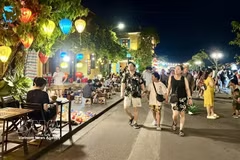
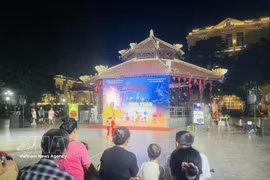
At the same time, the capital is expanding tourism spaces through the development of new pedestrian and culinary streets in Dong Da, Cau Giay and Tu Liem, alongside a growing number of high-end tourism and resort projects.

In the first quarter alone, Hanoi added another five-star hotel to its hospitality market. Several major tourism and accommodation projects are also scheduled to open in 2026, including the 58 Quang An luxury accommodation complex in Tay Ho ward and the Tien Bo Plaza hotel complex in Ba Dinh ward, which are expected to add nearly 3,000 hotel rooms.

However, the local tourism sector is still facing considerable headwinds. The Hanoi Department of Tourism noted that conflict in the Middle East has created ripple effects across global aviation, increasing transportation costs and affecting international travel sentiment. Long-haul markets such as Europe and North America have shown signs of slowing since March 2026.

Regional competition is also intensifying as countries including Thailand, Singapore and Malaysia continue launching tourism stimulus measures and incentives to attract international visitors

Despite these challenges, Hanoi is maintaining ambitious targets for 2026, aiming to welcome around 9.04 million international visitors and more than 27 million domestic tourists, with total tourism revenue projected at roughly 160 trillion VND.

​To achieve these goals, the city plans to focus on developing distinctive tourism products tied to Hanoi’s cultural identity, accelerating digital transformation, expanding international promotion activities and improving service quality.

Major tourism promotion events scheduled for 2026 include the Hanoi Autumn Festival, Hanoi Tourism Gift Festival and Hanoi Tourism Ao Dai Festival. The city is also building a centralised tourism database system, developing a digital Hanoi culinary tourism map and expanding the use of electronic ticketing at tourist sites.

According to the Hanoi Department of Tourism, the city’s strategy goes beyond increasing visitor numbers, aiming instead to boost tourist spending, extend visitor stays and strengthen the capital’s tourism brand under the slogan “Hanoi – Come to Love”./.

VNA

See more

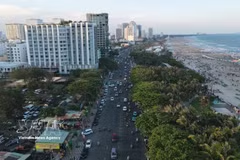
A bird's eye view of Vung Tau ward, Ho Chi Minh City (Photo: VNA)

Vung Tau stays the course on ASEAN clean tourism journey

Long known as a popular seaside getaway for domestic and international travellers, Vung Tau boasts an extensive coastline, sandy beaches and a unique landscape combining mountains, forests and the sea, making it well suited for resort, leisure and marine tourism.

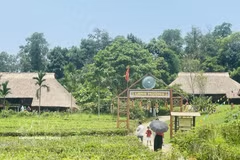
An aerial view of Lien village in Lao Cai province (Photo: vietnamtourism.gov.vn)

Social media helps bring local tourism destinations closer to visitors

Social media promotion by young people has helped create livelihoods for local communities, benefiting homestay owners, local guides, transport providers and sellers of regional specialties, particularly in remote areas with limited promotional resources but rich tourism potential.

The Chao Show by the Ho Chi Minh City-based the company Dau An Show presents the flavours of Vietnam’s three regions through nine signature Vietnamese dishes. (Photo: VNA)

Ho Chi Minh City boosts tourism appeal through culinary, cultural experiences

According to Vu Ngoc Lam, Country Director of Agoda Vietnam, travellers are becoming more selective when choosing accommodation, prioritising properties with strong reviews, quality amenities and distinctive dining options. This trend reflects a growing emphasis on the overall travel experience, alongside peer-based quality assurance.

Nam Luc waterfall is situated in Nam Luc 2 village, more than 20 kilometres from the centre of Sin Ho commune, at an altitude of 1,600-1,800 metres above sea level. (Photo: VNA)

Nam Luc waterfall: A hidden “white silk ribbon” in Lai Chau

Located amid the mist-covered mountains of the Sin Ho plateau in the mountainous northwestern province of Lai Chau, the Nam Luc waterfall is emerging as one of the region’s most compelling new destinations for trekking enthusiasts and nature lovers.

A view of the Trang An Scenic Landscape Complex - the first mixed cultural and natural heritage site in Vietnam. (Photo: VNA)

Ninh Binh aims to boost heritage-driven tourism growth

One of the highlights of the Ninh Binh Tourism Week 2026 is the Tam Coc Golden Season Festival at the Tam Coc – Bich Dong tourist site, where visitors can enjoy the vibrant rice harvest landscape alongside traditional cultural activities such as agricultural offerings processions, folk singing and traditional art performances.

Representatives of participating organisations pose for a group photo at the exchange programme marking China Tourism Day on May 19, 2026. (Photo: VNA)

Vietnam, China eye stronger tourism ties through cultural exchanges

Tourism exchanges between the two countries have expanded steadily in recent years, with a growing number of Vietnamese travellers to Chinese destinations such as Guilin, Lijiang, Zhangjiajie and Tianchi Lake, and Chinese tourists continuing to favour Vietnamese destinations including Hanoi, Ho Chi Minh City, Ha Long Bay, Da Nang and Nha Trang.

Several Vietnamese tourism products are introduced to visitors at the fair. (Photo: VNA)

Vietnam captivates visitors at Algeria tourism fair

Vietnam displays large photographs of renowned destinations such as Hoan Kiem Lake, Trang An Landscape Complex, Phong Nha-Ke Bang National Park, Hoi An Ancient Town, Ban Gioc Waterfall and the terraced rice fields of Mu Cang Chai at the International Tourism and Travel Fair (SITEV 2026) in Algeria.

Sun PhuQuoc Airways opens the gateway for the world to experience the paradise Phu Quoc. (Photo: Sun Group)

US media outlines what makes Phu Quoc Southeast Asia’s most sought-after destination

According to TTW, Phu Quoc is emerging as "one of the most desired destinations in Southeast Asia" due to a rare convergence of pristine natural beauty and a heavily invested, modern tourism ecosystem. From sweeping white sands and turquoise waters to global-class resort and entertainment complexes, the island is drawing an increasing number of international travelers seeking an experience that seamlessly balances luxury with a rich local identity.