Vietnam’s tourism sector accelerates green transition

Green transition not only helps preserve tourism resources and protect the environment, but also responds to rising market demand.

The Muong Hoa mountain-climbing train enhances green tourism experiences for visitors to Sa Pa. (Photo: VNA)

Hanoi (VNA) – Vietnam’s tourism industry is accelerating its transition towards greener and more sustainable development as localities, destinations and businesses increasingly view green transformation not merely as a trend, but as a vital requirement to enhance competitiveness and ensure long-term growth.

​Green transition not only helps preserve tourism resources and protect the environment, but also responds to rising market demand. A 2026 survey by digital travel platform Agoda shows that 77% of Asian travellers consider sustainability when planning their trips.

​Vietnam is among the leading markets embracing responsible tourism, with 81% of surveyed respondents saying sustainability is an important criterion when choosing destinations, while 43% pay attention to accommodation facilities holding sustainability certificates. These figures show that green factors are becoming crucial drivers of a destination’s attractiveness and visitor appeal.

​As a result, more tourism enterprises are proactively integrating sustainability into their products and services through eco-tours, “net zero” tourism models, organic agriculture and indigenous cultural experiences.

At the Vietnam International Travel Mart (VITM) Hanoi 2026, a wide range of green tourism products were introduced. Vietravel unveiled its “New Generation” product line integrating ESG (environmental, social, and governance) standards and the Living Experience Index (LEI) into product development and operations, featuring tours such as “Ben Tre – Net Zero Passport”, “Live Green with the Mekong” and domestic community-based tourism routes.​

Meanwhile, Vietluxtour launched its “Green Tourism and ESG Commitment Practice” ecosystem, promoting socially responsible travel experiences through tours such as “Con Dao – Protecting Sea Turtles”, “Ha Giang – Responsible Tourism”, “Old and New Saigon Metro” and “Cycling through Ninh Binh Heritage”.

General Director of Vietluxtour Tran The Dung said green tourism is no longer a temporary trend but a new standard for the tourism industry, with businesses pioneering green transformation expected to gain long-term competitive advantages.

Alongside enterprises, several destinations are also prioritising conservation over mass exploitation, investing in waste treatment systems and offering environmentally friendly tourism experiences to minimise impacts on nature and improve destination quality.

Vietnam’s tourism development strategy to 2030 identifies sustainable and inclusive tourism development based on green growth as a key orientation, while the national green growth strategy for 2021–2030 with a vision to 2050 outlines specific tasks for the sector, including developing green tourism models and introducing green labels for tourism service providers.

Despite notable progress, challenges remain as many enterprises still face difficulties in implementing green transformation due to limited experience and resources.

To support the process, the Vietnam Tourism Association (VITA) has introduced the VITA Green Tourism Criteria, a framework designed for destinations, accommodation facilities, travel agencies and service suppliers to standardise operations in line with orientations of the UN World Tourism Organisation.

According to VITA Chairman Vu The Binh, the criteria are closely aligned with globally recognised eco-certificates such as GSTC, Travelife and Green Key, helping Vietnamese businesses integrate into international tourism supply chains and access environmentally conscious travellers.

As of May 2026, more than 70 tourism units nationwide has received VITA Green certificates, becoming the country’s first officially recognised green tourism operators.​

Insiders noted that green transformation does not necessarily require large investments from the outset.

Tong Anh De, General Director of the Ninh Binh Legend Hotel, which was recently granted the VITA Green certificate, shared that his hotel began with small measures such as reducing single-use plastics, limiting paper printing, using energy-saving equipment, increasing the use of local products, and encouraging environmentally friendly practices among visitors.

He stressed that consistent small-scale actions can create significant long-term impacts, adding investment in green transformation should also be viewed as an investment in competitiveness and sustainable development./.
VNA

See more

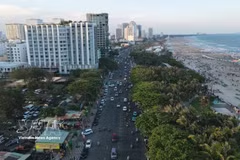
A bird's eye view of Vung Tau ward, Ho Chi Minh City (Photo: VNA)

Vung Tau stays the course on ASEAN clean tourism journey

Long known as a popular seaside getaway for domestic and international travellers, Vung Tau boasts an extensive coastline, sandy beaches and a unique landscape combining mountains, forests and the sea, making it well suited for resort, leisure and marine tourism.

An aerial view of Lien village in Lao Cai province (Photo: vietnamtourism.gov.vn)

Social media helps bring local tourism destinations closer to visitors

Social media promotion by young people has helped create livelihoods for local communities, benefiting homestay owners, local guides, transport providers and sellers of regional specialties, particularly in remote areas with limited promotional resources but rich tourism potential.

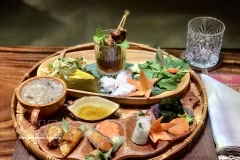
The Chao Show by the Ho Chi Minh City-based the company Dau An Show presents the flavours of Vietnam’s three regions through nine signature Vietnamese dishes. (Photo: VNA)

Ho Chi Minh City boosts tourism appeal through culinary, cultural experiences

According to Vu Ngoc Lam, Country Director of Agoda Vietnam, travellers are becoming more selective when choosing accommodation, prioritising properties with strong reviews, quality amenities and distinctive dining options. This trend reflects a growing emphasis on the overall travel experience, alongside peer-based quality assurance.

Nam Luc waterfall is situated in Nam Luc 2 village, more than 20 kilometres from the centre of Sin Ho commune, at an altitude of 1,600-1,800 metres above sea level. (Photo: VNA)

Nam Luc waterfall: A hidden “white silk ribbon” in Lai Chau

Located amid the mist-covered mountains of the Sin Ho plateau in the mountainous northwestern province of Lai Chau, the Nam Luc waterfall is emerging as one of the region’s most compelling new destinations for trekking enthusiasts and nature lovers.

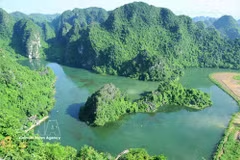
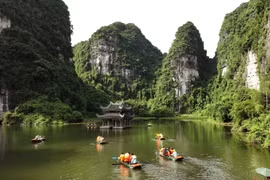
A view of the Trang An Scenic Landscape Complex - the first mixed cultural and natural heritage site in Vietnam. (Photo: VNA)

Ninh Binh aims to boost heritage-driven tourism growth

One of the highlights of the Ninh Binh Tourism Week 2026 is the Tam Coc Golden Season Festival at the Tam Coc – Bich Dong tourist site, where visitors can enjoy the vibrant rice harvest landscape alongside traditional cultural activities such as agricultural offerings processions, folk singing and traditional art performances.

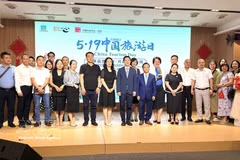
Representatives of participating organisations pose for a group photo at the exchange programme marking China Tourism Day on May 19, 2026. (Photo: VNA)

Vietnam, China eye stronger tourism ties through cultural exchanges

Tourism exchanges between the two countries have expanded steadily in recent years, with a growing number of Vietnamese travellers to Chinese destinations such as Guilin, Lijiang, Zhangjiajie and Tianchi Lake, and Chinese tourists continuing to favour Vietnamese destinations including Hanoi, Ho Chi Minh City, Ha Long Bay, Da Nang and Nha Trang.

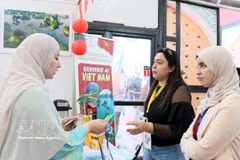
Several Vietnamese tourism products are introduced to visitors at the fair. (Photo: VNA)

Vietnam captivates visitors at Algeria tourism fair

Vietnam displays large photographs of renowned destinations such as Hoan Kiem Lake, Trang An Landscape Complex, Phong Nha-Ke Bang National Park, Hoi An Ancient Town, Ban Gioc Waterfall and the terraced rice fields of Mu Cang Chai at the International Tourism and Travel Fair (SITEV 2026) in Algeria.

Sun PhuQuoc Airways opens the gateway for the world to experience the paradise Phu Quoc. (Photo: Sun Group)

US media outlines what makes Phu Quoc Southeast Asia’s most sought-after destination

According to TTW, Phu Quoc is emerging as "one of the most desired destinations in Southeast Asia" due to a rare convergence of pristine natural beauty and a heavily invested, modern tourism ecosystem. From sweeping white sands and turquoise waters to global-class resort and entertainment complexes, the island is drawing an increasing number of international travelers seeking an experience that seamlessly balances luxury with a rich local identity.