Thai newspaper praises Phu Quoc as one of Southeast Asia’s fastest-growing beach destinations

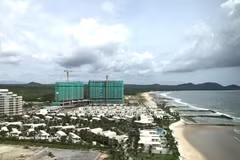
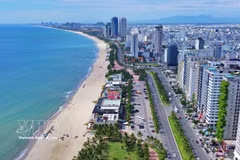
Known for its white-sand beaches, luxury resorts, night markets, and large-scale entertainment projects, the island is increasingly attracting travellers looking for a tropical getaway that combines nature with modern tourism infrastructure.

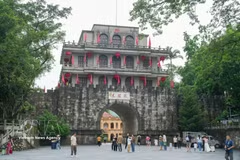
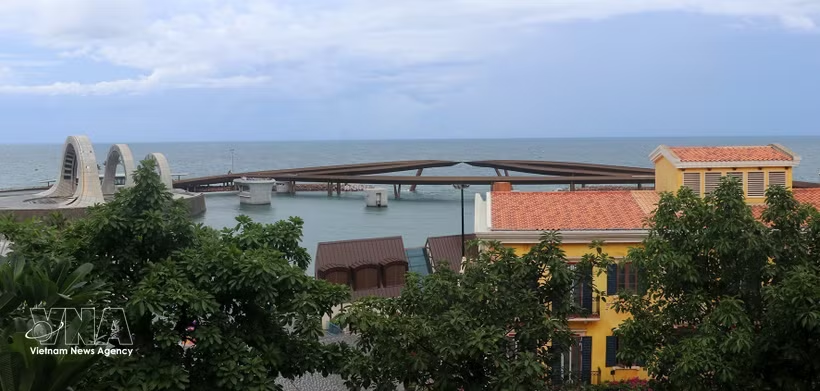
Kiss Bridge, a popular destination in Phu Quoc (Photo: VNA)

Bangkok (VNA) – Thailand’s Khaosod newspaper has published an article praising Vietnam’s Phu Quoc island as one of the fastest-growing beach destinations in Southeast Asia.

The article described Phu Quoc, located in the Gulf of Thailand, as Vietnam’s largest island and a key part of the country’s tourism ambitions.

Known for its white-sand beaches, luxury resorts, night markets, and large-scale entertainment projects, the island is increasingly attracting travellers looking for a tropical getaway that combines nature with modern tourism infrastructure, the writing noted.

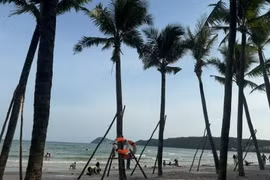
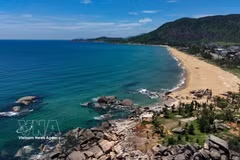
It highlighted that Long Beach, stretching along on the island’s western side, is known for its sunset views, beach bars, and resorts, while Sao Beach on the southeastern coast is famous for its powdery white sand and turquoise waters.

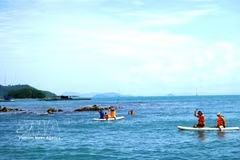
Khaosod noted the dry season from November to April is considered the best time to visit Phu Quoc, when calm seas and sunny skies make the island ideal for swimming, snorkelling, and island-hopping tours.

Compared with many larger beach destinations in the region, parts of Phu Quoc were said to still retain a slower and more relaxed atmosphere.

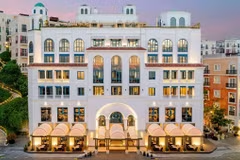
Over the past decade, the island, once known mainly as a quiet fishing village off southern Vietnam, has seen major tourism infrastructure investment. Large-scale developments such as Sunset Town and Grand World have transformed parts of the island into entertainment and shopping hubs filled with colourful Mediterranean-style architecture, restaurants, and nightlife.

Luxury international resorts now line many coastal areas, while Phu Quoc International Airport has made access far easier for foreign travellers, according to the article.

It also highlighted the Hon Thom cable car, stretching across the sea to connect Phu Quoc with smaller southern islands, as one of the island’s most famous attractions. The cable car offers panoramic views of fishing boats, coral reefs, and the Gulf of Thailand. Visitors can also join boat tours to nearby islands for snorkelling, coral diving, and seafood experiences.

Despite rapid development, traditional fishing communities remain part of island life, the newspaper said. Seafood was described as one of Phu Quoc’s highlights, with fresh crab, squid, sea urchins, and grilled shellfish widely available at local markets and seaside restaurants. The island is also well known across Vietnam for its fish sauce production and pepper farms.

According to the writing, Phu Quoc is becoming increasingly popular among Thai tourists thanks to relatively short travel times and visa-friendly entry policies for many visitors. Travellers from Bangkok can reach the island via connecting flights through Ho Chi Minh City or direct regional routes depending on airline schedules.

Khaosod concluded that as Vietnam continues investing heavily in tourism, Phu Quoc is positioning itself as one of the region’s major island destinations, offering a mix of tropical scenery, entertainment, and fast-growing resort development./.


VNA

See more

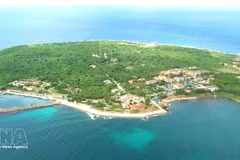
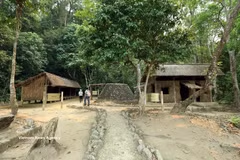
Con Co “steel island”: a green gem in the open sea. (Photo: VNA)

Con Co “steel island”: a green gem in the open sea

Unlike well-established destinations, this small island quietly preserves its layered heritage: tens-of-thousands-year-old basalt formations, pristine tropical forests and enduring wartime memories. Together, they create a distinctive “green gem” in the open sea, subtle yet captivating enough to hold any visitor.

The Hue–Da Nang “Central Heritage Connection” train takes passengers along one of Vietnam’s most spectacular coastal railway routes. (Photo: nhandan.vn)

Heritage rail journey brings new identity to central Vietnam tourism

The heritage train offers passengers not only a means of transport, but also a sense of connection linking destinations across central Vietnam, tourism with transport, and nostalgic memories with contemporary experiences. While older travellers are reminded of journeys from decades ago, younger passengers and international visitors are discovering a greener, culture-rich way to explore the region.

Many Vietnamese travellers love to plan the trip by themselves even when it requires a lot of time. (Photo courtesy of Booking.com)

Vietnamese travellers enjoy planning for trips

The Booking.com’s Travel Trends 2026 data revealed that a growing number of Vietnamese travellers, about 74% of respondents, are channelling “Main Character Planning Energy”, where planning and booking is just as enjoyable as the trip itself.

Hai Tac Island in An Giang province is increasingly attractive to visitors. (Photo: VNA)

Slow travel increases connections, reshapes tourism trends

Rather than rushing to “check in” at as many attractions as possible, slow travel allows visitors to immerse themselves in local life. Travellers may spend time wandering through a highland market, learning to cook a traditional dish, cycling around a coastal fishing village, or simply enjoying the tranquil rhythm of life in the countryside.

Sunlight streams into the Dinosaur Eye while visitors join the Son Doong adventure tour (Photo: VNA published)

Quang Tri province boosts tourism promotion through international television, films

A special documentary on Son Doong Cave, the world’s largest cave, was aired on March 29 in the renowned “60 Minutes” programme of CBS News. The report retraced the discovery of Son Doong Cave and years of expeditions conducted by the British Cave Research Association, offering global audiences a comprehensive look at the cave through scientific, historical and human perspectives.

The Dien Bien Phu campaign headquarters has become a popular tourist attraction in Dien Bien province. (Photo: VNA)

Dien Bien Phu tourism cable car project receives in-principle approval

The project aims to effectively tap the area’s natural landscapes, geographical advantages and distinctive historical value, while creating a high-quality tourism product with strong competitiveness. It is also intended to preserve, honour and promote the value of the Dien Bien Phu Victory special national historical relic site.

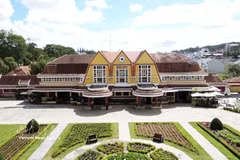
Da Lat station is the hub of the roughly 84-km Phan Rang–Da Lat railway (Photo: VNA)

Da Lat city's century-old railway station doubles as tourist draw

It now functions as both a transport hub and a sought-after photo spot. In the early morning, with mist still threaded through the pines, the station radiates an old-world calm. Visitors arrive at dawn to breathe the mountain air and capture iconic images of the highland city.

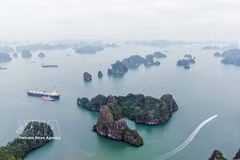
Ha Long Bay in Quang Ninh province. (Photo: VNA)

Quang Ninh - magnet for affluent Indian travellers

Alongside wedding tourism, Quang Ninh is also seeing robust growth in arrivals of Indian MICE travellers. Delegations of hundreds, and sometimes thousands, of visitors have been coming to the province for conferences, seminars and incentive travel programmes combined with leisure stays.