Heritage rail journey brings new identity to central Vietnam tourism

The heritage train offers passengers not only a means of transport, but also a sense of connection linking destinations across central Vietnam, tourism with transport, and nostalgic memories with contemporary experiences. While older travellers are reminded of journeys from decades ago, younger passengers and international visitors are discovering a greener, culture-rich way to explore the region.

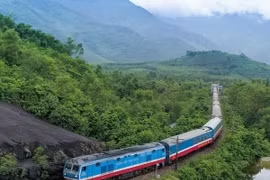
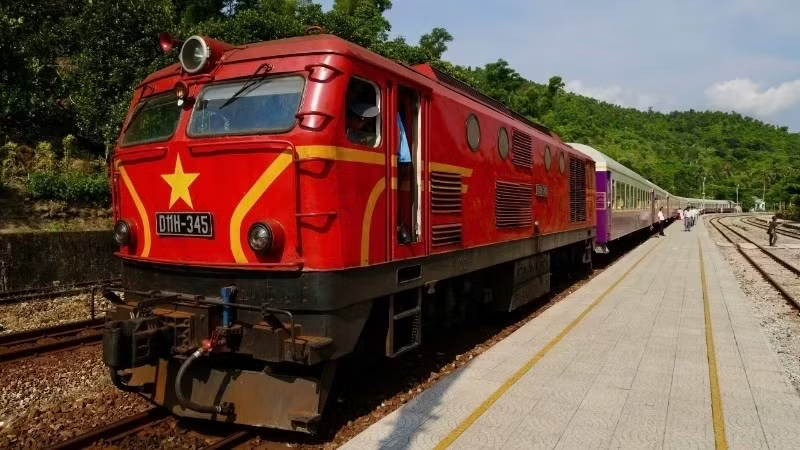
The Hue–Da Nang “Central Heritage Connection” train takes passengers along one of Vietnam’s most spectacular coastal railway routes. (Photo: nhandan.vn)

​Hanoi (VNA) – More than just a scenic ride along one of Vietnam’s most spectacular coastal railway routes, the Hue–Da Nang “Central Heritage Connection” train is emerging as a distinctive cultural tourism experience where music, cuisine and landscapes come together to reshape the image of modern rail travel.

The heritage train offers passengers not only a means of transport, but also a sense of connection linking destinations across central Vietnam, tourism with transport, and nostalgic memories with contemporary experiences. While older travellers are reminded of journeys from decades ago, younger passengers and international visitors are discovering a greener, culture-rich way to explore the region.

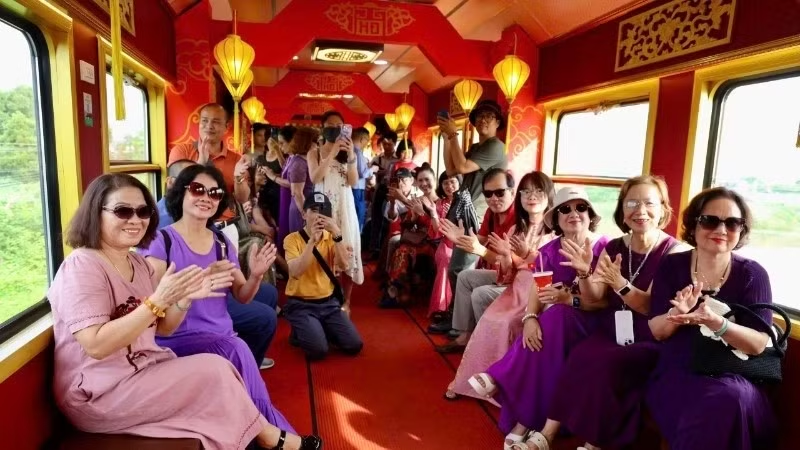
A standout feature of the journey is the community carriage, transformed into a moving cultural space amid the dramatic scenery of central Vietnam. Traditional art troupes from Hue and Da Nang cities perform onboard, bringing the distinct cultural identities of each locality directly to passengers.

Regional cuisine also plays a central role in shaping the experience. Local specialties served on the train introduce travellers to the stories, ingredients and traditions behind each dish, allowing passengers to savour both flavours and cultural heritage throughout the journey.

Behind the service is the coordinated effort of railway engineers, operational staff and service personnel who work together to ensure both smooth operations and a memorable passenger experience.
z7820893203592-dad52417c92e3708187b14f111ee62ae-4324.jpg
Passengers share joyful moments after unexpectedly meeting one another on a train journey. (Photo: nhandan.vn)

Vietnam’s railway sector is seeking to modernise its image by integrating tourism, culture and experiential elements into rail services. Rather than focusing solely on infrastructure, the industry is paying greater attention to details such as clean carriages, welcoming community spaces, attentive onboard service and reliable operations.

The Hue–Da Nang heritage route is considered especially unique thanks to its passage through iconic destinations such as Hai Van Pass and Lang Co Bay, which are renowned for both natural beauty and cultural richness. These advantages provide strong potential for experiential tourism development.

The success of the train also relies on close cooperation among transport operators, local authorities, artists and onboard service teams. Cultural performances, regional culinary offerings and community-focused activities have helped create a travel experience distinct from other forms of transport.

However, maintaining such a service presents considerable challenges. The railway section crossing Hai Van Pass is known for difficult terrain and unpredictable weather, particularly during the storm season in central Vietnam. At the same time, organising performances and onboard catering requires seamless coordination among technical, logistics and service units.

Railway workers are also under constant pressure to innovate as passengers increasingly expect not only safe and punctual travel, but also comfort, cultural engagement and emotional value. Balancing strict operational standards with service innovation has therefore become a key task for the industry.​

Looking ahead, the “Central Heritage Connection” train is expected to evolve beyond a transport-tourism product into a creative cultural space. Writers and artists joining railway-organised journeys have already found inspiration in the passing landscapes of Hai Van Pass, Lang Co Bay and the changing scenery outside the train windows.

Ideas under consideration include broadcasting poetry, essays and music inspired by central Vietnam and the railway journey through the train’s audio system, helping immerse passengers more deeply in the atmosphere of the heritage region.

Additional cultural products such as travel journals, illustrated postcards and collections of writings inspired by the route are also seen as potential souvenirs for visitors.

​With such initiatives, the heritage train is gradually being shaped into a unique cultural ecosystem where each journey leaves passengers with lasting memories of central Vietnam’s heritage landscape./.

VNA

See more

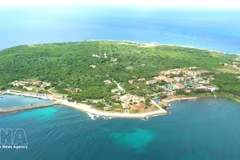
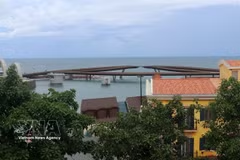
Con Co “steel island”: a green gem in the open sea. (Photo: VNA)

Con Co “steel island”: a green gem in the open sea

Unlike well-established destinations, this small island quietly preserves its layered heritage: tens-of-thousands-year-old basalt formations, pristine tropical forests and enduring wartime memories. Together, they create a distinctive “green gem” in the open sea, subtle yet captivating enough to hold any visitor.

Many Vietnamese travellers love to plan the trip by themselves even when it requires a lot of time. (Photo courtesy of Booking.com)

Vietnamese travellers enjoy planning for trips

The Booking.com’s Travel Trends 2026 data revealed that a growing number of Vietnamese travellers, about 74% of respondents, are channelling “Main Character Planning Energy”, where planning and booking is just as enjoyable as the trip itself.

Hai Tac Island in An Giang province is increasingly attractive to visitors. (Photo: VNA)

Slow travel increases connections, reshapes tourism trends

Rather than rushing to “check in” at as many attractions as possible, slow travel allows visitors to immerse themselves in local life. Travellers may spend time wandering through a highland market, learning to cook a traditional dish, cycling around a coastal fishing village, or simply enjoying the tranquil rhythm of life in the countryside.

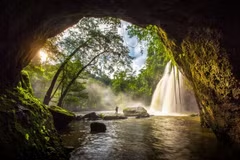
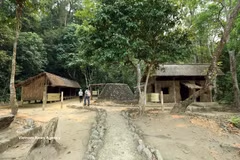
Sunlight streams into the Dinosaur Eye while visitors join the Son Doong adventure tour (Photo: VNA published)

Quang Tri province boosts tourism promotion through international television, films

A special documentary on Son Doong Cave, the world’s largest cave, was aired on March 29 in the renowned “60 Minutes” programme of CBS News. The report retraced the discovery of Son Doong Cave and years of expeditions conducted by the British Cave Research Association, offering global audiences a comprehensive look at the cave through scientific, historical and human perspectives.

The Dien Bien Phu campaign headquarters has become a popular tourist attraction in Dien Bien province. (Photo: VNA)

Dien Bien Phu tourism cable car project receives in-principle approval

The project aims to effectively tap the area’s natural landscapes, geographical advantages and distinctive historical value, while creating a high-quality tourism product with strong competitiveness. It is also intended to preserve, honour and promote the value of the Dien Bien Phu Victory special national historical relic site.

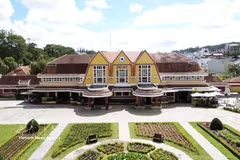
Da Lat station is the hub of the roughly 84-km Phan Rang–Da Lat railway (Photo: VNA)

Da Lat city's century-old railway station doubles as tourist draw

It now functions as both a transport hub and a sought-after photo spot. In the early morning, with mist still threaded through the pines, the station radiates an old-world calm. Visitors arrive at dawn to breathe the mountain air and capture iconic images of the highland city.

Ha Long Bay in Quang Ninh province. (Photo: VNA)

Quang Ninh - magnet for affluent Indian travellers

Alongside wedding tourism, Quang Ninh is also seeing robust growth in arrivals of Indian MICE travellers. Delegations of hundreds, and sometimes thousands, of visitors have been coming to the province for conferences, seminars and incentive travel programmes combined with leisure stays.