Hanoi (VNA) – The sharp rise in tourist arrivals during the recent Hung Kings Commemoration Day and April 30-May 1 holidays highlighted the growing appeal of destinations across Vietnam, driven by renewed tourism products and enhanced visitor experiences.
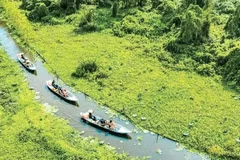
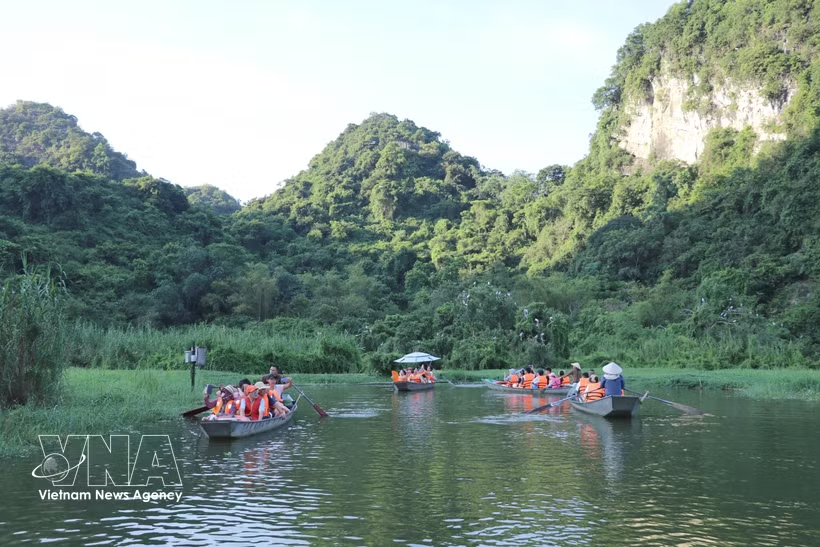
The northern province of Ninh Binh led the country in tourist arrivals during the two holiday periods, welcoming more than 2.7 million visitors, up 123.9% year-on-year. Tourism revenue was estimated at over 4.2 trillion VND (160 million USD), a rise of 205.1% compared to the same period in 2025.
The strong growth was attributed to efforts to diversify tourism products, expand tourism space to coastal areas, and organise cultural-artistic events and large-scale outdoor performances aimed at extending visitors’ stays and enriching their experiences.
Meanwhile, the northeastern province of Quang Ninh received 1.345 million visitors during the holidays, generating estimated tourism revenue of 4.165 trillion VND.
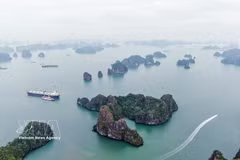
Beyond its natural advantages, the province has actively refreshed tourism products and improved service quality. A tourism route linking Ha Long Bay and Lan Ha Bay through four itineraries has opened up new opportunities for inter-regional tourism.
At the same time, a series of cultural and tourism events, including the Van Don Sea Tourism Festival and the Soong Co Festival in Binh Lieu, helped create more immersive experiences for visitors.
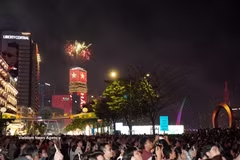
A key highlight was the 2026 Ha Long Carnaval themed “Wonder Illuminates the New Era”, which attracted around 80,000 participants.
The northern port city of Hai Phong continued to affirm its appeal in island and experiential tourism. From April 25 to May 3, the city welcomed nearly 1.5 million visitors, up 32% from the same period last year, with tourism revenue estimated at 1.12 trillion VND.
Popular destinations included Cat Ba, Do Son, the Vu Yen entertainment and urban area, and food tours. During the five peak days, many accommodation facilities in central Hai Phong, Do Son and Cat Ba operated at full capacity.
According to city authorities, Hai Phong is shifting towards deeper tourism development, focusing on visitor experiences and added value while leveraging the combined strengths of marine, cultural and urban tourism to create distinctive long-term products.
In the northern mountainous area, Tuyen Quang province also recorded a strong tourism surge, receiving nearly 190,000 visitors, including over 17,000 international arrivals, and earning nearly 498 billion VND in tourism revenue.
Tourists were drawn to famous attractions such as the Dong Van Karst Plateau Global Geopark, the Tan Trao Special National Historical Relic Site and the Na Hang hydropower lake tourism area. Local authorities also organised various culturally distinctive activities, including the H’Mong panpipe festival, folk games, art performances and kayak races.
Despite positive growth signals, the sudden increase in visitor numbers put heavy pressure on tourism infrastructure and services.
Cat Ba experienced a severe shortage of accommodation, forcing some visitors to rent local houses at high prices. Traffic congestion frequently occurred around Do Son tourist area, while food safety management became more challenging amid the boom in culinary tourism.
In Ninh Binh, several major tourist attractions faced localised overcrowding, placing strain on transport systems, parking areas, sanitation facilities and accommodation services. Long queues at ticket counters and inconsistent pricing at some eateries and shops also affected visitor experiences.
Meanwhile, tourism hotspots on the Dong Van Karst Plateau, including Lung Cu, Dong Van, Meo Vac and Quan Ba, faced accommodation shortages and traffic bottlenecks, particularly along National Highway 4C.
The challenges underscored the need for localities not only to attract visitors but also to improve destination management capacity, upgrade infrastructure and enhance service quality to ensure sustainable tourism development.
Local authorities in Hai Phong, Ninh Binh and Tuyen Quang said they are strengthening tourism management, improving infrastructure, tightening price controls, enhancing digital applications for visitor management, and upgrading transport systems and accommodation facilities to better serve tourists during upcoming peak travel periods./.