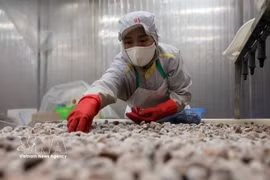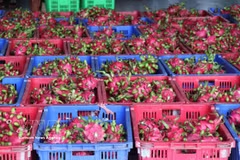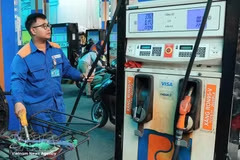
Hanoi (VNA) – Counterfeit, substandard and intellectual property-infringing goods continue to pose growing challenges to Vietnam’s business environment and consumer protection, as smuggling networks expand operations through e-commerce platforms, social media and express delivery services with increasingly sophisticated tactics.
In response, the customs sector has identified the fight against smuggling, trade fraud, counterfeit goods and intellectual property violations as a key task. Customs units nationwide have stepped up inspections and supervision of import-export activities along major routes and at key checkpoints.
According to the Customs Department, current “hotspots” are concentrated along the Vietnam-China, Vietnam-Laos and Vietnam-Cambodia land border routes. Counterfeit and imitation goods have also been detected entering the country through seaports, international airports and express delivery channels disguised as parcels.
Besides, authorities warned that counterfeit production and distribution networks are also operating openly within the domestic market, particularly on social media and e-commerce platforms. Violating products are mainly cosmetics, pharmaceuticals, health supplements, fashion items, electronics, tobacco and industrial materials, many of which directly affect public health and consumer confidence.
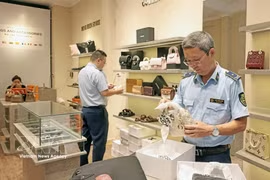
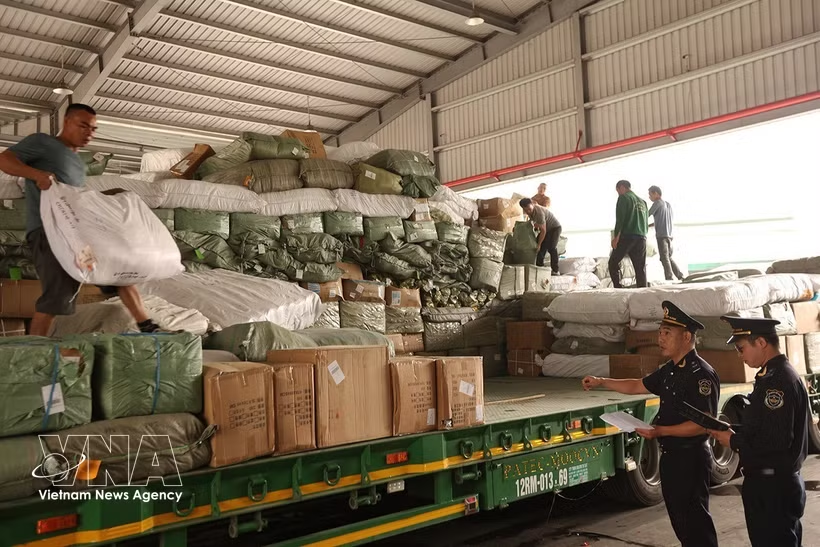
On May 7, the first day of a nationwide peak campaign against smuggling, trade fraud, counterfeit goods and intellectual property violations, customs officers discovered nearly 15,000 cosmetic and fashion items suspected of infringing major trademarks at the Huu Nghi International Border Gate in the northern province of Lang Son.
Specifically, the northern anti-smuggling control team, in coordination with Huu Nghi Border Gate Customs, inspected suspicious transit shipments and seized 10,508 cosmetic products allegedly violating the intellectual property rights of several the Republic of Korea's brands.
Authorities also confiscated 4,350 fashion items, including belts, shoes and handbags bearing signs of counterfeiting well-known brands such as Louis Vuitton, Hermes, Nike and Charles & Keith.
The crackdown has also extended to imported food products. Earlier, on February 2, customs officers at Sai Gon Port Customs Sub-department Region I detected signs of trademark infringement involving the “Dates Sanwan” brand during import procedures for a shipment of dried dates by Hat va Gia Vi JSC. The trademark is protected in Vietnam under the Intellectual Property Law.
The violating shipment was valued at nearly 2.3 billion VND (about 88,000 USD). Customs authorities later transferred the case to the Ho Chi Minh City People’s Committee for handling in line with regulations. The company was fined 490 million VND, suspended from business operations for two months and ordered to destroy all infringing products.
According to customs officials, violators are increasingly employing sophisticated tactics, including false declarations of goods’ legal status, trademark counterfeiting, origin fraud and misuse of transit procedures to evade inspections.
The implementation of specialised enforcement plans, combined with early warning measures and tighter controls, has enabled customs authorities to promptly identify new smuggling methods and key transportation routes.
In the first four months of 2026, the customs sector detected and handled 23 cases related to intellectual property violations, including 11 cases recorded in January alone. Violating goods ranged from luxury fashion products and electronic devices to industrial goods, automobile components and food products.
Notably, a case involving counterfeit bearings uncovered by Customs Sub-department Region II has been recommended for criminal prosecution, reflecting the authorities’ stronger resolve in combating counterfeit goods and intellectual property violations.
As counterfeit goods increasingly infiltrate supply chains and domestic markets, authorities said enhanced controls from border gates to inland distribution channels are essential to protecting legitimate businesses, public health and Vietnam’s investment and business environment./.