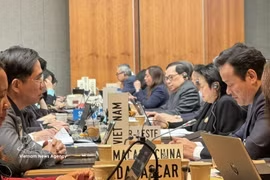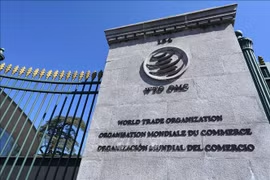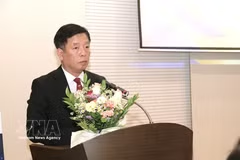
Geneva (VNA) – Vietnam updated new points in its state management of the origin of goods at the regular meeting of the Committee on Rules of Origin under the World Trade Organisation (WTO) in Geneva, Switzerland, on May 12.
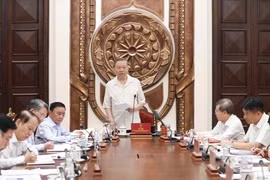
The Vietnamese delegation to the hybrid meeting included representatives from the Agency of Foreign Trade under the Ministry of Industry and Trade (MoIT) and officials from Vietnam’s Permanent Mission in Geneva.
Regarding improvements to the legal framework, Deputy Director of the Agency of Foreign Trade Trinh Thi Thu Hien informed participants about the drafting of a Government decree detailing some articles and enforcement measures concerning the origin of goods under the Law on Foreign Trade Management, which will replace Decree No. 31/2018/ND-CP.
The draft decree introduces new provisions, including those on a mechanism for self-certification of goods origin, creating a legal basis for aligning domestic rules with the commitments on self-certification of origin under the free trade agreements (FTAs) to which Vietnam is a party. It also updates regulations on the electronic origin certification management system (eCoSys) and the exchange of electronic certificate of origin (C/O) data with partners.
Vietnam also shared the positive impacts of digitalising C/O issuance procedures. C/Os are issued electronically through the eCoSys system, featuring digital signatures, electronic seals of authorised agencies and QR codes for authentication.
The integration of QR codes enables customs authorities in importing countries to proactively verify C/Os, thereby reducing authentication requests, facilitating trade, shortening processing times, and enhancing transparency in origin management.
Hien also updated the meeting on the decentralisation of power and delegation of authority in the field of goods origin in Vietnam. At present, C/O issuance is carried out by the MoIT and provincial-level People’s Committees. So far, 31 out of 34 provinces and cities have applied decentralisation and delegation mechanisms in this field, helping improve access to public services and creating more favourable conditions for local exporters.
The information presented by Vietnam attracted attention from others WTO members amid global efforts to accelerate the digital transformation of import – export procedures and improve the implementation of rules of origin to enhance supply chain adaptability.
The Chair of the Committee on Rules of Origin acknowledged Vietnam’s proactive role and willingness to share practical experiences and regulations related to the rules of origin. Representatives from the US, Singapore and Colombia highly valued Vietnam’s report, its cooperative spirit in combating origin fraud, and its digital transformation efforts in C/O issuance.
Vietnam’s active participation at WTO meetings continued to affirm its proactive and responsible role in promoting trade facilitation and strengthening international cooperation in combating origin fraud.
Reforms in origin management have also contributed to digital transformation in foreign trade management, as well as science – technology development and innovation in line with Resolution No. 57-NQ/TW on breakthroughs in science – technology development, innovation and national digital transformation./.