Hanoi (VNA) – As modern life grows increasingly fast-paced, travellers are seeking journeys that offer deeper meaning and more authentic experiences. This shift has fueled the rise of “slow travel,” a growing global trend that encourages visitors to travel more mindfully, stay longer and build stronger connections with the places they visit.
Rather than rushing to “check in” at as many attractions as possible, slow travel allows visitors to immerse themselves in local life. Travellers may spend time wandering through a highland market, learning to cook a traditional dish, cycling around a coastal fishing village, or simply enjoying the tranquil rhythm of life in the countryside.
More than a travel style defined by slower movement, slow travel prioritises meaningful experiences. In an era dominated by speed and constant connectivity, the ability to pause, reconnect and regain balance has become one of tourism’s most valuable offerings.
Drawing from 25 international tourism reports, CNBC recently forecast major global travel trends for 2026, highlighting a shift away from the number of destinations visited toward experiential, sustainable and highly personalised travel.
The report noted that travellers are increasingly interested in secondary destinations — places outside major tourism hubs that nevertheless provide rich and immersive experiences. This reflects a broader transition from consumption-driven tourism to experience-driven travel, with slow travel emerging as a deliberate choice among global tourists.
Notably, in a recent ranking of Asia’s top slow travel destinations released by Agoda, Hoi An in Da Nang city topped the list. The ancient town’s compact layout, nostalgic atmosphere and walkable streets make it ideal for leisurely exploration on foot or by bike. Visitors can join cooking classes, visit tailor shops, or cycle through rice fields while engaging with local culture.
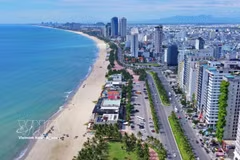
Previously, Agoda also recognised Nha Trang, Da Nang and Ho Chi Minh City as ideal destinations for slow travel based on traveller search data. Such recognition not only underscores Vietnam’s growing appeal among international visitors but also highlights the country’s significant potential for developing this tourism model.
In recent years, slow travel has become increasingly visible across Vietnam. Models encouraging travellers to “travel less but experience more”, including homestays, farmstays, wellness retreats, community-based tourism, trekking tours, walking tours and rail journeys, have steadily expanded.
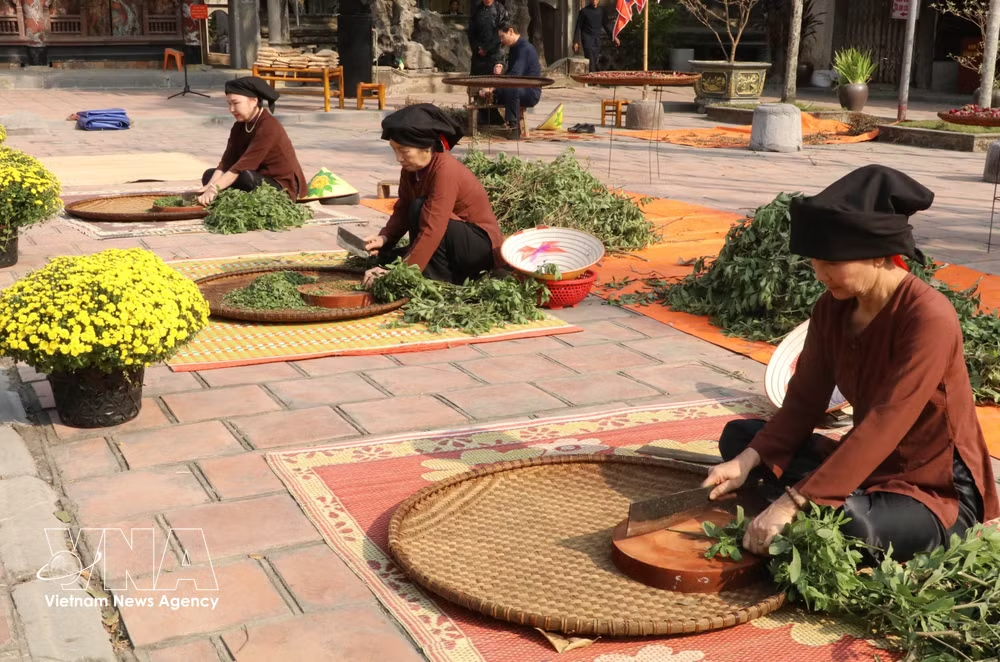
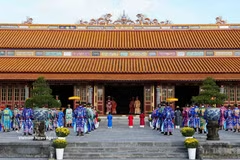
Beyond the destinations recognised by Agoda, localities such as Hanoi, Hue, Ninh Binh, Da Lat and Can Tho are also demonstrating strong advantages for slow tourism thanks to their natural landscapes and cultural depth.
Slow travel not only helps visitors recharge, but also encourages longer stays, increases tourist spending and motivates local communities to preserve cultural identity. At the same time, it contributes to a more balanced distribution of tourists, helping destinations avoid overcrowding and reducing pressure on infrastructure, resources and the environment.
Experts say that although slow travel in Vietnam has made encouraging progress, the sector remains in its early stages and requires more coordinated investment. One of the biggest challenges lies in shifting away from a tourism development mindset focused primarily on visitor numbers.
For years, many destinations have measured tourism success by the volume of arrivals rather than by the depth and quality of visitor experiences. The result has often been overcrowding during peak seasons, short stays and growing risks of commercialisation and cultural erosion.
According to Pham Ha, Chairman and CEO of LuxGroup, low-cost advantages will gradually diminish amid intensifying global competition. In the future, destinations capable of telling compelling stories, creating meaningful experiences and preserving cultural and natural values will be best positioned to attract sustainable tourism demand./.